










Stockholm’s nuclear alarm What if war breaks out tomorrow?
Sweden appears to be edging closer to joining the ranks of countries with access to nuclear weapons. According to The Telegraph, the Swedish government is in talks with the United Kingdom and France about potentially expanding nuclear guarantees for the kingdom.
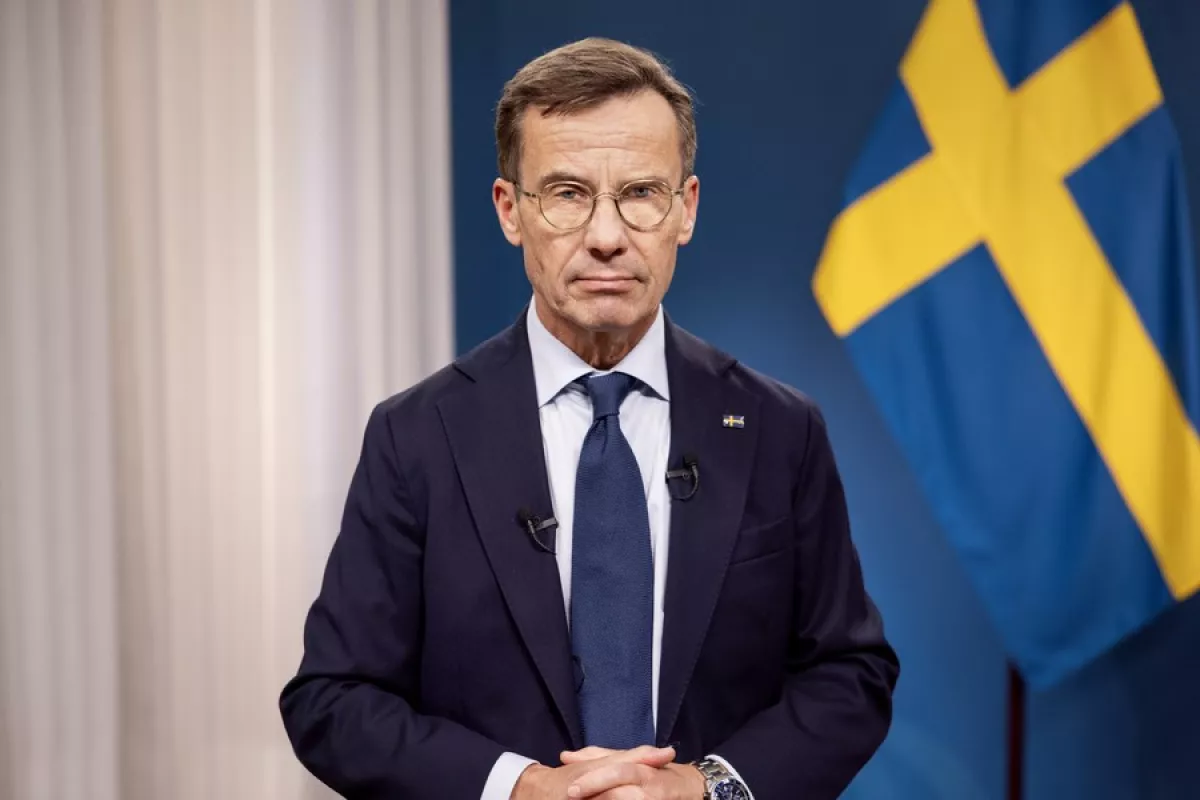
“We are now holding ongoing discussions with both France and the United Kingdom. They are not very precise yet, and the French [nuclear weapons] are uniquely French, but France also shows openness to discussing with other countries,” said Swedish Prime Minister Ulf Kristersson. He added that “as long as dangerous countries possess nuclear weapons, sound democracies must also have access to nuclear weapons.”
Kristersson stressed that Sweden currently sees no need to host nuclear weapons on its soil—but that could change in the event of war.
This position echoes comments he made in May 2024 during an interview with Sveriges Radio, where he allowed for the possibility of nuclear weapons on Swedish territory if the country were drawn into a conflict. “If a war reaches our territory and Sweden becomes involved, that would be a completely different situation. Then all NATO countries would benefit from the nuclear umbrella, which must exist as long as Russia possesses nuclear weapons,” he said, emphasising that “all decisions regarding Sweden’s territory are made solely by Sweden.”
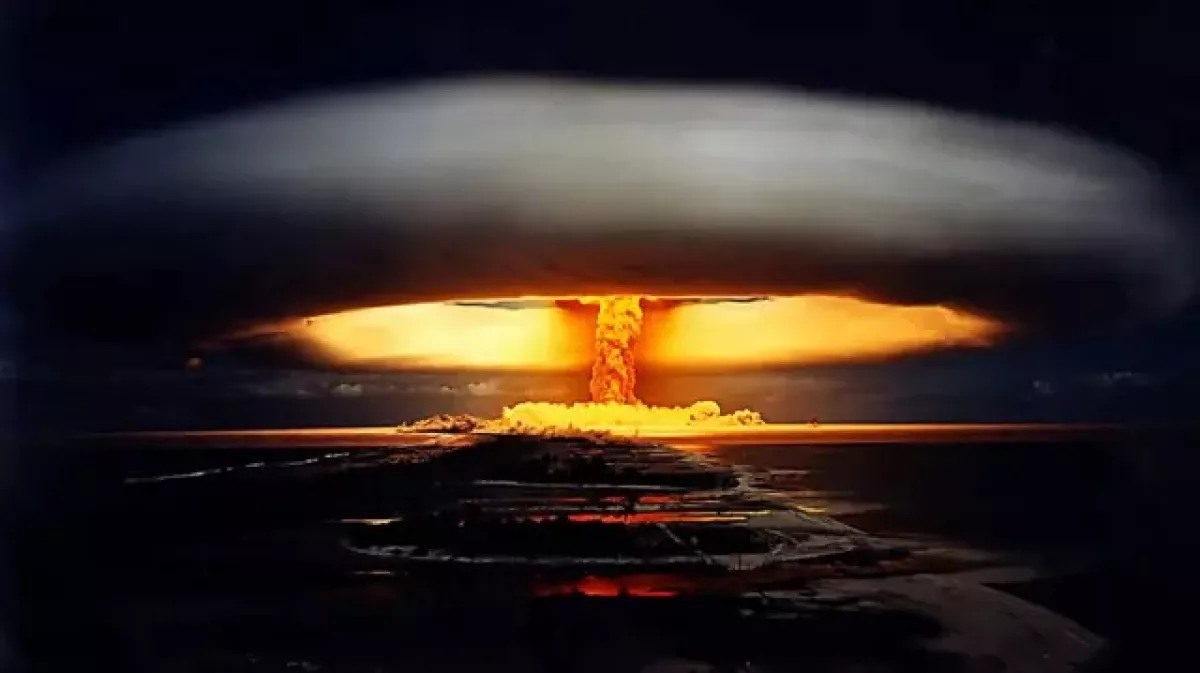
After World War II, Sweden seriously considered developing a nuclear arsenal to deter the USSR. However, after signing the Treaty on the Non-Proliferation of Nuclear Weapons in 1968, Sweden gradually wound down its nuclear research programme, completing it by 1972. In March 2024, the kingdom joined NATO and has since been protected under the Alliance’s “nuclear umbrella,” which in itself removed any immediate need for its own nuclear weapons.
Against this backdrop, pressing questions arise: Why is Sweden now turning to France and the United Kingdom for nuclear guarantees when it is already within NATO’s security orbit? Could this signal the first, tentative steps toward joining the club of nuclear powers?
To understand the reasoning, a brief retrospective is necessary. Since March 2025, discussions have emerged within Sweden’s socio-political sphere about the potential need for a domestic nuclear capability. At that time, Jimmie Åkesson, leader of the right-wing Sweden Democrats, recalled Stockholm’s past experience in nuclear technology. A few weeks later, Robert Dalsjö, a specialist at the National Defence Research Institute (FOA), called for the creation of nuclear weapons “with a Swedish component.” The idea also gained support from Alice Teodorescu Måwe, a Member of the European Parliament from the centre-right Christian Democrats, who argued that Sweden should take a role in Europe’s broader nuclear strategy.
However, at that stage, the debate remained largely theoretical and did not progress beyond discussion.
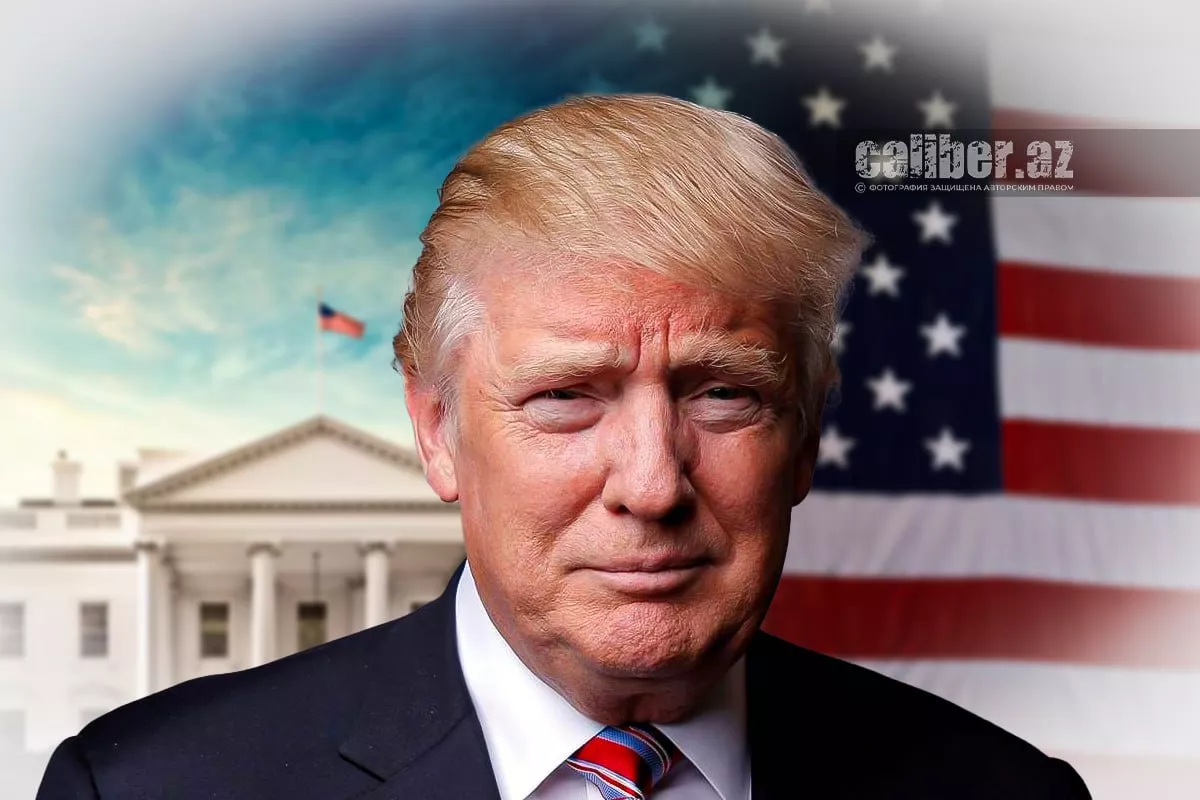
Regarding Sweden’s current pursuit of nuclear guarantees, several international experts interpret it as an effort to reduce dependence on the United States. This conclusion seems quite logical, especially in light of key points outlined in the new U.S. National Security Strategy, particularly those relating to policy toward the European Union. It is no coincidence that the document caused surprise across many European capitals.
The strategy redefined Washington’s foreign policy priorities, placing greater emphasis on national interests and emphasising that European countries must take greater responsibility for their own defence. While the document does not explicitly renounce U.S. protection of Europe—meaning formal obligations remain—it makes clear that the primary responsibility for the security of the continent lies with Europeans themselves.
Meanwhile, in January of this year, the Swedish newspaper Dagens Nyheter reported that under President Donald Trump, the United States is gradually stepping back from its commitment to protect the European Union. As a result, the Nordic countries, led by Sweden, may begin considering the possibility of possessing nuclear weapons themselves.
“The discussion on nuclear weapons needs to go beyond how the French and British can protect the entire continent. Is such a capability necessary in Northern Europe? Sweden’s combination of advanced nuclear technology expertise and a developed defence industry makes it a key player in this matter,” the newspaper noted, emphasising that “Trump’s policies increase the risk of nuclear proliferation.”
Thus, it can be said that the trigger activating the nuclear debate in Sweden was the new American National Security Strategy in particular, and Trump’s America First–based policy in general. This is the first point.
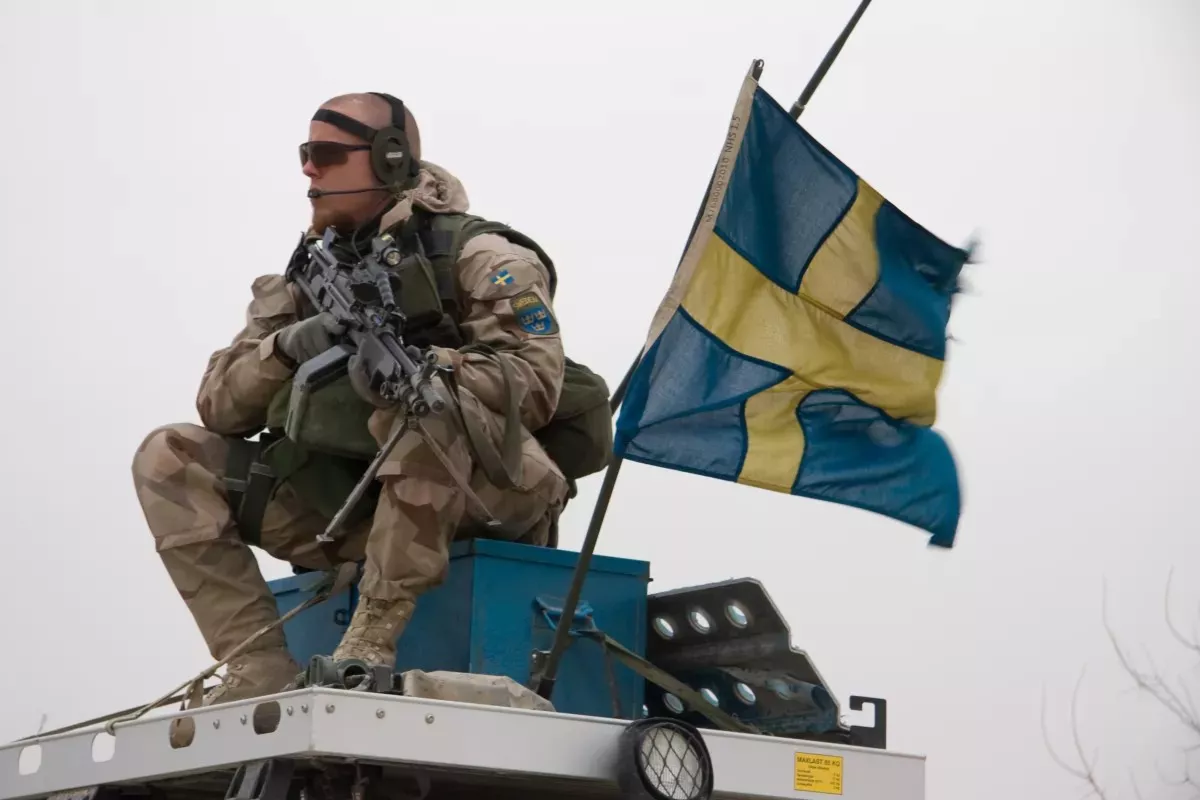
The second aspect concerns Sweden’s actual ability to develop its own nuclear weapons. According to Martin Goliath, a leading nuclear weapons specialist at FOA, the country would have to build an entire infrastructure to produce the necessary materials, which would require enormous investment. On the other hand, considering that there are six morally and technically outdated nuclear power plants on Swedish territory—whose modernisation the authorities have neglected—the possibility of Stockholm developing atomic weapons without effective assistance from an existing nuclear state appears highly doubtful.
It seems likely that Sweden will again seek support from France and the United Kingdom on this matter. However, whether either country would actively assist in developing weapons of mass destruction is another matter entirely. A far more realistic scenario is that Paris and London would extend protection to Sweden through their existing nuclear arsenals—and nothing beyond that. Viewed in this light, the likelihood of a new NATO member state becoming a nuclear power in the near future is virtually zero.







 editor@caliber.az
 +994 55 444-88-98
 Азербайджан, Баку, ул. Низами, 203, Af Business House, 5-й этаж