










Ukraine and the price of abandoning its NATO bid Expert opinions on Caliber.Az
During negotiations with U.S. envoys in Berlin, Ukrainian President Volodymyr Zelenskyy reportedly proposed abandoning Ukraine’s bid for NATO membership in exchange for Western security guarantees that could pave the way toward ending the war with Russia, according to Reuters.
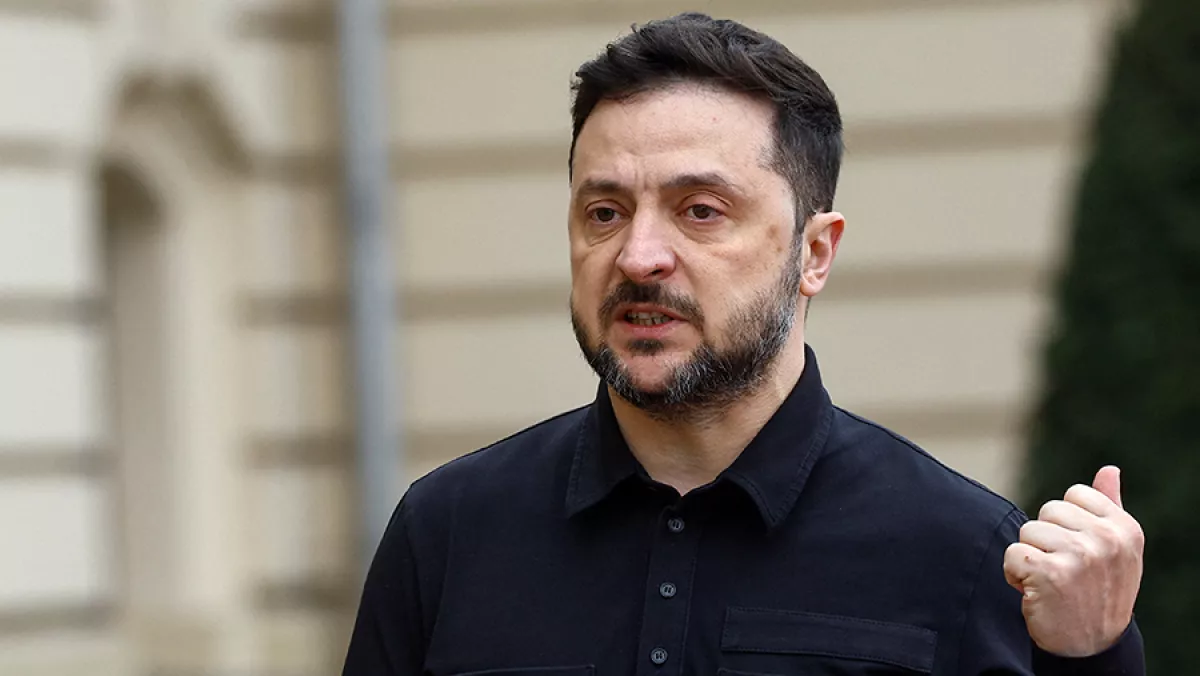
The agency notes that Kyiv’s willingness to forgo NATO membership marks a significant shift and aligns with one of Moscow’s key objectives. At the same time, Ukraine continues to reject any transfer of its territories to Russia. In return, Kyiv is insisting on legally binding security guarantees from the United States, European countries, as well as Canada and Japan.
Following this, EU High Representative for Foreign Affairs and Security Policy Kaja Kallas stated that Ukraine’s accession to NATO is no longer on the agenda. According to her, under the current circumstances the European Union must offer Kyiv robust security guarantees.
Kallas emphasised that this is not about formal pledges, but about tangible measures. “They cannot be papers or promises. They have to be real troops, real capabilities,” she stressed.
Will President Zelenskyy’s proposal to abandon Ukraine’s bid for NATO membership have a meaningful impact on the course of peace negotiations? Will the United States, Europe, Canada, and Japan agree to provide alternative security guarantees in exchange? Could this step alter the current balance of power?
Prominent Ukrainian experts shared their assessments of these developments with Caliber.Az.
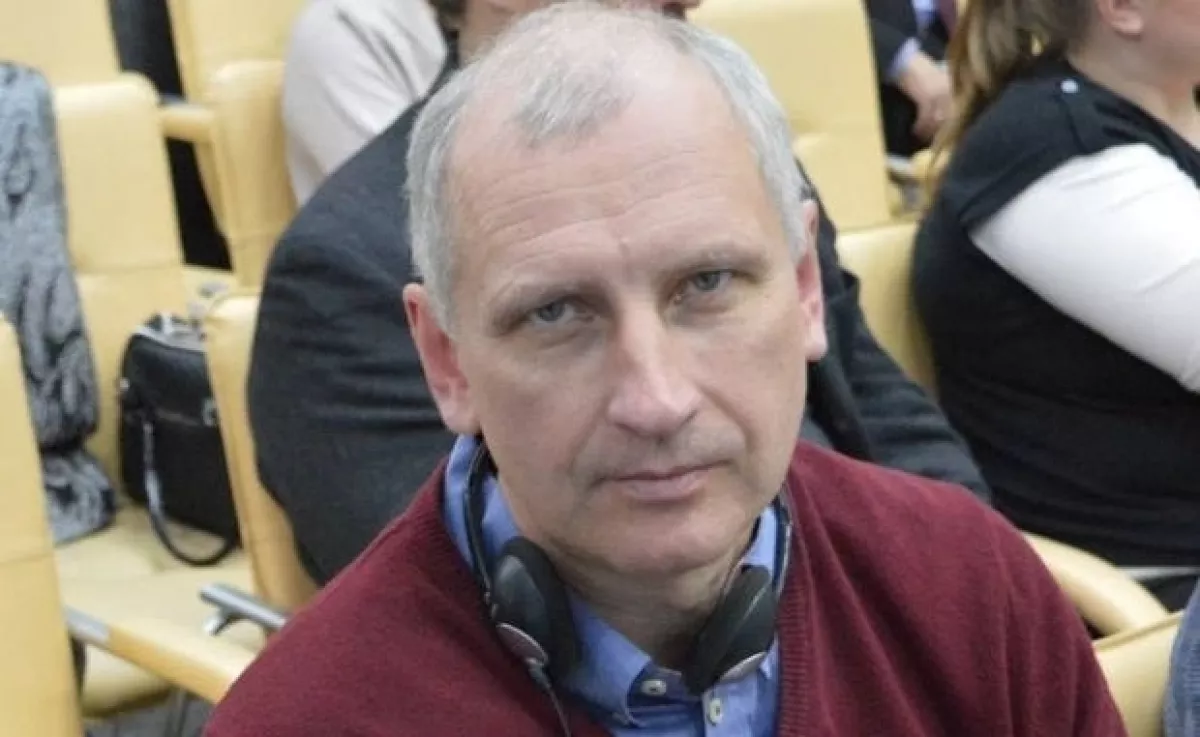
Security and defence expert, retired colonel Oleh Starikov, noted that during a joint briefing with German Chancellor Friedrich Merz on the evening of December 15, ahead of a meeting with European leaders, Volodymyr Zelenskyy partially refuted the information that had been circulating.
“He emphasised that even if an agreement is reached, Ukraine must retain its European perspective and its prospect of joining NATO. Thus, if the American and Ukrainian delegations did arrive at some form of compromise, it was purely at the level of wording. Ukraine would be allowed to keep its course toward NATO and EU membership enshrined in the Constitution. However, de facto, our country would be protected on the basis of one or several security guarantee agreements—analogous to Article 5 of the NATO Charter.
Undoubtedly, this is a key issue in the negotiations, alongside the territorial one, and I would even say it is far more important than the territorial question.
If, however, we are talking about Zelenskyy’s refusal of immediate NATO accession—which, from Kyiv’s perspective, would indeed be the best possible security guarantee for the country—then it is quite possible that this was precisely the element of progress referred to by the U.S. President Donald Trump’s special envoy, Steve Witkoff, when he spoke about the outcomes of the talks on December 14 and 15.
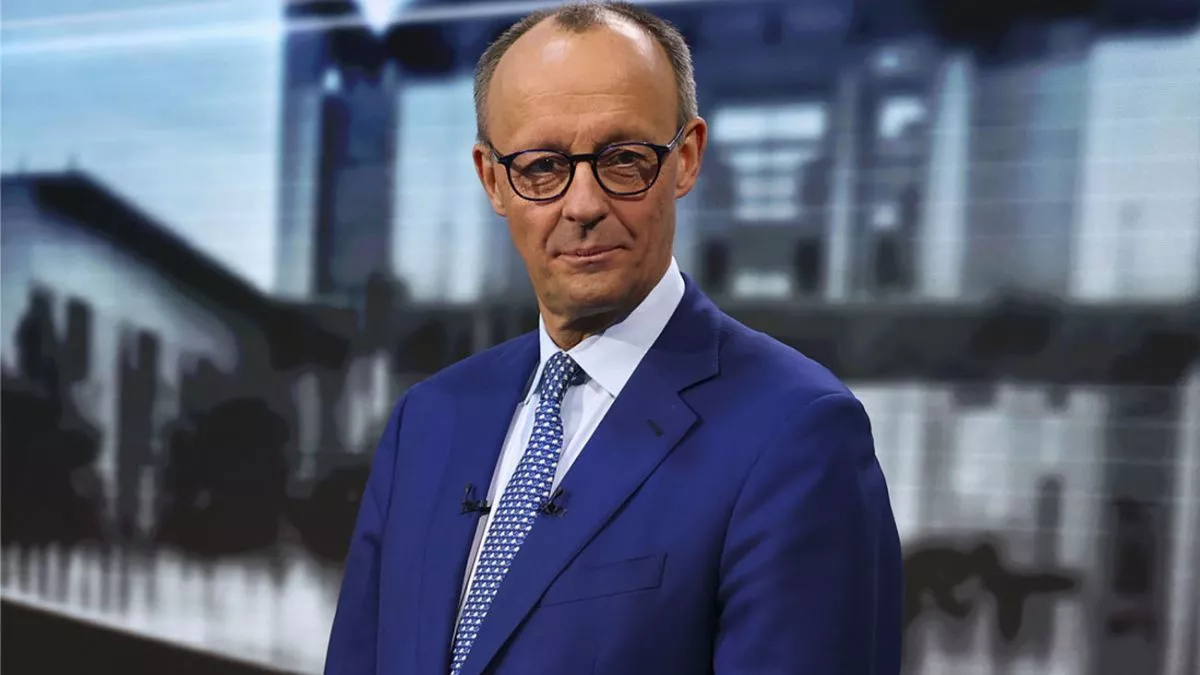
At the briefing on December 15, Merz stated: ‘we will not repeat the mistakes of Minsk.’ By this, he made it clear that over the entire course of negotiations, the positions of the European and American participants in the peace process have converged to the greatest extent possible.
Yes, the softening of Zelenskyy’s stance has indeed given new momentum to the continuation of consultations, but this does not mean that all sensitive issues have been resolved. The ‘NATO knot’ was particularly dangerous because the Alliance’s refusal to accept Ukraine into its ranks—by analogy with Sweden and Finland, through an accelerated procedure—was obvious from the very beginning. As a result, Zelenskyy could have been left with nothing at all. At least, I consider such a possibility plausible.
Finding himself in a ‘better something than nothing’ situation, our president is now trying to extract the maximum possible from that ‘something’,” the commentator explained.
This is the most delicate point in the entire issue of security guarantees as such, he added.
“In 2024, Ukraine signed bilateral security guarantee agreements with the United Kingdom, Germany, and France, as well as with Canada, Italy, Spain, Norway, Belgium, Iceland, Latvia, Finland, the Netherlands, Sweden, Portugal, and a number of other countries.
Under these documents, in the event of a new attack, the partners are obliged to provide assistance to Ukraine. The agreements are valid for 10 years or until Ukraine joins NATO. This raises a logical question: why are these agreements now virtually forgotten? They are not mentioned anywhere. If Ukraine is once again raising the issue of security guarantees, does this mean that the previous agreements are no longer valid? No. However, it may indicate that official Kyiv does not place serious hopes on them, since it is insisting on new ones.
At the same time, we do not yet know whether this concerns demands for entirely new guarantees or an intention to ‘revive’ the 2024 agreements, strengthen them, and make them legally binding.
What actually happened? In my view, that is not even the main question. The key issue is how the new agreements would differ from the 2024 arrangements. Zelenskyy has mentioned security guarantees from the United States and the need for such a document to be ratified by Congress, so that it would not depend on Donald Trump’s position.
But it is important to understand this: we will not be protected by papers, even ratified ones, but by a strong army, modern weaponry, and—let me emphasise—high-quality analysis. As well as foresight and strategic thinking at the highest level. I believe that no agreements, even those bearing a million seals, provide real guarantees in a rapidly changing world. Even if Canada, Japan, and the United States agree to them.
Yes, they may agree—but to what exactly? A document can be signed any number of times. The text of security guarantees can even be carved in granite. There is always the possibility of citing circumstances and evading the fulfilment of obligations.
But everything changes if the guarantor of the security agreement for Ukraine is Donald Trump personally. In that case, it becomes clear why he needs these negotiations, agreements, and phone calls with Zelenskyy. If this is indeed the case, Japan, Canada, and other potential signatories are taking virtually no risks. All the risks fall on the incumbent U.S. president—above all, the risk of worsening relations with Russia. At the same time, it will be he who determines how to respond to threats against Ukraine.
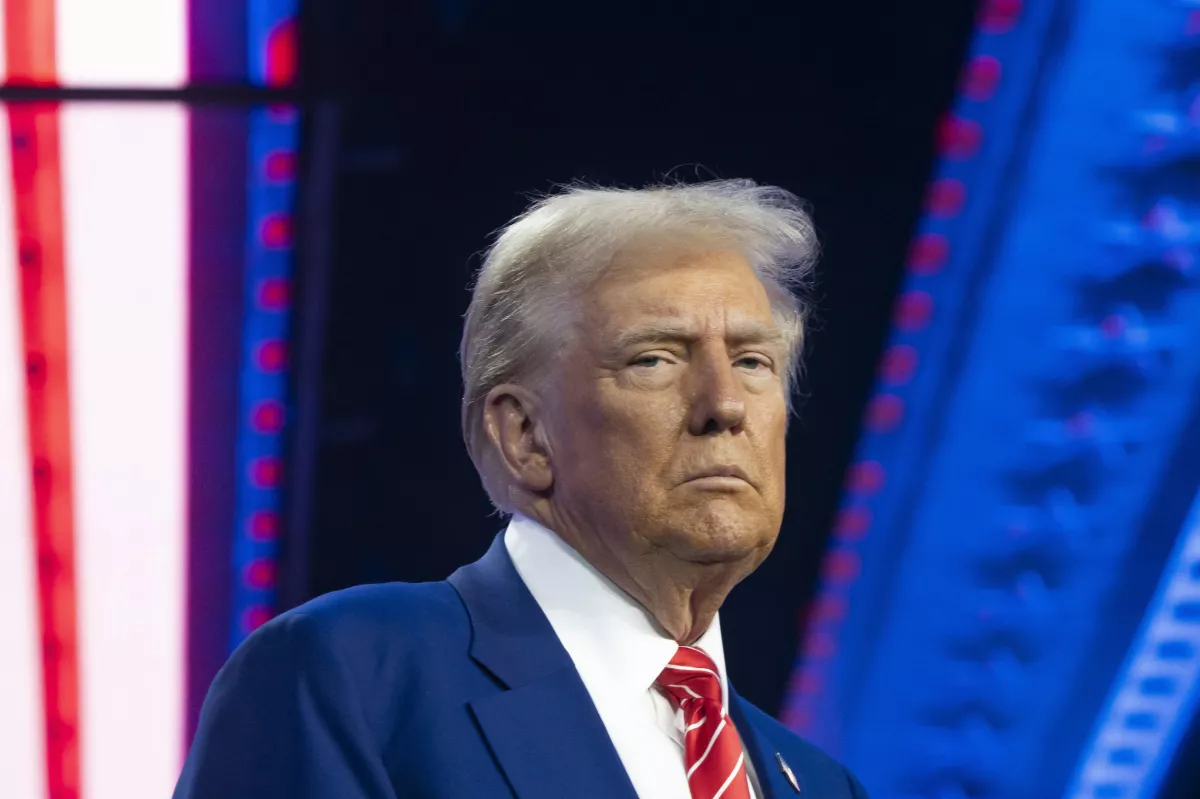
Thus, through this agreement, if it is concluded, the leaders of major world powers are not so much saving Ukraine as they are pledging loyalty to Trump,” the expert believes.
At present, there is no stable balance of power as such, he went on to say, since the global balance of power overall has been disrupted.
“Why are the negotiations so protracted and exhausting? Because it is impossible to foresee everything, yet the participants are trying to do exactly that—to calculate and codify every possible scenario and reaction. This approach is fundamentally flawed, because it is impossible to insure against all risks and anticipate absolutely everything. By the way, this becomes very clear in the context of power outages—often occurring off schedule and without warning.
So instead of endlessly prescribing scenarios and countermeasures, the parties to the peace process must—and I am confident they will—come to the understanding that what truly matters is resources and capacity. Put simply, when preparing for a journey, you certainly take risks and potential troubles into account, but you do not fixate on them; instead, you focus on equipping yourself with everything necessary to overcome those risks or avoid them altogether. This is precisely the approach Trump has demonstrated from the outset in his foreign policy, especially in the field of security. Gradually, we are moving toward it as well. The emphasis on preventing a reduction in the size of the Armed Forces of Ukraine is a clear sign of this mindset.
And what is Europe focusing on today? Judging by the story of Russian assets, it has suddenly ‘seen the light’ and decided in one stroke to boost its own financial resources, using Ukraine as a cover. The most ‘remarkable’ aspect, however, is that by freezing these assets, the European Union has effectively given Russia an excellent formal pretext for aggression. If Ukraine could be attacked because ‘it seemed necessary,’ then Europe, figuratively speaking, has already made itself culpable to the tune of 300 billion euros.
I have an unpleasant fear that Europe may ‘hand over’ Ukraine in exchange for non-aggression from Russia because of those €300 billion. I very much hope I am wrong. If I am mistaken at this point—God willing—we will see a strengthening of NATO’s eastern flank, a massive influx of money and weapons into Poland, as well as accelerated militarisation of Bulgaria, Hungary, and Slovakia. But not through EU mechanisms—rather, directly under Trump’s leadership. As an example, take a look at ‘quiet’ Romania.
If such a ‘trade-off’ is indeed taking place, then after all the documents are signed with pomp and ceremony, we may be in for a bitter disappointment.
Another point worries me as well. On December 15 in Berlin, both Zelenskyy and Merz—at least before talks with European leaders and the NATO Secretary General—spoke about the possibility of a Christmas truce as a potential (!) starting point for searching for approaches to a stable and long-term peace. ‘A ceasefire for a few days,’ Merz put it.
‘A truce as an element of security guarantees,’ Zelenskyy clarified. Thus, at the Berlin talks on December 15, the discussion was no longer about stable peace, as it was supposedly addressed earlier in Florida. If this is the case, then we are currently effectively ‘stuck’ at a zero stage—similar to the situation between Israel and Palestine in December 2024. Look at what is happening there now after the loud statements about ‘peace.’ I would not even call it a full-fledged truce. Formally—yes, the label ‘peace’ is applied, but the key contradictions in Gaza remain unresolved, as do the root causes of the conflict.
What do we have now? Leaders travelling to Berlin, meetings, phone calls—and ultimately some package of proposals to be sent to the Kremlin. But what if the Kremlin says ‘no’? And how can they respond given the effective confiscation of the ‘frozen’ assets?
A ‘no’ from Putin would mean no real obligations from other countries toward Ukraine, except perhaps $900 million from the U.S. Congress for the entirety of 2026 and abstract promises of hundreds of billions from Europe. Neither these nor subsequent consultations have so far had a significant impact on the balance of power—that is the point I am making.
The actual balance of power will be influenced by Russia’s reaction to the asset confiscations and the possible breakdown of consultations between Russia, the U.S., and China on nuclear deterrence issues.
But Ukraine needs to act quickly. Otherwise, it will be like a pre-Christmas sale: ‘grab what is available today—tomorrow even that will be gone,” Starikov concluded.

Meanwhile, Mykhailo Honchar, president of the Ukrainian Center for Global Studies “Strategy XXI” and editor-in-chief of the journal Black Sea Security, noted that within the framework of diplomatic manoeuvres, President Volodymyr Zelenskyy expressed his intention to renounce Ukraine’s NATO membership.
“At the same time, it should be understood that his word alone is not decisive. The goal of attaining membership in NATO and the European Union is enshrined in Ukraine’s Constitution, requires a constitutional majority in parliament for consideration of the matter, and cannot be overturned by a unilateral decision of the president.
Moreover, from Kyiv’s perspective, abandoning the prospect of NATO membership is only conceivable on the condition of concluding bilateral security agreements with the U.S., European countries, and possibly Canada and Japan—agreements that would essentially resemble a NATO Article 5-style mechanism. However, this raises numerous questions regarding the U.S. as the primary potential guarantor. We already have the experience of the 1994 Budapest Memorandum, and it is obvious that Ukraine does not need a new document with ‘paper guarantees’ and Donald Trump’s bold signature.
Real and solid guarantees can only come in the form of U.S. military presence and a nuclear umbrella—analogous to the U.S. defence arrangements with Japan and South Korea. At the same time, any bilateral security guarantee agreement would have to be ratified by the U.S. Congress,” the analyst explained.
He notes that it is clear the White House, having recently presented a new National Security Strategy with an isolationist and fundamentally anti-European character, is unlikely to be ready to take such a step.
“Unlike the current U.S. administration, European leaders have demonstrated a united approach, resulting in a joint document from the EU leadership and nine heads of state and government—Germany, the United Kingdom, France, Italy, the Netherlands, Finland, Sweden, Denmark, and Poland—adopted on the evening of December 15. The document addresses both security guarantees for Ukraine and the prevention of future waves of Russian aggression.
The consolidated position of Europe and Ukraine, in a context where America’s credibility on the continent has diminished, could, in essence, become the foundation for restoring peace and ending Russia’s aggression. Counting on the Kremlin’s goodwill without its military defeat is unrealistic,” Honchar believes.







 editor@caliber.az
 +994 55 444-88-98
 Азербайджан, Баку, ул. Низами, 203, Af Business House, 5-й этаж