










After a series of humiliations: Macron’s African front is falling apart Article by The National Interest
The American magazine The National Interest has published an article examining the decline of France’s influence in Africa. Below is an excerpt from the piece for Caliber.Az readers.
It is no secret that the stature of France as a world power has been diminishing. The fall has been particularly sharp over the past decade—and most obvious in the African nations where France once held great sway. In a desperate attempt to recoup goodwill, France has begun pandering and grandstanding to these nations, with mixed results. The recent Africa Forward Summit, highlighting African support of a 2015 proposal to reform the Security Council veto, is a case in point; at the summit, France trumpeted an effort that is at best symbolic, and at worst a cruel fraud on the African people.
The Africa Forward Summit in Kenya sought to promote “Africa–France Partnerships for Innovation and Growth.” French President Emanuel Macron announced $27 billion in new investments—60 percent French and 40 percent African—focused on energy, artificial intelligence, and agriculture. From the first, that rendered the Summit a poor echo of a 2022 US summit that pledged to invest more than double that amount—and, moreover, exceeded that ambitious goal within two years.
But that was not the worst part. The entire point of the Summit was, from the French perspective, less about investment than about resetting its relationship with African governments. That also went poorly.
France is on the back foot across Africa
As a once-major colonial power in Africa, France held enormous influence, and enjoyed a long-standing military presence in francophone countries as a result. Over the past decade, however, French influence has declined sharply, as its troops have been evicted, once-friendly nations have turned away from the West.
On the political front, resentment over French interference in domestic affairs and failure to bolster allied governments has contributed to successive coups and growing anti-French sentiment. Over the past five years, autocratic governments in Burkina Faso, Mali, and Niger expelled French diplomats and military forces. Relations with Chad, Cote d’Ivoire, and Senegal are similarly deteriorating. Even more worrying, many of France’s erstwhile post-colonial partners enhanced relations with Russia, including welcoming Russian mercenary groups, as they downgraded relations with Paris.
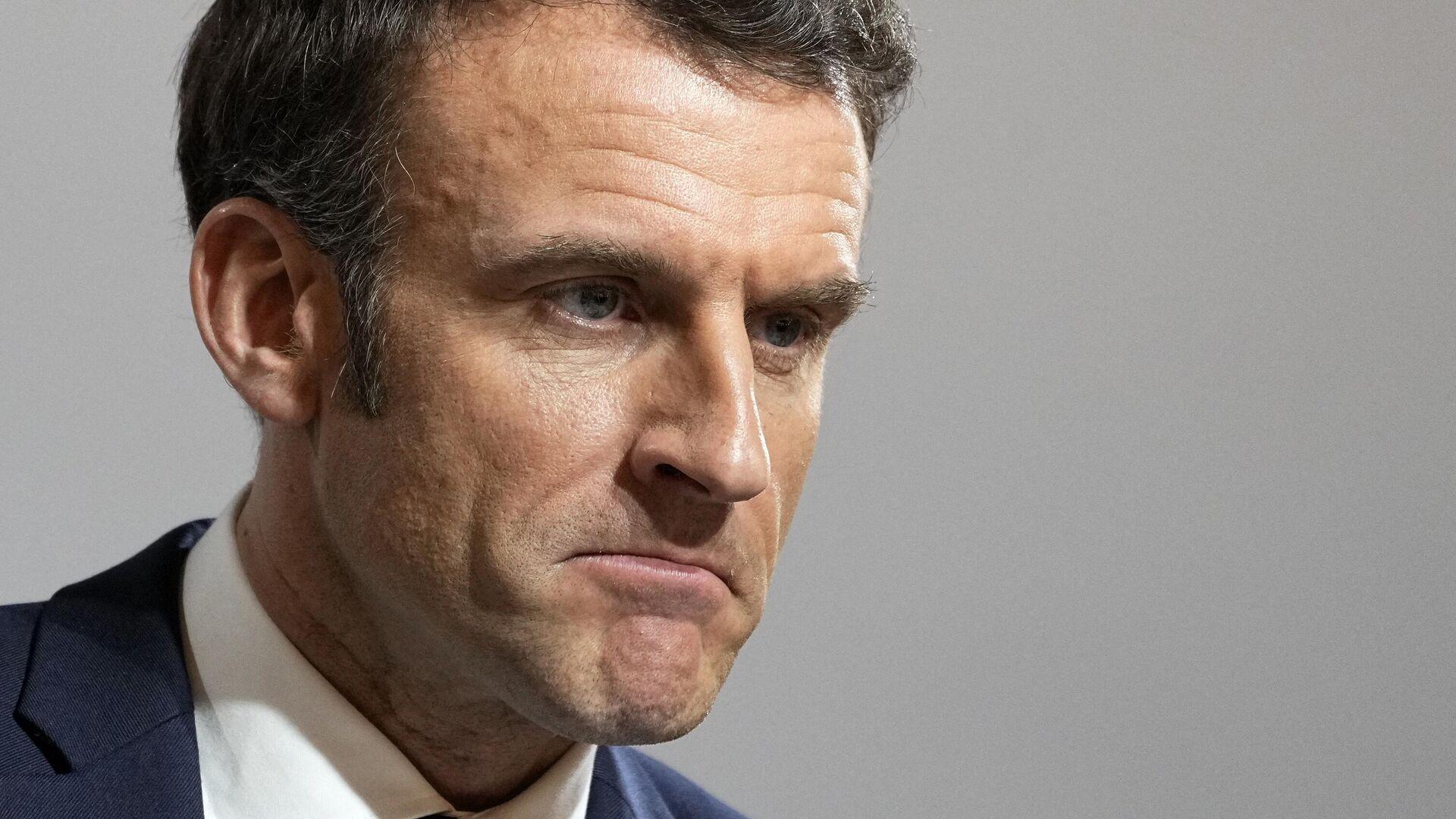
To shift this trajectory, Macron launched a diplomatic effort to repair its relationships in the region and restore its influence. In 2025 France sought to reset relations with Algeria, cement a cooperative agreement with Liberia, and expand ties with Kenya and Nigeria, which are not traditional French partners. The capstone of this effort was to be the Africa Forward Summit, where Macron emphasized the need for “mutual respect” with African governments and pledged a new partnership between France and the continent.
As with earlier diplomatic forays, where Macron criticized African nations for “ingratitude,” Macron quickly sabotaged himself by interrupting a session during the Summit to scold the attending African crowd for its “total lack of respect.” Reactions from African officials and observers were irate, pointing out the irony of the leader of France lecturing them on decorum while promising a new era of respectful relations.
Macron’s proposed UN reform
Amid the controversies and fiascoes, France touted the nominally positive news that 11 new African countries publicly came out in support of France’s 2015 proposal, co-sponsored by Mexico, for a “collective and voluntary agreement among the permanent members of the Security Council to… refrain from using the veto in cases of mass atrocities.” What exactly would constitute a mass atrocity is undefined but would rely on a determination by the UN Secretary General at the urging of at least 50 UN member states. The number of countries supporting the proposal is now 118.
It sounds impressive, but the announcement is something of a head fake.
If asked, many advocates would prefer to eliminate the veto altogether. But that is an unattainable goal. Formal limitations on the veto require an amendment to the UN Charter, which would require support and ratification by all the permanent members (China, France, Russia, the United Kingdom, and the United States). The odds that China, Russia, and the United States would support such an amendment are infinitesimal. Notably, France has not proposed giving up its own veto—even to other EU countries—because it will not give up the power to block Security Council action harmful to its interests.
Thus, the initiative does not propose formally restricting or eliminating the veto. Instead, the proposal seeks merely to pressure the permanent members of the Security Council to restrain themselves.
This starts with passing a resolution in the General Assembly with support from a large majority. It will then be presented as the “will of the international community,” and used to bully the permanent members against vetoing resolutions.
On one hand, the effort is entirely symbolic. It has no means of enforcement, but it will give America’s adversaries a cudgel with which to target American leaders and public opinion. On a deeper level, however, the effort is utterly cynical.
France has over the centuries been a great military, naval, political, and cultural power, but those great days are long gone. France last used its veto in 1989; in the decades since, it has been quite content to let America reap criticism for deploying its Security Council veto—often to the broader benefit of France and Western countries—while tsk-tsking when it sees diplomatic advantage for itself.
But France, and indeed all of Europe, needs America more than ever to carry out necessary, if unpopular, acts in our common interest. To the extent that Macron’s Security Council gambit is successful, France may end up regretting it.







 editor@caliber.az
 +994 55 444-88-98
 Азербайджан, Баку, ул. Низами, 203, Af Business House, 5-й этаж