










“Armenia is of little interest to Israel” Expert opinions on Caliber.Az
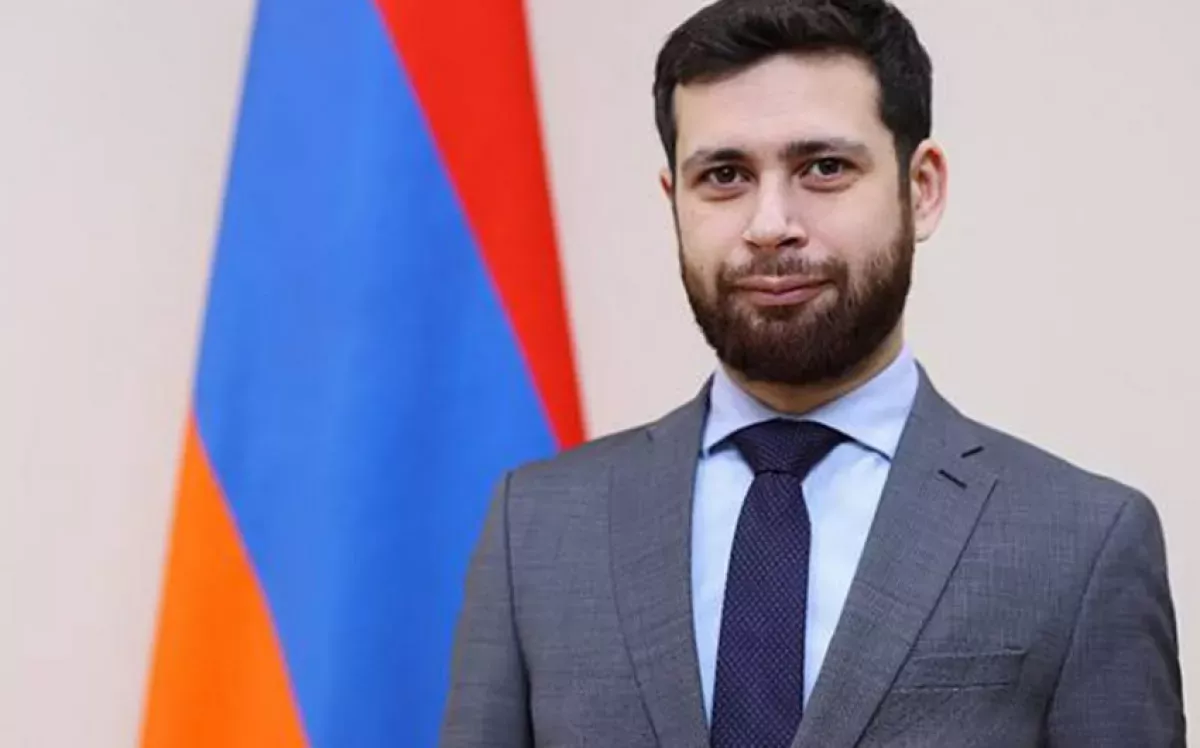
Recently, Armenian Deputy Foreign Minister Vahan Kostanyan visited Israel for a series of meetings aimed at exploring the possibility of opening a new chapter in bilateral relations, reports The Jerusalem Post. However, behind these diplomatic contacts lie deep disagreements and sensitive issues that continue to influence the interaction between the two countries.
This naturally raises the question: how realistic is it to establish normal relations between Armenia and Israel?
Caliber.Az asked well-known experts to provide their answers to this question.

Israeli journalist and historian Shimon Briman noted that there is a fundamental difference between Israel’s attitude toward Azerbaijan and its attitude toward Armenia.
“The Jerusalem–Baku line has always been our priority. The Jerusalem–Yerevan line, for many reasons, is only a secondary direction. With Azerbaijan, we share a strategic partnership as well as common geopolitical and business interests.
Armenia, on the other hand, is of little interest to Israel. Moreover, it represents a potential threat as an ally of Iran and as an air base for the transfer of Iranian cargo, often of a military nature.
Our agencies monitoring manifestations of antisemitism clearly record anti-Jewish publications in Armenia, including on social media, which are full of hostile and absurd statements. The situation is further aggravated by anti-Israel statements from some members of the Armenian community in Jerusalem. All of this leaves little chance for Israel–Armenia relations to rise above their current level.
Israel’s relations with Azerbaijan have been tested by serious challenges and have every chance of continuing to strengthen, especially since both our countries support the geopolitical direction of US President Trump,” Briman emphasised.

Russian Middle East expert Ruslan Suleymanov noted that the Armenian leadership is indeed trying to establish relations with Israel—especially now, when a fragile, yet still present, peace has been established in the Gaza Strip.
“The reaction of Israeli authorities to Armenia’s recognition of the State of Palestine is no longer as sharp. In this situation, it is possible to attempt some form of agreement. I believe this generally fits Yerevan’s policy of diversifying its foreign relations. By recognising the Palestinian state, Armenian authorities are not seeking to enter into a direct conflict with Israel. Nevertheless, building a relationship will be extremely difficult and will be accompanied by mutual distrust,” the expert said.
According to him, Israel’s main concern is Armenia’s close contacts with Palestinian factions, including the most radical groups. “On the Armenian side, there is dissatisfaction with Israel’s close relationship with Azerbaijan. Here, the parties will have to reach an understanding: contacts with third countries should not affect the development of Armenian–Israeli relations.
If (hopefully) there are no new outbreaks or escalations—neither between Israel and Palestinian radicals nor between Armenia and Azerbaijan—this would certainly create opportunities for developing bilateral ties. But, I repeat, this process will be extremely difficult: a legacy of mutual distrust will inevitably persist and hinder progress.”
Suleymanov emphasised that prospects will primarily emerge in the absence of major conflicts, when neither country is forced to immediately take sides.
“In such an environment, without active military actions in which Armenia or Israel could be directly or indirectly involved, there is a chance to build both political and economic relations—no matter how difficult. But at the initial stage, the parties will first need to earn each other’s trust,” the Middle East specialist concluded.







 editor@caliber.az
 +994 55 444-88-98
 Азербайджан, Баку, ул. Низами, 203, Af Business House, 5-й этаж