










ESA's Plato mission to mark new era in humanity's hunt for new planets
In the search for habitable worlds beyond Earth, the European Space Agency is preparing to launch its Plato satellite early next year, equipped with 26 high-precision cameras designed to scan thousands of exoplanets—planets orbiting stars outside our solar system.
Named in homage to the influential Greek philosopher (acronym for PLAnetary Transits and Oscillations of stars), the mission aims to determine how typical—or unique—our own solar system really is. As Ana Heras Pastor, the project’s lead scientist, told the Financial Times, the goal is to better understand how planetary systems form and evolve.
Plato is part of what Reid Wiseman, Commander of NASA's Artemis II mission, has described as a “golden age” of space exploration. Just last month, the Artemis crew flew around the far side of the Moon—echoing the achievements of the Apollo program more than half a century ago.
“Today’s capabilities and ambitions dwarf anything contemplated at the time of the first human lunar landing in 1969, when the only known worlds were those that orbited the Sun,” the article notes.
Revival of space race
Rapid advances in rockets, telescopes, satellites, artificial intelligence, and robotics are allowing scientists to explore space with unprecedented precision. At the same time, investment in space programs is surging—particularly in the United States and China—both of which aim to land humans on the Moon by the end of the decade.
These ambitions are also driven by the promise of a future “lunar economy.” Consultancy PwC estimates that activities such as mining and tourism could generate between $94 billion and $127 billion in cumulative revenues by 2050.
Meanwhile, privately funded ventures backed by billionaires, like Elon Musk and Jeff Bezos, are bringing space travel within reach—at least for a wealthy few—while scientists continue searching for signs of life elsewhere, including in the cloud-covered atmosphere of Venus.
Search for answers
Since the first confirmed discovery of an exoplanet, astronomers have identified more than 6,000 such worlds—a tiny fraction of the estimated 100 billion planets in the Milky Way.
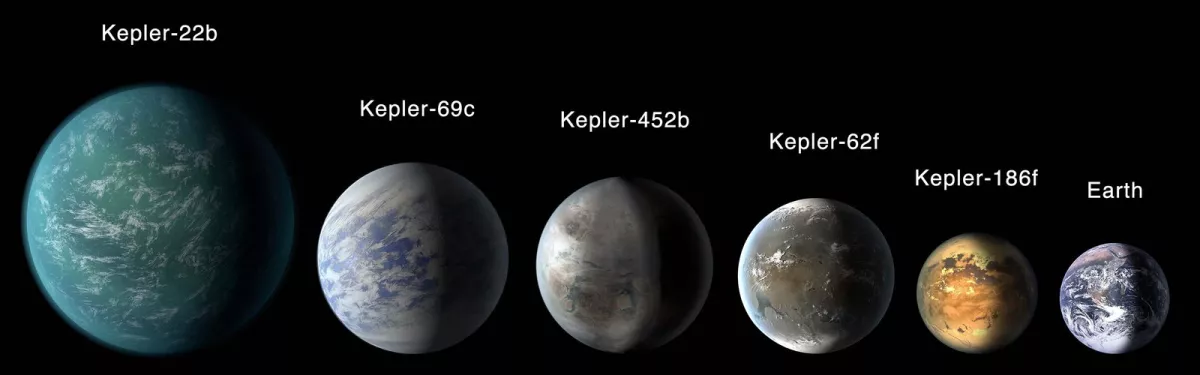
Studying these distant planets could reveal new insights into Earth’s own climate and geological systems. The cataloguing of exoplanets is also part of a broader effort to detect extraterrestrial intelligence, with radio telescopes scanning the cosmos for possible signals.
According to Lisa Kaltenegger, the Director of the Carl Sagan Institute, these discoveries can reshape how we understand planetary environments. She points to the work of Carl Sagan, who helped demonstrate that Venus is extremely hot due to a runaway greenhouse effect caused by its carbon dioxide-rich atmosphere.
Yet knowledge of exoplanets remains incomplete, and scientific debates are ongoing. One example is K2-18b, a planet located 124 light-years from Earth. Initial findings suggested possible signs of biological activity, described as the strongest evidence yet of extraterrestrial life. However, subsequent studies have cast doubt on those claims.
“We’re trying to figure out how those planets actually work on a fundamental level,” Kaltenegger says.
Despite rapid progress, the vast distances involved remain a major barrier. The closest known exoplanet lies more than four light-years away. By comparison, the Voyager 1—launched in 1977—has only just reached a distance equivalent to one light-day from Earth.
By Nazrin Sadigova







 editor@caliber.az
 +994 55 444-88-98
 Азербайджан, Баку, ул. Низами, 203, Af Business House, 5-й этаж