










Germany’s auto cities face deep budget strains as carmakers falter
Germany’s leading automotive cities are confronting mounting financial pressure as struggles at major carmakers sharply reduce local tax revenues, forcing municipalities to cut services, raise fees and borrow heavily.
Wolfsburg, Ingolstadt and Stuttgart — home to Volkswagen, Audi and Mercedes-Benz — have long ranked among Europe’s wealthiest regions, buoyed by strong exports and robust corporate profits.
That prosperity is now under strain as weaker overseas demand, higher energy and labour costs, and the industry’s transition to electric vehicles erode earnings, Deutsche Welle reports.
The impact is being felt directly in municipal budgets. In Ingolstadt, expected tax revenues for 2025 have fallen to less than half of earlier projections. Stuttgart has warned of a shortfall close to 40% compared with 2024, while Wolfsburg is still seeking ways to close its funding gap.
“The city is in a deep financial crisis. There’s no other way to put it,” said Dorothea Deneke-Stoll, Ingolstadt’s deputy mayor.
Across Germany, cities rely heavily on commercial taxes to finance public services. While tax revenues rose slightly between 2023 and 2024, growth failed to keep pace with inflation. Rene Geissler, a researcher at the Technical University Wildau, described this as a worrying trend.
“There’s a stagnation of tax revenues,” he told DW, calling it “a negative signal, because in a healthy economy tax revenues are always growing.”
At the same time, spending pressures have intensified due to migration, an ageing population and expanded social benefits. The Association of German Cities has warned that municipal deficits could reach €30 billion in 2025, surpassing last year’s record shortfall.
The downturn is particularly acute in car-dependent cities. Audi and its parent Volkswagen have struggled with declining sales in China, including a 10% year-on-year drop in deliveries in the first half of 2025. Suppliers have also been hit.
“We recognize of course that the auto industry is in a period of transformation, with the move to electric vehicles and other areas that go with it,” Deneke-Stoll said. “That also affects suppliers in Ingolstadt, and that contributes to the larger picture.”
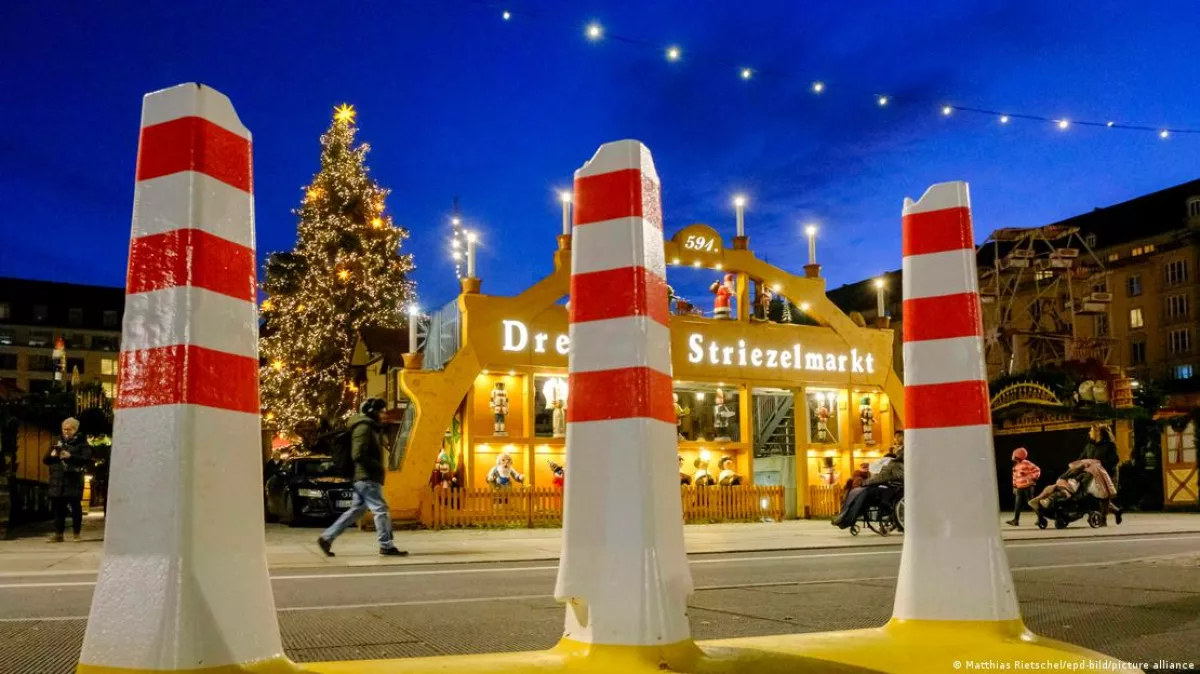
In Ingolstadt, the projected deficit has ballooned to €88 million between 2026 and 2029, nearly three times initial estimates. The city is cutting public events, trimming services and has even cancelled the purchase of Christmas trees for public spaces.
“That’s been a big point of contention in the city council,” Deneke-Stoll said of potential property tax increases. “But by my calculations we can’t avoid going down that path.”
Other cities are also rethinking spending. In Friedrichshafen, home to parts supplier ZF, shrinking dividends have forced sharp increases in childcare fees. Monthly costs are set to double or triple by 2026, prompting concern among residents.
“I think that in the car cities, in what was until recently a very modern industry — good pay, good factories, a big budget with lots of community services and a good quality of life — that probably won’t be easy to hold onto,” Geissler said.
Despite the challenges, local officials insist long-term prosperity is not at risk. “I wouldn’t say the city’s prosperity is in danger,” Deneke-Stoll said. “But there will be spending cuts that residents will see and feel.”
By Aghakazim Guliyev







 editor@caliber.az
 +994 55 444-88-98
 Азербайджан, Баку, ул. Низами, 203, Af Business House, 5-й этаж