










Historic EU visit to Jordan leaves both sides securing gains for own agenda
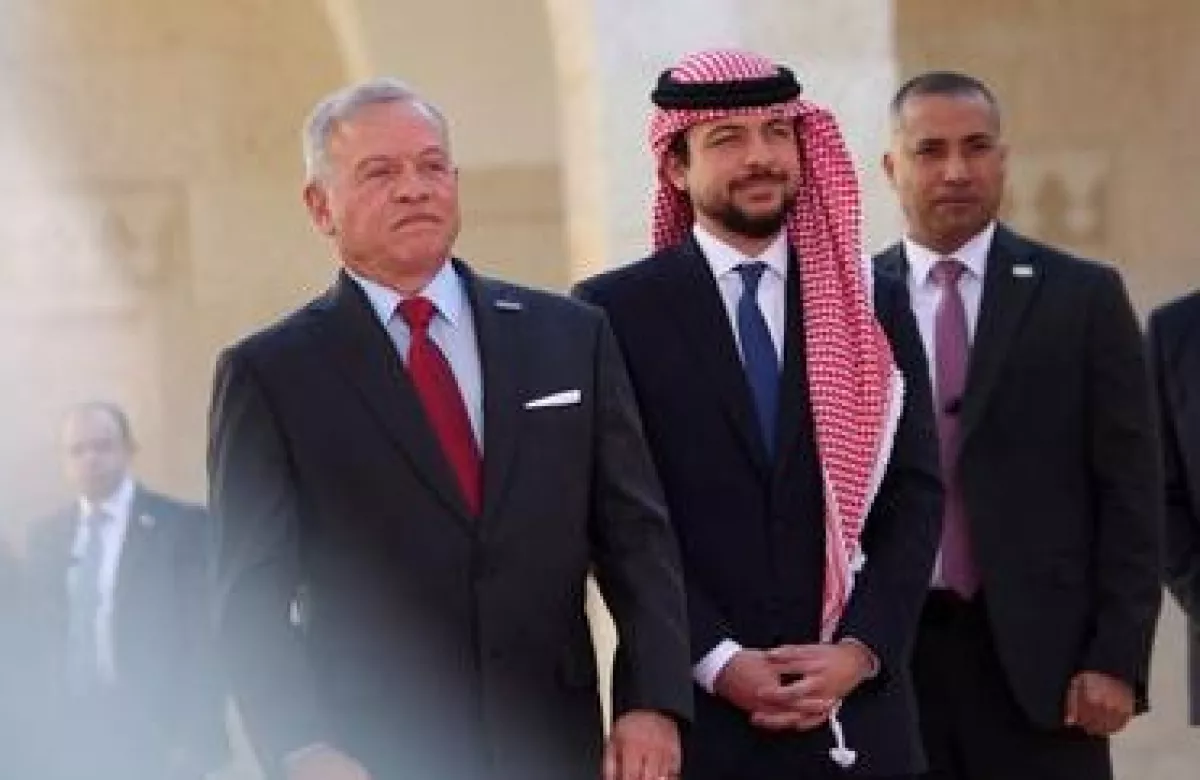
EU leaders gathered in the Jordanian capital, Amman, on January 8 for the inaugural EU-Jordan summit, a meeting that highlights Europe’s effort to reassert its influence in a region marked by conflict and mass displacement. European Commission President Ursula von der Leyen and European Council President Antonio Costa arrived at Jordan’s Al Husainiyah Palace, where they were received by King Abdullah II bin Al-Hussein and Crown Prince Hussein bin Abdullah. Throughout the visit, all sides stressed their commitment to strengthening cooperation between the European Union and the kingdom.
Momentum for closer relations was already building with the signing of the EU-Jordan Strategic and Comprehensive Partnership in January 2025. Supported by €3 billion allocated for the 2025–2027 period, the agreement is designed to assist Jordan in areas including security, economic resilience and migration management, as noted in an analysis of the relationship published by DW.
For Jordan, the partnership carries significant weight, according to geopolitical expert Amer Sabaileh. Speaking to DW, he pointed out that the country has long struggled with the pressures of hosting large refugee populations. Over the years, Jordan has taken in Palestinians, as well as Iraqis, Yemenis and Sudanese displaced by conflict. More recently, it has become the main destination for Syrians fleeing civil war, and the United Nations estimates that around 500,000 Syrian refugees still live in Jordan’s cities and camps.
“Having the EU as a partner today helps ensure that Jordan can face these challenges today and in the coming years with a clear vision, expertise and, above all, the financial support the country urgently needs,” Sabaileh says.
The summit delivered concrete financial signals that Amman had been seeking. Both sides announced plans for an investment conference in April aimed at identifying opportunities in sectors such as security, defence, education and youth empowerment. The emphasis is on initiatives that extend beyond emergency refugee assistance and address the broader economic hardship affecting Jordanians. Unemployment currently stands at over 14%, with rates even higher among young people and women.
European interests in Jordan
From the EU’s perspective, closer ties with Jordan also offer clear advantages. The bloc sees the kingdom as a dependable and stable partner in a region increasingly defined by turmoil, Jordanian political analyst Labib Kamhawi told DW. By supporting Jordan in its role as a major refugee host country, the EU has helped improve living conditions for hundreds of thousands of displaced people through sustained humanitarian and financial assistance. Since 2011, more than €4 billion has been channelled into humanitarian aid and macro-financial support to help Jordan manage the consequences of the Syrian conflict.
At the same time, Kamhawi argues that this funding has served an additional purpose: reducing the likelihood that large numbers of refugees will attempt to reach Europe. That goal aligns with the EU’s increasingly restrictive migration policies in recent years.
Both sides now say they want to deepen their cooperation further. Jordan and the EU expressed support for engaging politically and economically with the Syrian government to “provide an environment for the safe and voluntary return of Syrian refugees,” Jordan’s Foreign Minister Ayman Safadi said at a post-summit press conference.
Preventing future refugee flows is a shared priority, Kamhawi adds, particularly amid fears of renewed displacement linked to developments in the West Bank, including the possibility of Israeli annexation.
This concern feeds into another key motive behind Europe’s engagement with Jordan. In recent months, the EU has struggled to carve out a meaningful role in diplomacy surrounding the war between Israel and Hamas. Jordan has long presented itself as a strong advocate for Palestinian rights, and both Amman and Brussels officially back a two-state solution.
By working more closely with Jordan, EU leaders hope to strengthen their influence in discussions on Gaza’s future, including efforts to secure a ceasefire and lay the foundations for longer-term peace.
The Amman summit also forms part of a broader regional tour by EU leaders. Following their visit to Jordan, von der Leyen and Costa are expected to travel to Lebanon and Syria, where additional financial assistance is likely to be announced, while EU foreign policy chief Kaja Kallas is visiting Egypt.
By Nazrin Sadigova







 editor@caliber.az
 +994 55 444-88-98
 Азербайджан, Баку, ул. Низами, 203, Af Business House, 5-й этаж