










Pakistan's decades-long record of mediating between rival powers
News emerged this week that the Pakistani government, backed diplomatically by Ankara and Cairo, has been relaying messages between Washington and Tehran as efforts continue to edge toward ending the ongoing conflict. While both sides have welcomed Islamabad’s mediating role, this is familiar ground to Pakistan, as it has played a central part in numerous diplomatic efforts over the past decades.
Pakistan helped broker the secret US-China backchannel in 1971 and acted as a key interlocutor in the Geneva Accords that facilitated the withdrawal of Soviet troops from Afghanistan in the 1980s. It also supported talks leading to the 2020 Doha Agreement between Washington and the Taliban and, across successive governments, has tried to mediate between Saudi Arabia and Iran.
While it remains uncertain whether the latest diplomatic push will yield anything lasting, an article by Al Jazeera examines why Pakistan continues to reappear as a diplomatic broker during major conflicts.
“Pakistan’s story is told most often through the prism of conflict,” says Naghmana Hashmi, a former Pakistani ambassador to China. “Yet beneath the headlines of coups, crises, and border skirmishes runs a quieter, more consistent thread: a state that has repeatedly tried to turn its geography and Muslim-world ties into diplomatic leverage for peace,” she told the Qatari outlet.
Since the launch of Operation Epic Fury, the US-Israeli air campaign that began in late February 2026 and killed Supreme Leader Ali Khamenei within days, Islamabad has quietly but significantly inserted itself into the crisis, engaging in calls and meetings with key regional actors.
Prime Minister Shehbaz Sharif has held multiple conversations with Iranian President Masoud Pezeshkian. Army Chief Field Marshal Asim Munir has reportedly spoken directly at least once with President Donald Trump. Both Sharif and Munir have also travelled to Saudi Arabia, which signed a mutual defence agreement with Pakistan in September last year, hosts a US base, and has recently faced Iranian attacks.
Pakistan's Foreign Minister Ishaq Dar confirmed on March 25 that Islamabad is conveying a US 15-point ceasefire proposal to Tehran, with Türkiye and Egypt offering additional diplomatic backing, as the US-Israeli war against Iran enters its second month. Chief US negotiator Steve Witkoff also confirmed this week that Pakistan has been passing messages between Washington and Tehran.
Islamabad's mediating experience
As the Al Jazeera article recounts, then-US President Richard Nixon visited Pakistan in August 1969 and quietly asked the country’s military ruler, President Yahya Khan, to deliver a message to Beijing: Washington sought to open communication with the People’s Republic of China.
Pakistan was selected for this role because it maintained working relationships with both Washington and Beijing.
Winston Lord, who served as Kissinger’s aide and was on the flight to Beijing, described the decision in a 1998 oral history interview conducted by the Association for Diplomatic Studies and Training.
“We finally settled on Pakistan. Pakistan had the advantage of being a friend to both sides,” he said. Two years of indirect exchanges followed, with Pakistani officials carrying messages between the two capitals.
Then, in July 1971, Kissinger arrived in Islamabad during a public tour of Asia. In the early hours of July 9, Yahya Khan’s driver transported Kissinger and three aides to a military airfield, where a Pakistani government aircraft awaited them along with four Chinese representatives. The plane flew overnight to Beijing, while a decoy convoy headed toward the hill resort of Nathia Gali, about three hours from Islamabad.
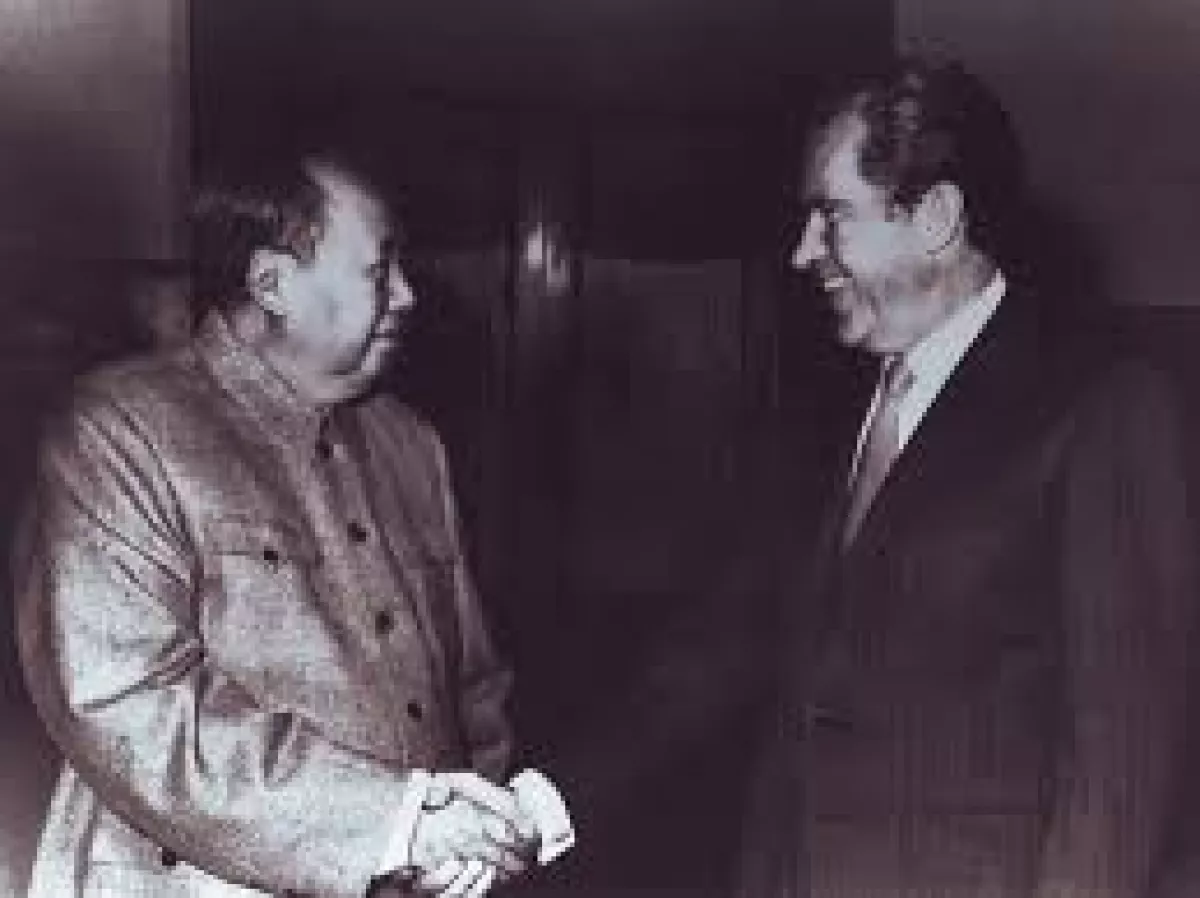
Kissinger spent 48 hours in talks with Chinese leader Zhou Enlai before returning to Pakistan. The trip paved the way for Nixon’s visit to Beijing in February 1972, and the well-known handshake with Mao Zedong that ushered in détente and US recognition of communist China.
Masood Khan, who later served as Pakistan’s ambassador to the United States and the United Nations, says the episode reflected something deeper.
“In 1971, Pakistan was the only country that could be trusted simultaneously in Washington and Beijing with a very sensitive mission, which was kept secret even from the State Department,” he told Al Jazeera.
“But beyond trust, Pakistan had also acquired the requisite strategic manoeuvrability and operational flexibility that suit interlocutors caught in an apparently irredeemable situation,” Khan added.
Muhammad Faisal, a Sydney-based foreign policy analyst, described it as Pakistan’s defining diplomatic moment.
“Pakistan’s facilitation of the US-China backchannel is unambiguously the most consequential. It restructured Cold War geopolitics in ways that still define the international order. No other Pakistani facilitation comes close in scale or permanence,” he points out.
Soviet-Afghan war
Another episode that highlighted Pakistan’s mediating capabilities came in the 1980s following the Soviet military intervention in Afghanistan. The Soviet-backed Kabul government faced resistance from Afghan mujahideen, who were supported militarily and financially by the US, Saudi Arabia, and China. Pakistan acted as the primary conduit for this support, with Al Jazeera recalling the role of its Inter-Services Intelligence agency in coordinating the resistance.
From June 1982, a United Nations-mediated process began in Geneva. As Pakistan did not recognise the Soviet-backed Kabul government, negotiations were conducted indirectly. The Geneva Accords were ultimately signed on April 14, 1988, by the foreign ministers of Afghanistan and Pakistan, with the United States and the Soviet Union acting as guarantors. They established a timeline for Soviet withdrawal, which was completed by February 1989.
As Khan noted, Pakistan occupied a dual role in those negotiations. “It was both a stakeholder and a mediator,” he said, which is a dynamic that would shape Islamabad's Afghan policy for decades to come.
Evolving Taliban
Geographic proximity, along with deep cultural and historical ties to Afghanistan, continued to drive Pakistan’s involvement in its neighbour's developments .
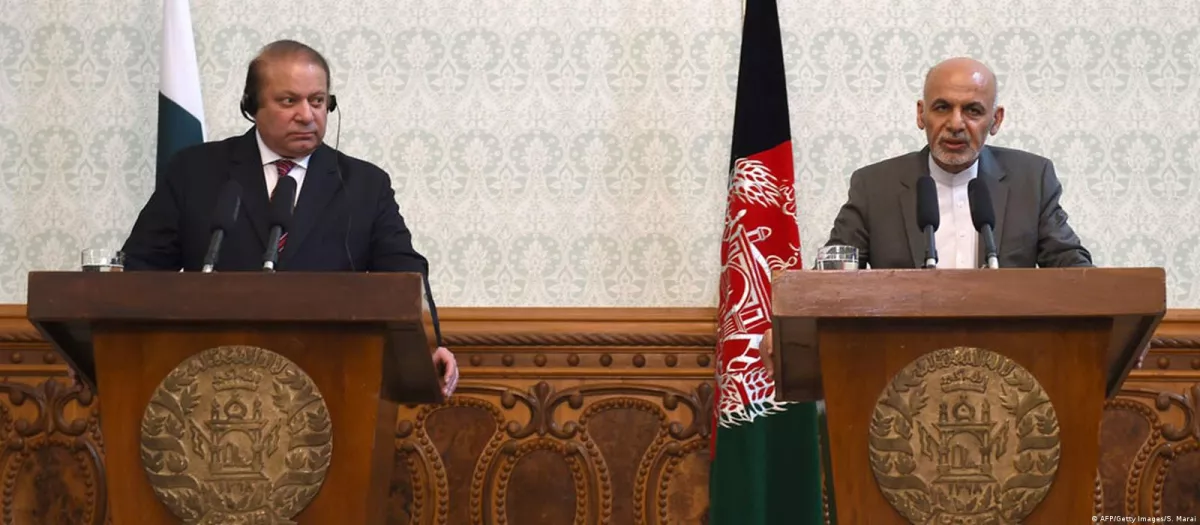
Nearly three decades later, in July 2015, Pakistan hosted the first officially acknowledged direct talks between the Taliban and the Afghan government of then-President Ashraf Ghani in Murree, near Islamabad, with US and Chinese officials present as observers. Pakistan also contributed to the subsequent US-Taliban negotiations that culminated in the Doha Agreement in 2020.
Recurring diplomacy
Faisal links Pakistan’s recurring diplomatic role to enduring structural factors.
“Pakistan’s access is linked to its geography and its regional relationships amid many fault lines that it straddles,” he told the outlet.
“Iran cannot ignore Pakistan because it is home to the largest Shia population outside Iran. For the US, ignoring Pakistan, a nuclear-armed Muslim-majority nation straddling the broader Middle East and South Asia with close ties to China, comes at its own risk.”
Khan dismisses the suggestion—raised by some analysts—that Pakistan’s mediation is primarily driven by Washington.
“To suggest that Pakistan has always opted for mediation at the behest of the US is a reductive construct. Mediation is in the DNA of Pakistan’s diplomacy,” he said.
“Pakistan does not pursue bloc politics and prefers to maintain equidistant relations with Washington, Beijing, Tehran, Riyadh, and other Gulf states. It is aligned, but not a camp follower.”
Still, the current effort to mediate with Iran carries higher stakes than many recent initiatives.
“Pakistan now enjoys trust in Washington, Tehran and the Gulf capitals,” Khan said. “No other country in the region has that kind of leverage.”
By Nazrin Sadigova







 editor@caliber.az
 +994 55 444-88-98
 Азербайджан, Баку, ул. Низами, 203, Af Business House, 5-й этаж