










Path to war: dismantling global arms control system Treaties fall, tensions rise
Next week will mark the completion of the dismantling of the global nuclear arms control system. At the same time, the process of the breakdown of conventional arms control—ranging from anti-personnel mines to cluster munitions and missiles—is rapidly accelerating. This is paralleled by the literal bankruptcy of the UN and its peacekeeping activities. All of this is logically complemented by the de facto recognition by world powers of the possibility of revising borders and using war as a legitimate means of resolving disputes. The liberal triumph of recent decades has brought the current world order to complete collapse.
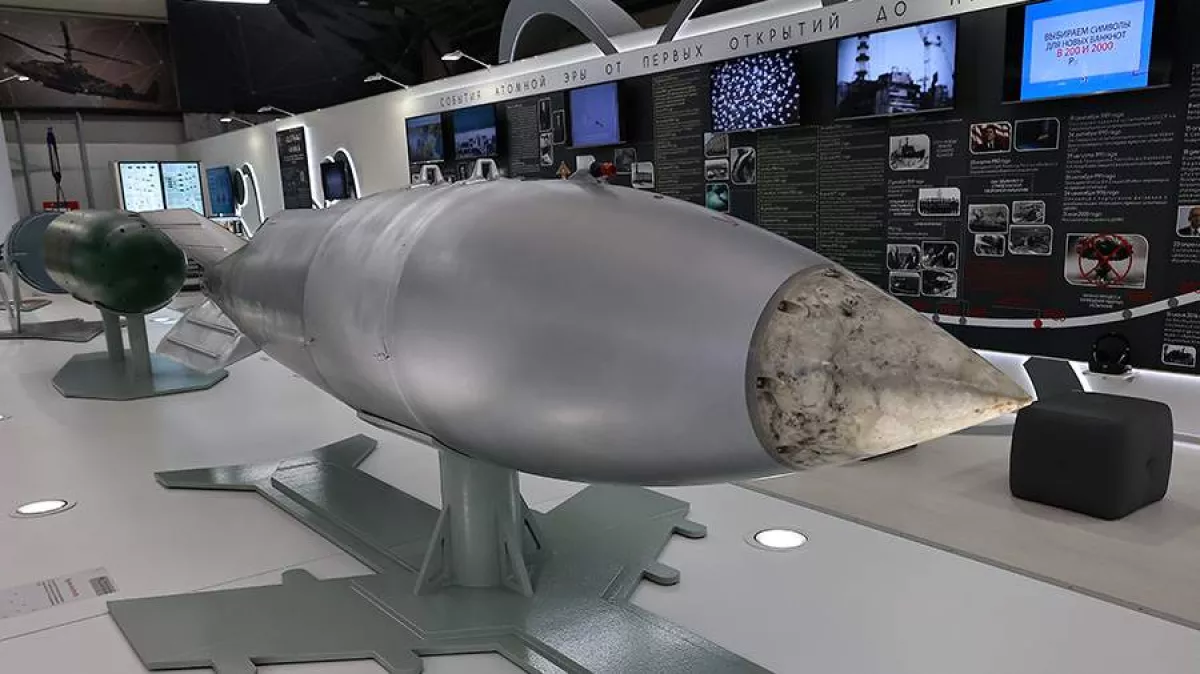
Nuclear power and objective helplessness
On February 5, the so-called “civilised community” will roll back half a century. With the expiration of the nuclear arms reduction treaty between the United States and the Russian Federation (New START), the last document limiting nuclear weapons will cease to be in effect. Formally, the Russian side suspended the treaty earlier, citing non-compliance by its American partners back in 2023, during President Biden’s term. However, at that time, Moscow and Washington promised to adhere to the main quantitative limits of the treaty until its expiration in February 2026.
The Kremlin had clearly counted on the new American president agreeing to a deal on nuclear weapons, as well as on other sensitive issues such as Ukraine.
It has now become obvious that Trump has no intention of making such deals on any major issues, and is simply “pressuring” everyone, including Russia. Just recently, he himself stated that the START treaty has “many weaknesses” and that “the negotiators did a poor job.” Trump is unhappy that, under the treaty, the U.S. has 3,700 warheads while Russia has 4,309. This ratio was originally justified by the fact that other U.S. allied nuclear powers (France and the UK) are aimed at Russia, but now their coordination with Washington is weakening, giving Trump new arguments in favour of a revision.
In any case, Moscow miscalculated in its plans to improve its strategic position under Trump. And now, the Deputy Chairman of the Russian Security Council, Dmitry Medvedev, laments that “Donald Trump has been politically unstable from the start.”
However, the issue is not only about START—it is also about the absence of a replacement and even the prospects of creating one. Negotiations are not just stalled—the major powers, in particular the U.S., China, and EU countries, show no desire whatsoever to reach any agreement in this area.
Instead, everyone is betting on gaining certain strategic advantages through dangerous games with nuclear weapons. Russia has invested in hypersonic missiles capable of carrying nuclear warheads. The U.S. is developing the “Golden Dome for America” missile defence project. This rejects the perfectly logical concept of the inseparable link between offensive and defensive strategic weapons, on which the strategic arms control system had stood until now: it effectively neutralised the threat of a nuclear strike for decades, guaranteeing that there would be no winners in a nuclear clash. Both Russia and the U.S. are simultaneously talking about the possible resumption of nuclear testing. Russian strategists like Karaganov even coyly hint at the potential use of nuclear weapons.
Sounds powerful? Don’t rush to conclusions. Dynamic investments in nuclear weapons are dangerous for the world, but they do not actually indicate the might of superpowers. On the contrary. Recent history shows that those who frantically build up nuclear arsenals are often acting out of a sense of weakness—sometimes right on the eve of collapse.
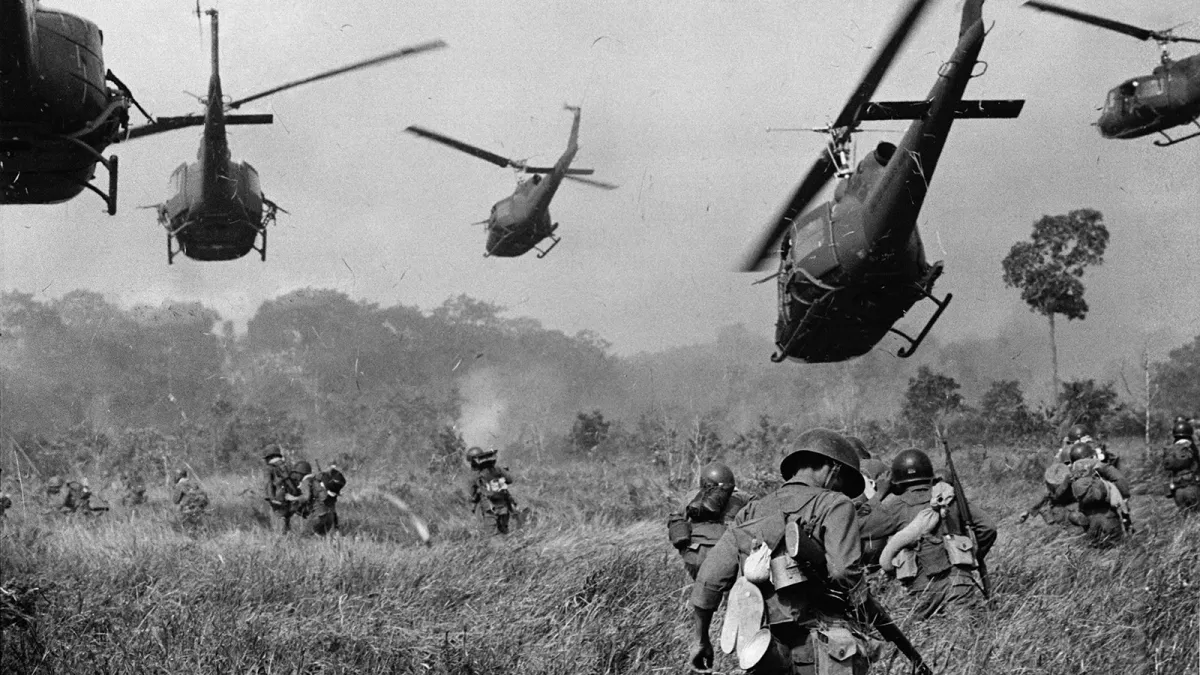
If we look at the simple metric of the number of warheads, we see that the U.S. had its peak in 1967—31,255 warheads—at a time when America was mired in the quagmire of the Vietnam War, retreating in Latin America, and facing endless waves of protests, racial riots, and civil disobedience—with shootings and bodies in the streets. The U.S. managed to hold on, although it was far from certain—veterans were burning their medals, and the Watergate scandal brought the government to the brink of moral collapse. Washington invested heavily in nuclear weapons precisely out of a sense of insecurity, recognising that only by sheer mass of warheads could it counter the USSR, which had just achieved a series of major successes in space and therefore, by default, possessed more effective missile delivery systems for nuclear warheads.
The Soviet Union also reached the peak of its nuclear arsenal at a very interesting moment, with the maximum number of warheads (40,159) in 1986. Even then, some understood that achievements in nuclear weapons were masking the “gaping heights” of the USSR’s failures in other areas, giving rise to the metaphor of “Upper Volta with rockets.” Of course, this was more hyperbole than metaphor, yet the country did indeed collapse at precisely that peak.
For this reason, the current reliance on nuclear weapons is more a symptom of problems among the world’s powers than a demonstration of strength. And this is indeed the case, as evidenced by fundamental issues such as the U.S.’s enormous national debt and internal instability—the government remains trapped in “budget wars” and is on the brink of another funding shutdown, the population is growing poorer, the central bank (the Federal Reserve) and state authorities openly challenge the president, and opposition forces and law enforcement regularly clash, even using weapons. Just as the crisis in California was resolved, another erupted in Minnesota. Such intensity of confrontation across so many levels would have been unthinkable even a decade ago. In other words, any superpower could turn into an “Upper Volta with rockets.”
EU—a “paradise” surrounded by minefields
Meanwhile, the international system for controlling conventional weapons is also collapsing. For example, over the past year alone, six countries withdrew from the 1997 Mine Ban Treaty (the Ottawa Convention). These include Poland, Lithuania, Latvia, Estonia, Finland, and Ukraine. All of them have now begun installing large-scale minefields along their borders with Russia and Belarus.
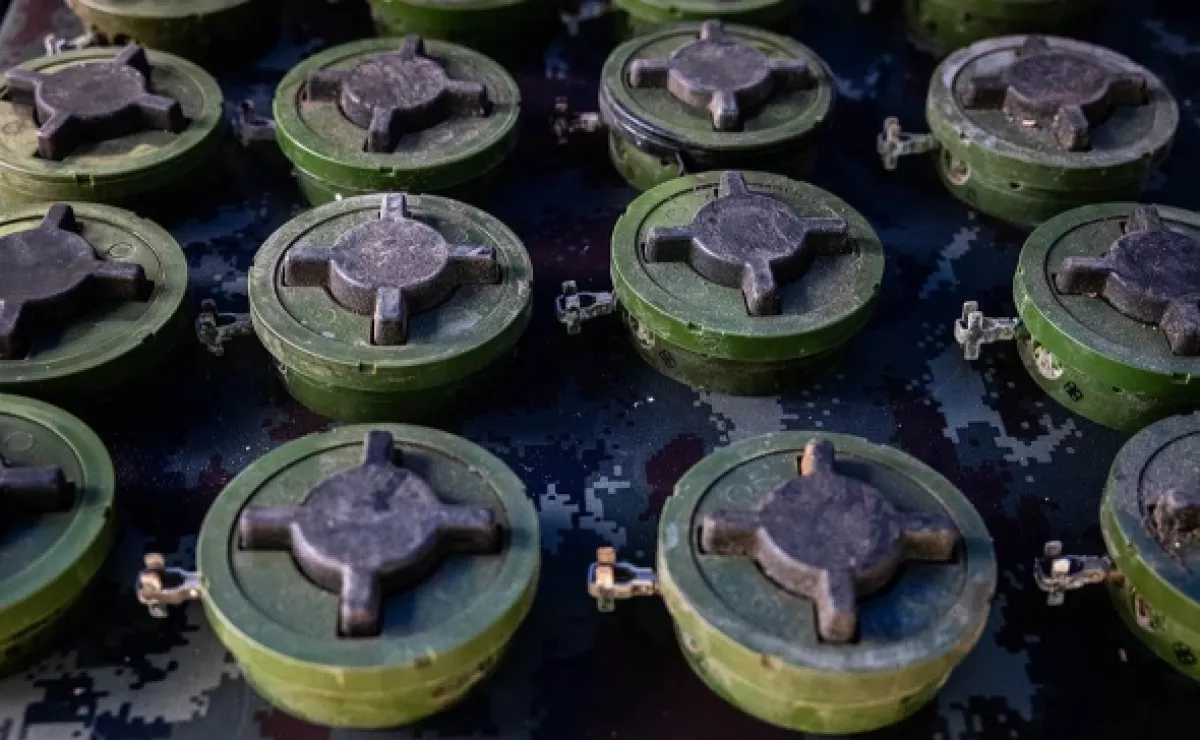
At the same time, Lithuania also withdrew from the Convention on Cluster Munitions, which, along with the Ottawa Convention, is considered one of the most important documents of humanitarian law, since all these types of weapons, due to their indiscriminate effects, primarily target civilians. This is clearly seen in the heavy legacy left by Armenian nationalists in the territories of Azerbaijan they once occupied—mines did not stop the Azerbaijani army, but they created obstacles for civilian life (though, on the occupied lands, nobody had seriously intended to restore it before liberation). In general, the problem is widely known, and it is telling that the Eastern Europeans succeeded in pushing for its reconsideration.
Although these countries all belong to the same region, the combination of these efforts, amplified by EU support, creates a strong momentum for undermining the Ottawa Convention. Especially since it had already been weakened by the refusal of the U.S., Russia, and China to join. Indeed, as soon as the decision of the Eastern European countries to withdraw from the Ottawa Convention became known, the influential British think tank Policy Exchange (affiliated with the leading Conservative Party) published a report calling on the government to leave both the Ottawa Convention and the Convention on Cluster Munitions. The reasoning was telling: “After a number of our NATO allies in eastern and north-eastern Europe have recently signalled their intent to pull out, the UK must show solidarity with these front-line states by doing the same.” This was not a marginal opinion from talking-head political scientists—the call was supported by well-known politicians such as Ben Wallace, the former Secretary of Defence and Minister for Security.
In other words, there are no “small countries” in international politics. As we can see, it is precisely the states that Russia likes to dismissively call “limitrophes” and fantasise about bypassing that have achieved tangible shifts in European policy, even at the level of armaments.
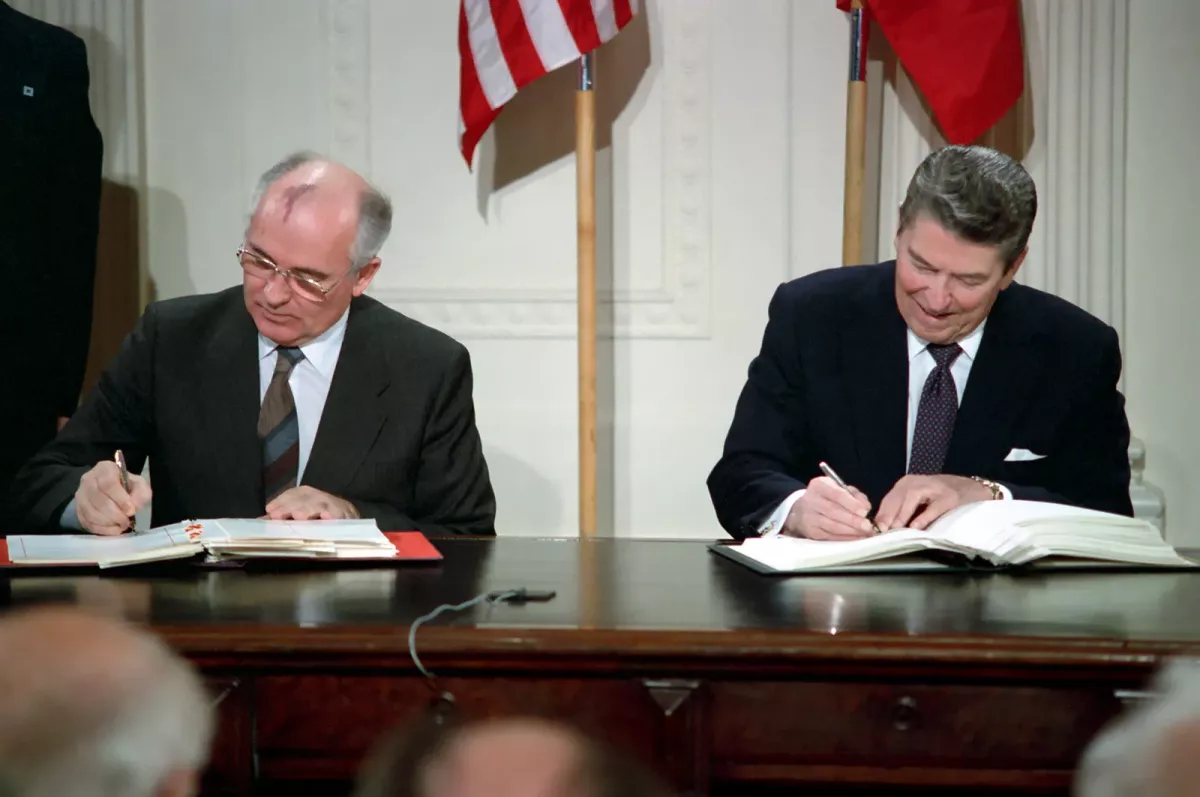
Another example of this is, incidentally, the destruction of the Intermediate-Range Nuclear Forces Treaty (INF Treaty). Its signing in 1987 was a decisive contribution to strategic stability in Eurasia for a simple reason. Fewer, more visible, and expensive long-range missiles are difficult to redeploy due to the bulkiness of their launch platforms or the need to construct specialised infrastructure. In contrast, short- and intermediate-range missiles (from 500 to 5,500 km) can be moved quickly and discreetly to the very borders of an adversary, from where they can strike more accurately due to reduced distortions, shorter flight times, and fewer opportunities for counteraction by the opponent.
The INF Treaty was unique in that it mandated the complete elimination of these types of weapons, followed by regular mutual inspections. This created decades of groundwork in Europe for peace and mutual trust, even amidst conflicts.
But after the onset of confrontation between Russia and the collective West, the INF Treaty began to falter. Russia and the U.S. started accusing each other of developing systems that violated the agreement.
In 2019, Washington suspended its participation in the INF Treaty, and Moscow did the same, while promising not to deploy intermediate- or short-range missiles in Europe or other regions as long as American systems were not deployed there. Notably, after the treaty’s suspension in 2019, the European Union called on the superpowers to preserve it, emphasising that the termination of the agreement leaves the European continent vulnerable to the threat of a renewed arms race. China issued a similar appeal.
Nevertheless, the INF Treaty could not be saved, and in August of last year, Russia abandoned its unilateral moratorium on the deployment of such missiles.
However, European strategic stability has suffered no less from the fact that the INF Treaty’s provisions are no longer being observed by several countries along Russia’s borders. These systems are becoming increasingly inexpensive, and it is now possible to launch them even from simpler platforms. As a result, Eastern European NATO members and allies, in coordination with the U.S., are seeking to acquire the corresponding systems. Ukraine already has them.
Liberalism’s illusory “triumph” pushes world to major war
The open bet on militarisation reflects the uncertainty of international community members about the preservation of the world order in its previous form. These very investments in weapons and military power also create the conditions for its further destruction through the forceful resolution of international issues, including openly imperialist policies. An example of this has been the normalisation of territorial claims and claims to spheres of influence. The same applies to overt threats of war, which are no longer perceived as fundamental violations of international law.
Against the backdrop of a growing list of U.S. territorial claims and military operations conducted to protect American economic interests, the Russian side has also set aside its ostentatious concern for international law.
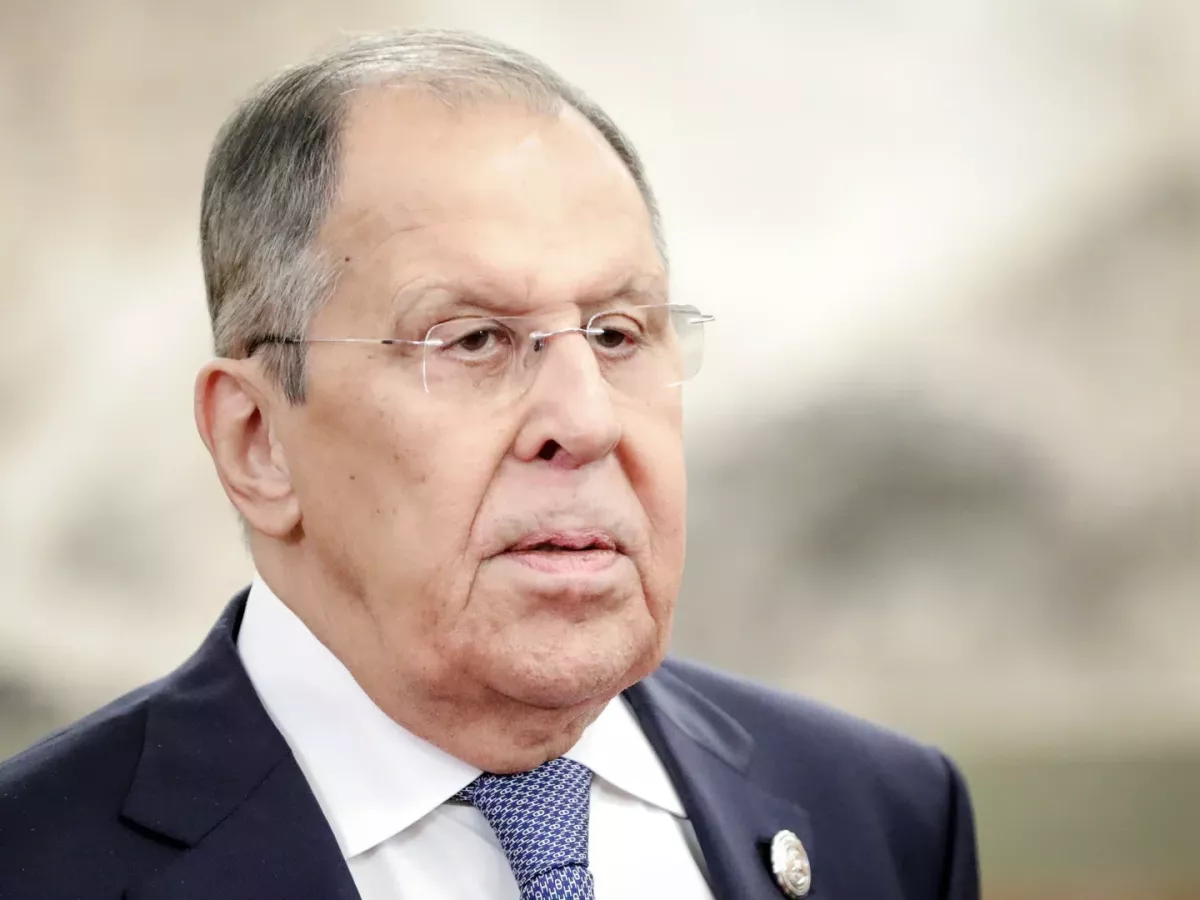
On January 29, Russian Foreign Minister Sergey Lavrov stated that “Russia has submitted a request to the UN to recognise the right of the peoples of Donbas and Crimea to self-determination, analogous to Greenland, which the United States claims.”
Indeed, this move reflects emerging trends in international politics. The European Union appears to be effectively preparing to transfer part of the territory of one of its members—Danish Greenland—to the United States, with the main question seemingly revolving around the formalities of the transfer. NATO leadership, represented by its Secretary General from the Netherlands, has openly sided with Washington, which has demanded the transfer of Greenland to the U.S.
Another example is the way Washington pressures Canada to follow its lead on a wide range of issues, often hinting at various forms of leverage. Among these is increasingly explicit support for separatism within Canada. On January 30, it was revealed that representatives of the U.S. State Department had already held three secret meetings with members of a party advocating for the secession of Alberta—a wealthy oil-producing province—from Canada and its incorporation into the United States. Washington, however, has hardly hidden its intentions: on January 22, on the sidelines of the Davos forum, U.S. Treasury Secretary Scott Bessent openly expressed his support for the Albertan separatists.
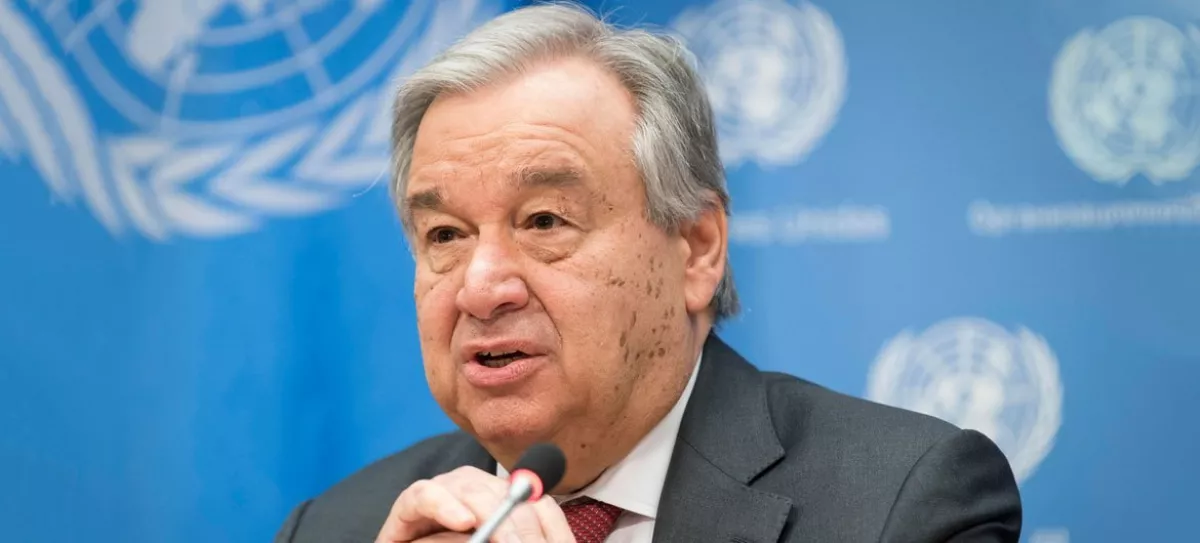
It remains only to add that soon countries may have nowhere to discuss such problems or ways to establish coexistence on the planet. On January 30, UN Secretary-General António Guterres warned of a likely “financial collapse” of the organisation due to unpaid contributions by July. The problems are primarily linked to the U.S. refusal to pay part of its contributions—Washington has even stopped funding peacekeeping missions altogether. Russia has also reduced its payments, refusing to contribute to the UN Economic Commission for Europe since 2022 and delaying payments to other UN bodies. As a result of unpaid contributions, the UN has already cut its budget by 15% and laid off nearly one in five staff members.
In conclusion, it should be noted that the current collapse of international legal regimes and mechanisms should not be attributed solely to individual politicians on either side of the Atlantic or Pacific, or even to individual states. Its scale and multidirectional nature point to more complex causes. The legal norms that once prevented a slide toward military confrontation did not begin to disintegrate recently, in 2022, or even in 2014. Their decay began after the West’s triumph in the “Cold War,” which was ensured not so much by Western actions as by the internal problems of the Eastern bloc and its conflicts with China.
Nevertheless, that triumph gave the U.S. and its allies the ability to declare the “end of history” and the triumph of liberalism as the only correct ideology. In doing so, the West abandoned inclusivity, dialogue with opponents (who, within this ideological paradigm, became “enemies,” “autocrats,” “fascists,” and otherwise unworthy interlocutors), and the principle of non-interference in internal affairs. Of course, for some time, international legal norms continued to function, as it was a fairly robust and well-designed system, difficult to dismantle immediately, and one that took into account the interests of the former collective West, allowing it to manage the world while expending minimal resources.
However, Western ambitions continued to grow, driven by the inexorable economic logic of neoliberal capitalism. After “accessing” new resources and markets in the Eastern bloc and particularly the former USSR following the Cold War, Western liberal elites once again faced a decline in profit rates. At that point, it was the turn of previously “radical” states, long hidden behind the shadow of the USSR, to step forward—primarily oil-rich countries. For example, the United States engaged with Iraq, while French elites sought to “tap into” Libya. Yet these interventions were limited in scope. At the same time, the same markets and resources began attracting the attention of the now-resurgent Russian and Chinese elites.
All of these actors were driven by the same factors—not a “clash of civilisations,” cultural “values,” or ideological differences. In recent decades, all disagreements between the collective West and its counterparts in Russia and China have largely revolved around the redistribution of spheres of influence. In other respects, all parties are full-fledged capitalists, pursuing the same neoliberal model.
It goes without saying that most countries of the world have little stake in these disputes, regardless of who prevails. Is it any wonder, then, that the majority of the world’s nations are distancing themselves from this essentially meaningless—but all the more dangerous—confrontation?







 editor@caliber.az
 +994 55 444-88-98
 Азербайджан, Баку, ул. Низами, 203, Af Business House, 5-й этаж