










Sagrada Família reaches final height with Tower of Jesus Christ PHOTO
The long-unfinished silhouette of Barcelona’s most iconic landmark has finally reached its intended summit, marking a historic turning point in one of the world’s most ambitious religious construction projects.
The basilica of Sagrada Família has now achieved its final architectural height of 566 feet following the installation of the cross atop the central Tower of Jesus Christ. The completion of the structural pinnacle comes more than 144 years after construction first began and signals what is effectively the finishing stage of the world’s tallest church, CNN shares.
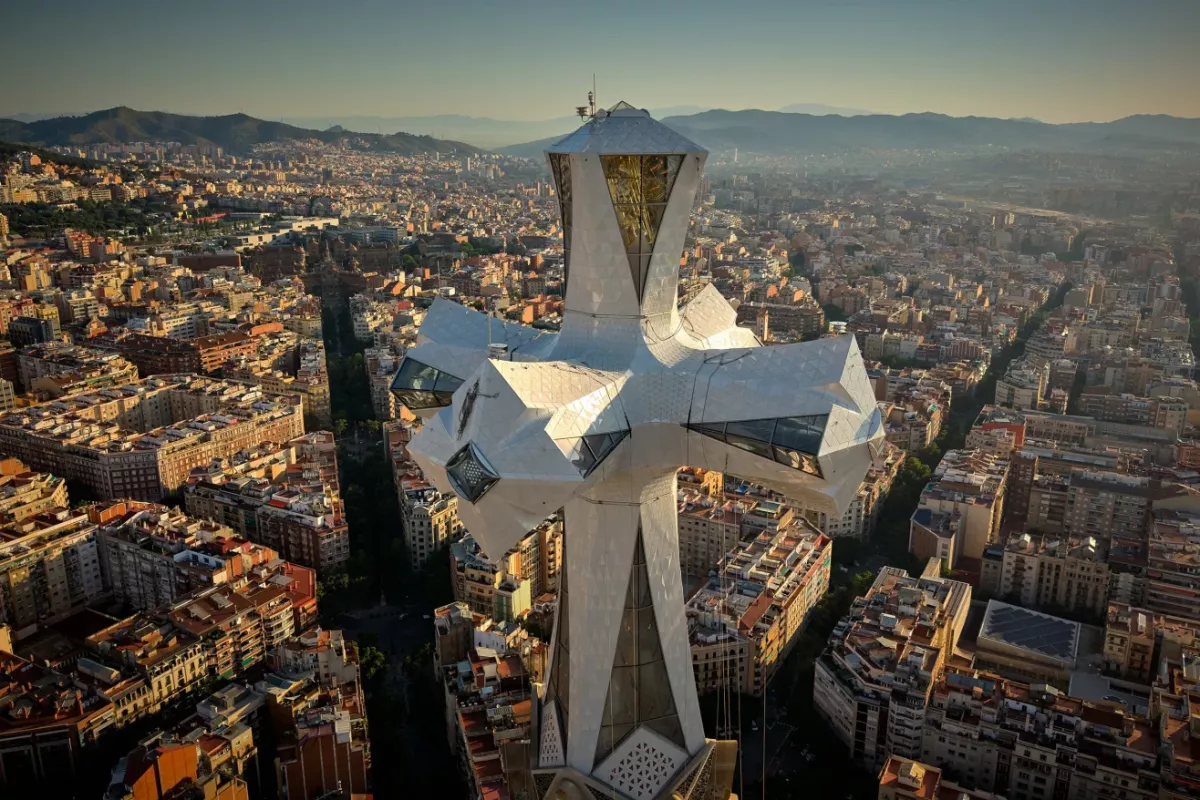
Visitors to the basilica instinctively trace the spiraling forms of its towers upward, but their gaze now extends further than ever before. The final cross — a 100-ton structure assembled from 14 prefabricated sections — crowns the central spire and completes the landmark’s defining vertical profile.
The achievement will be formally marked on June 10, when Pope Leo XIV leads a Solemn Mass and blessing ceremony at the site. While some interior and non-structural work is expected to continue for several more years, 2026 has long been identified as the symbolic completion point of the basilica, which is now approaching the 100th anniversary of architect Antoni Gaudí’s death.
The project has been shaped by wars, political upheaval, and persistent funding shortages. The Spanish Civil War in particular devastated early progress, with anarchists destroying workshop materials and many of Gaudí’s original models in 1936. Much of the design was later reconstructed by his collaborators using surviving documentation.
A central challenge throughout has been remaining faithful to Gaudí’s vision while integrating modern engineering standards. Architect Mauricio Cortés told CNN that the design balances historical intent with contemporary constraints:
“Obviously, the times have changed — the technology has evolved, as have the regulations,” he said. “We believe we’re pretty close to [his plans for] the exterior, for sure,” he added. “With the interior, as he didn’t define it in detail, there’s more room for interpretation.”
The cross itself, manufactured in Germany and completed in Barcelona, reflects that blend of tradition and innovation. Built from concrete and stainless steel to reduce weight while ensuring structural integrity, it was assembled at height before being lifted into place atop the tower. Cortés said Gaudí had envisioned a luminous cross that would glow by day and illuminate the skyline at night.
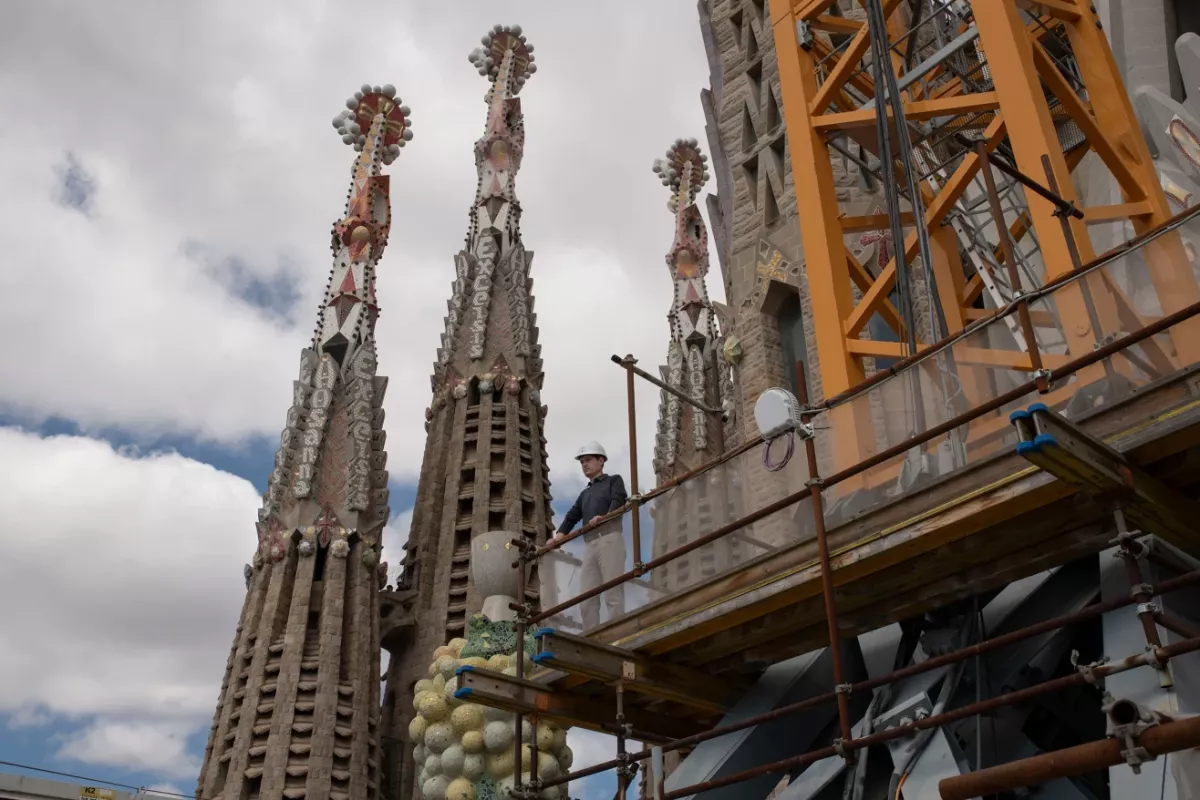
Inside the construction workshops above the nave, artisans continue refining decorative elements in ceramic, glass, and stone. The basilica’s facades — each representing key biblical narratives — are already crowned with intricate mosaics and pinnacles that dominate the skyline.
Antoni Gaudí, who took over the project in the late 19th century, famously accepted that he would not live to see its completion.
“My client is not in a hurry,” Gaudí famously replied when asked about completion dates. His client was neither the developer nor Barcelona’s faithful, it was God.
Despite its near-completion, controversy remains. The final phase centers on the planned Glory Facade, envisioned as the main entrance. Its proposed staircase could require major urban restructuring, including the potential demolition of nearby residential buildings, a prospect that has alarmed local residents.
Among them is Alicia Busquets, who told CNN, “Who can guarantee that two years from now my house won’t be torn down?”
Residents argue that communication from project authorities has been insufficient, while the construction board maintains that agreements with city officials must precede detailed consultations.
The basilica’s funding model — reliant entirely on donations and tourism revenue — adds another layer of uncertainty. Visitor numbers fell sharply during the Covid-19 pandemic but rebounded strongly, reaching nearly 5 million in 2025.
By Sabina Mammadli







 editor@caliber.az
 +994 55 444-88-98
 Азербайджан, Баку, ул. Низами, 203, Af Business House, 5-й этаж