










Saudi Arabia adjusts prominent five-year economic plan around new priorities
Saudi Arabia has announced a significant recalibration of its sweeping Vision 2030 reform agenda, a decade after Crown Prince Mohammed bin Salman first unveiled the ambitious plan to diversify the oil-reliant economy and modernize Saudi society. Originally introduced in 2016 by Mohammed bin Salman — then deputy crown prince and defence minister — the $2 trillion blueprint sought to reduce the kingdom’s reliance on crude exports and reposition the world’s largest oil exporter as a hub for technology, tourism and renewable energy. Since then, Riyadh has launched a series of large-scale development projects and social reforms.
Yet shifting global economic conditions, lower-than-expected oil revenues and a changing geopolitical landscape of the last few years have prompted the kingdom to revise its strategy.
This week, King Salman dismissed Investment Minister Khalid bin Abdulaziz al-Falih and replaced him with Fahd bin Abduljalil bin Ali al-Saif, a senior executive at Saudi Arabia’s sovereign wealth fund, the Public Investment Fund (PIF). The move underscores Riyadh’s intent to sharpen its economic focus and accelerate adjustments to Vision 2030.
The reshuffle comes ahead of the unveiling of a revised five-year plan under Vision 2030, as economic growth slowed to 3.3% in 2025, down from 5.3% previously. Officials say the updated strategy will prioritize emerging and revenue-generating sectors while scaling back or delaying some of the kingdom’s most high-profile “giga-projects.”
Finance Minister Mohammed al-Jadaan confirmed the shift in an interview with Bloomberg earlier this week, saying the government is working on a new five-year roadmap aimed at "doubling down on tourism, manufacturing, logistics and energy."
He added that under the revised approach, some projects will be reduced in scale, others expanded and some placed on hold.
Evolution of 2030 diversification agenda
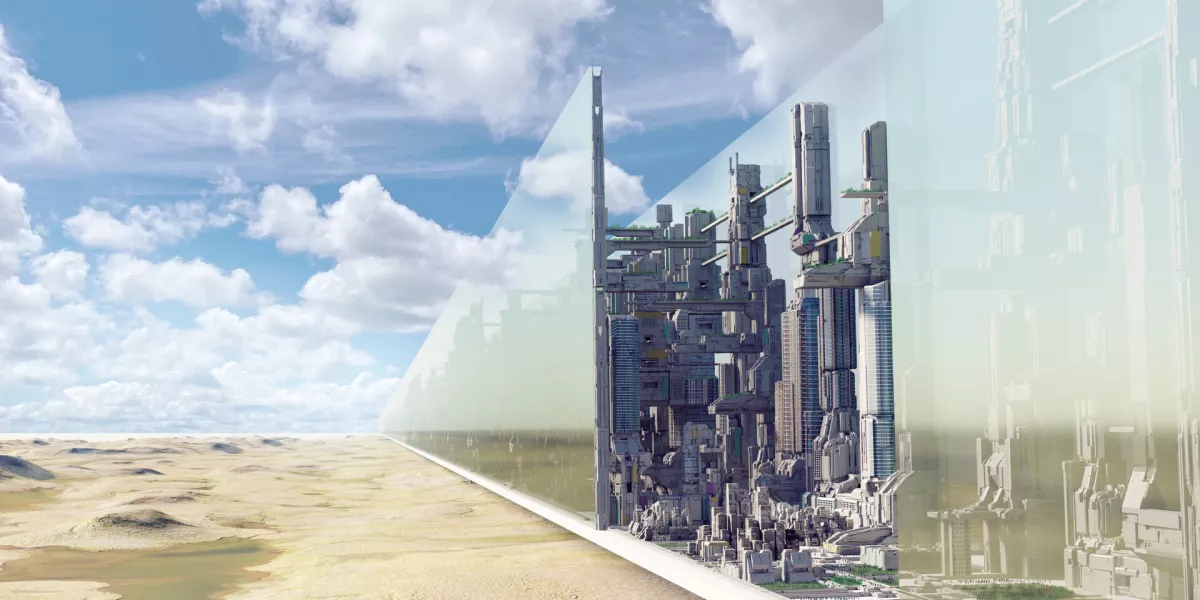
Vision 2030 initially placed heavy emphasis on transformative mega-developments, including the futuristic city of NEOM and its 170-kilometer linear urban project known as The Line. Other flagship projects included the cube-shaped Mukaab structure in downtown Riyadh and the Trojena mountain resort, which was originally slated to host the 2029 Asian Winter Games.
However, construction delays and tighter finances have forced adjustments,with Saudi Arabia’s Olympic Committee announcing earlier this week that the sport event will instead be held in Almaty, Kazakhstan. Authorities have also dramatically scaled back on the dimensions of The Line and suspended construction of the Mukaab altogether.
Sources told Reuters for a previous article that low oil prices have constrained the kingdom’s ability to finance some of its most ambitious developments, pushing officials to trim certain initiatives. The combination of global oil prices below levels needed for funding and high government spending, as well as a young population in need of employment have furthermore strained resources.
The publication reported that the $925 billion PIF has been amplifying pressure to pivot away from costly real estate megaprojects toward industries expected to generate stronger near-term returns.
Yasir Al-Rumayyan, governor of the PIF, told reporters last year that over the next five years the fund will concentrate on six key “ecosystems,” including tourism, urban development, innovation, clean energy and industry.
Despite the recalibration, several major spending initiatives remain in place. Saudi Arabia has pledged billions of dollars toward reconstruction efforts in Syria, including plans for a joint Saudi-Syrian airline and telecommunications company. Domestically, Riyadh continues to expand the area surrounding the Grand Mosque in Mecca through the King Salman Gate project, which will add new prayer, accommodation and hospitality towers.
The leadership changes also reflect the growing influence of the PIF in shaping the kingdom’s economic direction. Fahd bin Abduljalil bin Ali al-Saif, the new investment minister, brings extensive government and corporate experience, including as minister for energy, industry and mineral resources, as well as a brief tenure as health minister.
Before entering public office, he had a long career at state oil giant Aramco, where he served as president and CEO between 2009 and 2015.
By Nazrin Sadigova







 editor@caliber.az
 +994 55 444-88-98
 Азербайджан, Баку, ул. Низами, 203, Af Business House, 5-й этаж