










South Korea fast-tracks Iron Dome-style defence to protect capital photo
South Korea is accelerating plans to deploy its indigenous missile defence system, known as the Low Altitude Missile Defence (LAMD), with full operational capability now targeted for 2029 — two years earlier than originally scheduled. The system is intended to strengthen protection for Seoul and the surrounding metropolitan areas against North Korea’s expanding long-range artillery and rocket capabilities, according to The Korea Times.
The decision to bring forward deployment reflects growing concern within South Korea’s military over the rapid advancement of Pyongyang’s multiple launch rocket systems (MLRS), which are capable of delivering large volumes of projectiles at low altitudes. These systems pose a significant threat to densely populated urban areas, particularly the capital region.
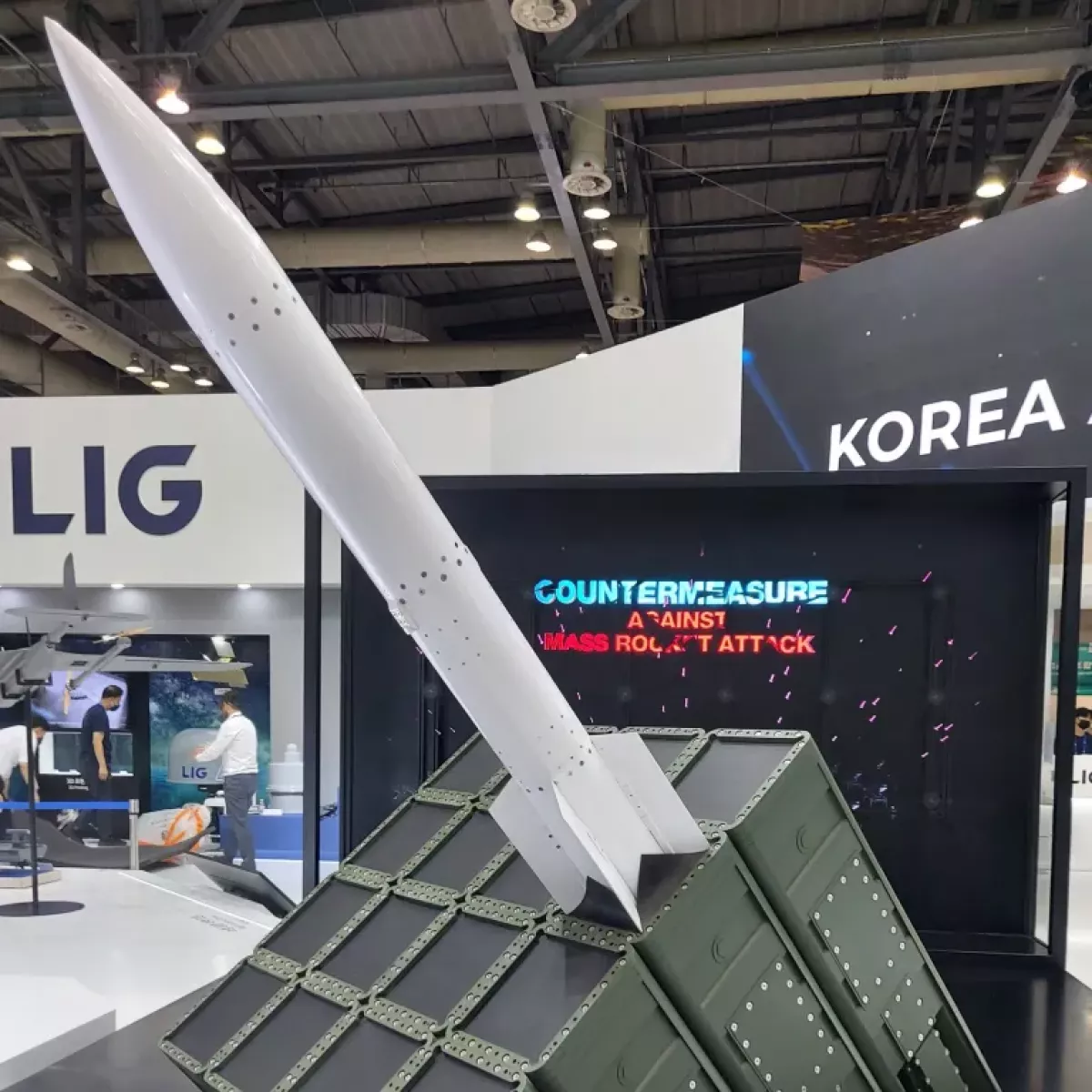
LAMD is being developed as a layered, integrated air defence solution comparable in concept to Israel’s Iron Dome. It is specifically designed to counter short-range threats by detecting and intercepting incoming rockets and artillery shells before they reach their targets.
The system will incorporate several core components, including radar installations for early detection, tactical communication networks to coordinate responses, mobile launchers, and interceptor missiles. Its architecture is intended to enable the simultaneous tracking and engagement of multiple incoming threats, particularly those flying at low altitudes — a key challenge in modern air defence.
South Korea is expected to invest approximately $558 million in the development of LAMD through 2030, underscoring the strategic priority placed on enhancing domestic missile defence capabilities amid rising regional tensions.
The push to advance LAMD also builds on South Korea’s growing experience in air defence technologies. The country’s Cheongung-II system has already demonstrated operational effectiveness abroad. Deployed in the United Arab Emirates, it played a role in defending airspace during aerial attacks attributed to Iran, reportedly achieving an interception success rate of 96%.
Officials view LAMD as a critical next step in expanding these capabilities, particularly in addressing the unique threat posed by North Korea’s artillery-heavy military strategy. Once deployed, the system is expected to form a key layer in South Korea’s broader, multi-tiered air and missile defence architecture.
By Tamilla Hasanova







 editor@caliber.az
 +994 55 444-88-98
 Азербайджан, Баку, ул. Низами, 203, Af Business House, 5-й этаж