










US – Azerbaijan charter and Aliyev in Munich Caliber.Az weekly review
The editorial team of Caliber.Az presents the latest episode of the programme “Events” with Murad Abiyev.
Azerbaijan – Armenia
After visiting Armenia, U.S. Vice President J.D. Vance also visited Azerbaijan. This visit marked a turning point in the United States’ policy in the South Caucasus, signalling a shift towards a pragmatic strategic partnership.
The signing of a Charter of Cooperation with Azerbaijani President Ilham Aliyev, covering defence, cybersecurity, nuclear energy, logistics, and artificial intelligence, established a new level of trust and recognised Azerbaijan as an independent centre of power in Eurasia.
A key element of the visit was the discussion of the Trump Route for International Peace and Prosperity, or TRIPP — a new transport corridor connecting mainland Azerbaijan with Nakhchivan through Armenia, which opens up prospects for regional economic integration.
Thus, the U.S. strategy in the region has shifted towards realism — focusing on security, energy, and infrastructural connectivity. Vance’s visit and his agreements with Aliyev marked the beginning of an era in which Azerbaijan becomes a key link in the architecture of Eurasian stability and a vital part of the logistics network connecting East and West, with the United States also playing an important role.
Equally important is the military dimension of cooperation — so significant that Vice President Vance shared some of its details in his press statement. He announced that the United States will supply Azerbaijan with new patrol boats to protect its territorial waters.
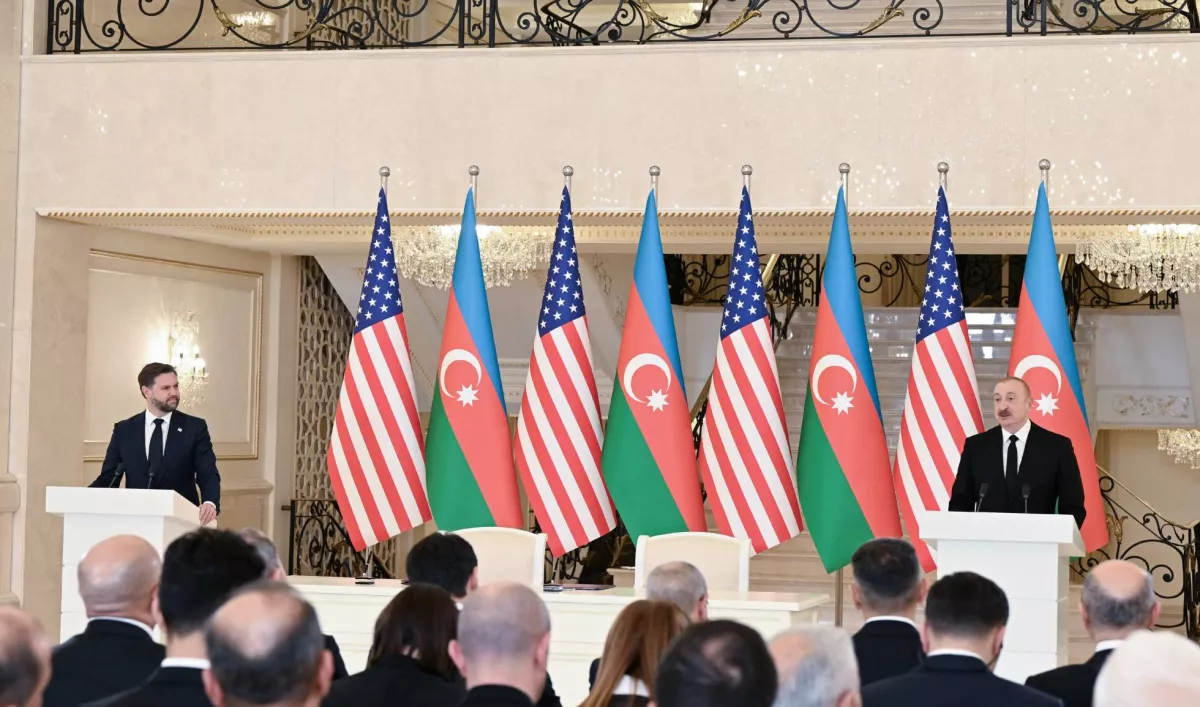
In turn, President Ilham Aliyev emphasised that Azerbaijan will continue work on issues related to energy security. “Azerbaijan today provides energy security through its natural gas resources to 16 countries, 11 of them being NATO members, allies of the United States,” Aliyev stated.
Currently, President Aliyev is in the Bavarian capital participating in the 62nd Munich Security Conference. His invitation to attend the event reflects Azerbaijan’s high standing on the international stage.
Yesterday, upon his arrival in Munich, the head of state gave two interviews: one with local television channels and another with the French channel France 24.
In the first interview, Aliyev discussed, among other things, the prospects of the Board of Peace, of which Azerbaijan is one of the founding members. The President noted that international law has weakened, and that the new world order must be based on civilised mechanisms of cooperation and responsibility.
Regarding transport, the President highlighted Azerbaijan’s role as a key hub between Europe and Asia, developing not only oil, gas, and railway corridors, but also new “electric” and digital corridors — including cable, fibre-optic, and data infrastructure — underscoring the strategic importance of the country as a reliable partner for both East and West.
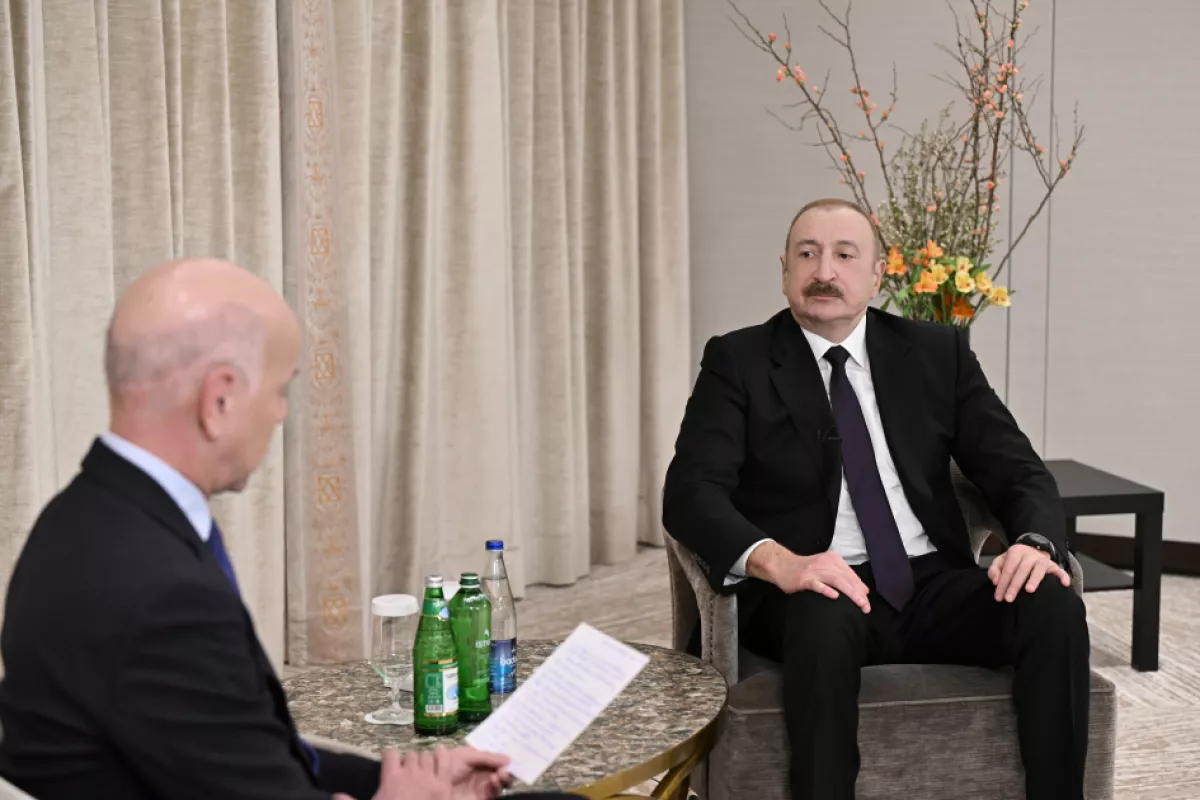
In an interview with France 24, Ilham Aliyev stated that, following the signing of the Washington Declaration, a real and lasting peace has effectively been established: hostilities have ceased, trade routes are open, and supplies have resumed. However, he emphasised that the signing of a final peace treaty is only possible after amendments to the Armenian constitution, which currently retains territorial claims over Karabakh. If this condition is met, the President expressed confidence that peace with Armenia could be formalised this year.
Responding to questions about separatist figures who have been sentenced, he rejected the possibility of a pardon, comparing their crimes to those of the Nazis.
Regarding the return of Karabakh Armenians, Aliyev stated that Azerbaijan had offered them the opportunity to stay by obtaining Azerbaijani citizenship. Moreover, he stressed the importance of the principle of reciprocity, recalling the hundreds of thousands of Azerbaijanis who were expelled from Armenia.
Discussing relations with France, Aliyev noted that they had deteriorated due to Paris’s support for separatists, emphasising that Azerbaijan was not the initiator of this decline. However, during a meeting with Emmanuel Macron at the latest European Political Community summit in Copenhagen, they agreed on a “reset” of bilateral relations.
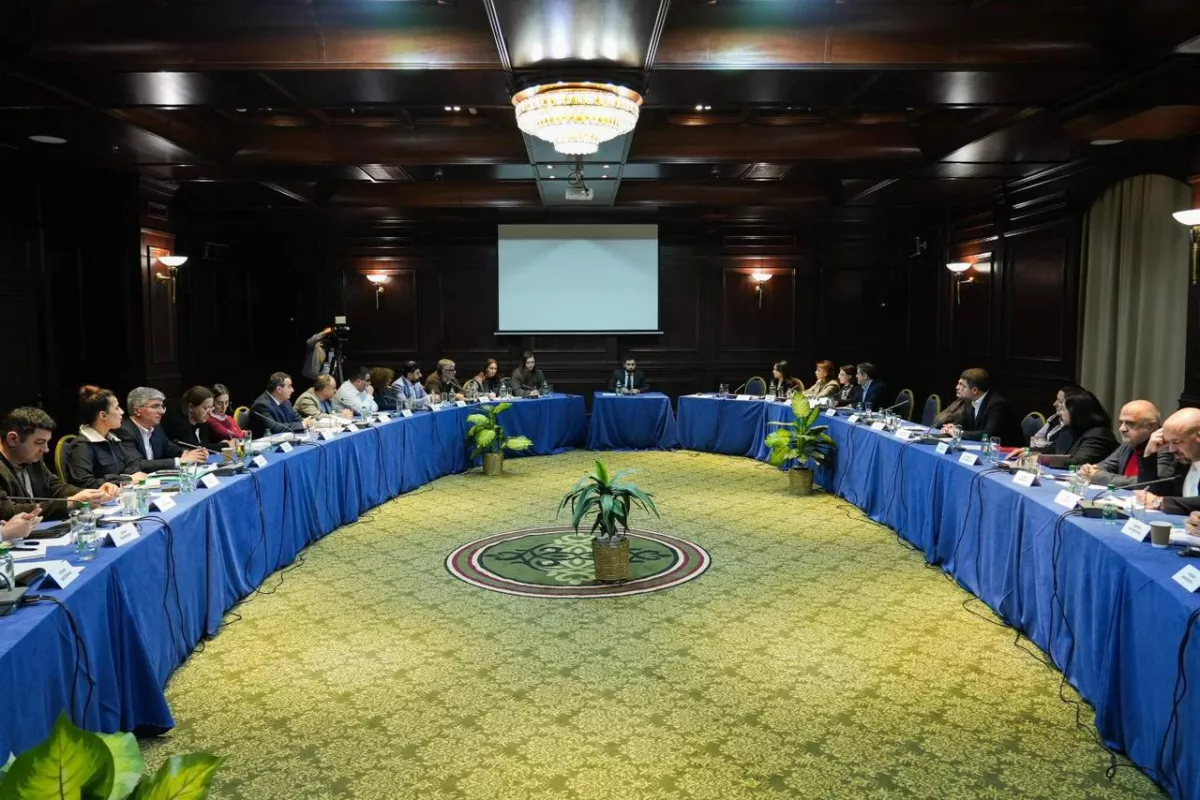
Meanwhile, representatives of Azerbaijani civil society are participating in a roundtable in Armenia. The delegation, composed of members from various analytical centres and civil organisations, crossed the land border at the demarcated boundary and arrived in Armenia. As part of the Bridge of Peace initiative, the delegation held two days of meetings with Armenian civil society representatives. This gathering became another building block in the reconstruction of trust between the two countries.
The State Security Service of Azerbaijan released materials from a criminal case against Ramiz Mehdiyev and a group of political figures accused of state treason and attempts to organise a violent coup with the assistance of foreign intelligence agencies. As a reminder, Ramiz Mehdiyev faces charges under Articles 278.1 (actions aimed at seizing state power), 274 (state treason), and 193-1.3.2 (legalisation of property obtained by criminal means) of the Criminal Code of Azerbaijan.
According to the investigation, Mehdiyev and his associates held negotiations with foreign centres about changing the country’s leadership, coordinated the actions of opposition structures, received significant funding to mobilise protests, and discussed altering Azerbaijan’s foreign policy in exchange for external support.
All of this once again underscores that the strengthening of Azerbaijan’s sovereignty following the victory in the 44-day war and the successful anti-terrorist operation in September 2023 has become a source of heightened irritation for far too many.
Munich
The question of Europe’s survival amid the brutalisation of international relations became the central theme across a series of events held last week — including the European Industry Summit in Belgium, an informal summit of EU leaders also in Belgium, and, finally, the ongoing Munich Security Conference.
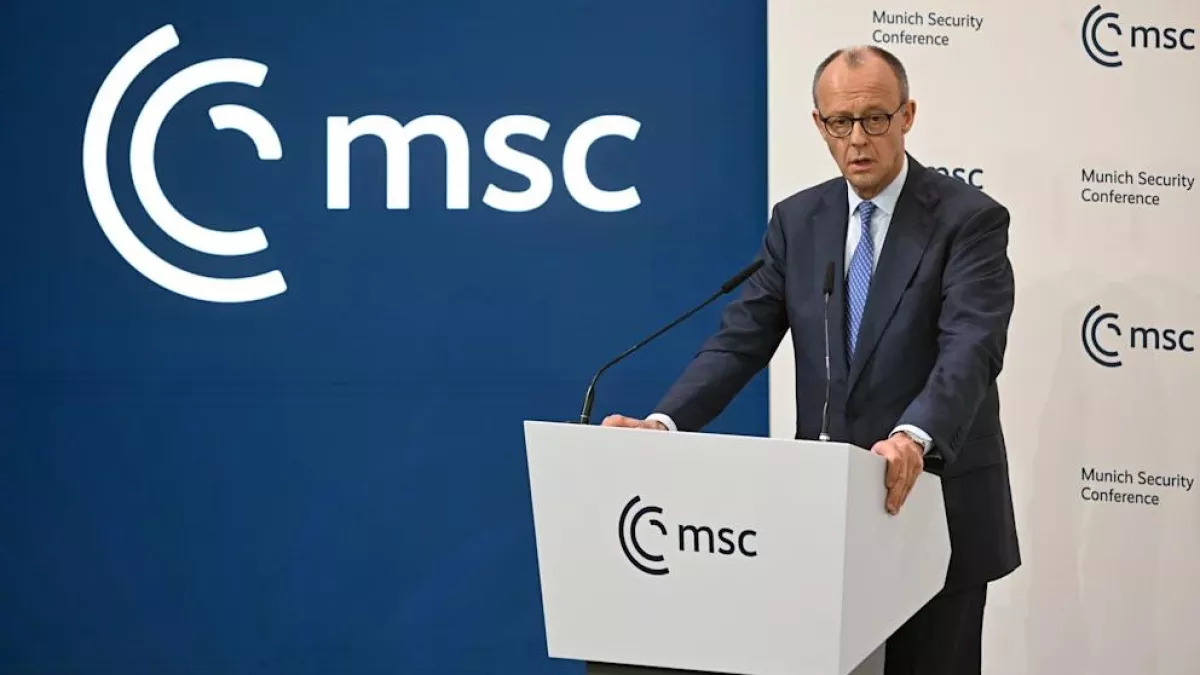
Germany and its Chancellor Friedrich Merz emerged as the flagship proponents of decisive change. Opening the conference with a powerful and striking speech, Merz called on Europeans to mobilise their military, political, economic, and technological potential in the face of external threats — which he implicitly or explicitly included the United States among. The German Chancellor urged Europeans to embrace “change and even sacrifice right now” to reverse the current situation.
This speech can be seen as a reasonably effective counter to the strongly anti-European address delivered by J.D. Vance at the same conference exactly one year ago. Merz aims to demonstrate that Europe has awakened from its lethargy, that it will regain strength, and that it should not be underestimated. Moreover, as the German Chancellor highlighted, without Europe’s assistance, the United States cannot count on full security in the emerging global order.
The statement not only pointed to Europe’s prospective military capabilities but also suggested diplomatic manoeuvring amid China’s growing power, and even hinted at a potential “reset” with Russia. While Moscow was not explicitly mentioned, recent discussions among European elites about the need to establish channels of communication with Russia signal that the Old Continent is indeed attempting to assert itself as an independent global actor.







 editor@caliber.az
 +994 55 444-88-98
 Азербайджан, Баку, ул. Низами, 203, Af Business House, 5-й этаж