










US vs Iran: Calm before the storm? Expert opinions on Caliber.Az
Events in Iran continue to remain the number one topic worldwide, as does the reaction of world leaders to the actions of Iranian authorities against protesters.
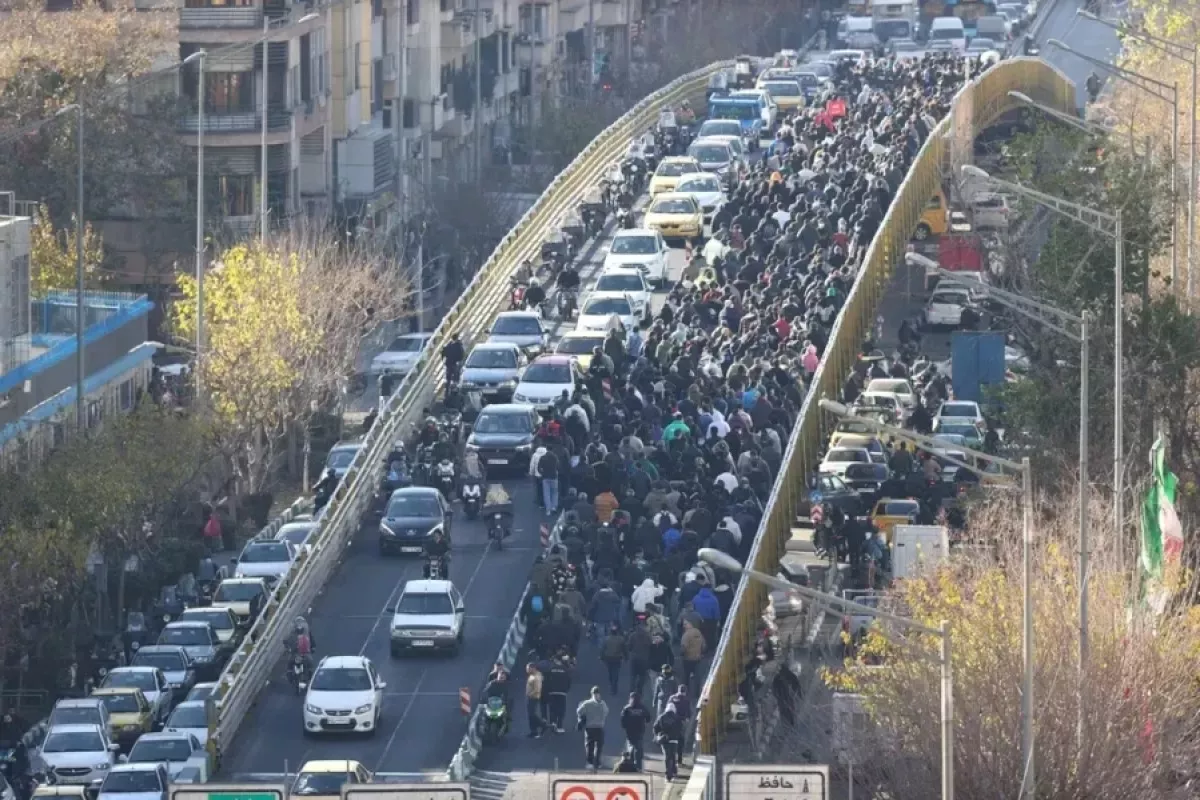
Specifically, The New York Times reports that U.S. President Donald Trump is weighing a range of options regarding Iran, from diplomatic measures to potential military strikes, aimed at deterring the country’s leadership from further crackdowns on protesters.
According to the newspaper, citing informed sources, the Pentagon has presented the White House with a variety of scenarios, including attacks on Iran’s nuclear facilities and ballistic missile infrastructure. One source suggested that cyberattacks or strikes targeting Iran’s internal security forces are among the most likely options. Rising tensions and the risk of escalation are further underscored by calls from the United States and other countries urging their citizens in Iran to leave the country immediately.
Meanwhile, several Iran specialists point out that military action could be leveraged by Tehran to strengthen internal cohesion—an armed response might help the current regime suppress the protests. However, much would depend on the choice of targets, the precision of strikes, and the element of surprise. At the same time, Tehran has repeatedly warned that any U.S. attack could provoke a severe response against Israel and American bases in the region.
So what do experts make of the likelihood of a U.S. military operation against Iran? Caliber.Az consulted both American and Israeli political analysts to assess the situation.
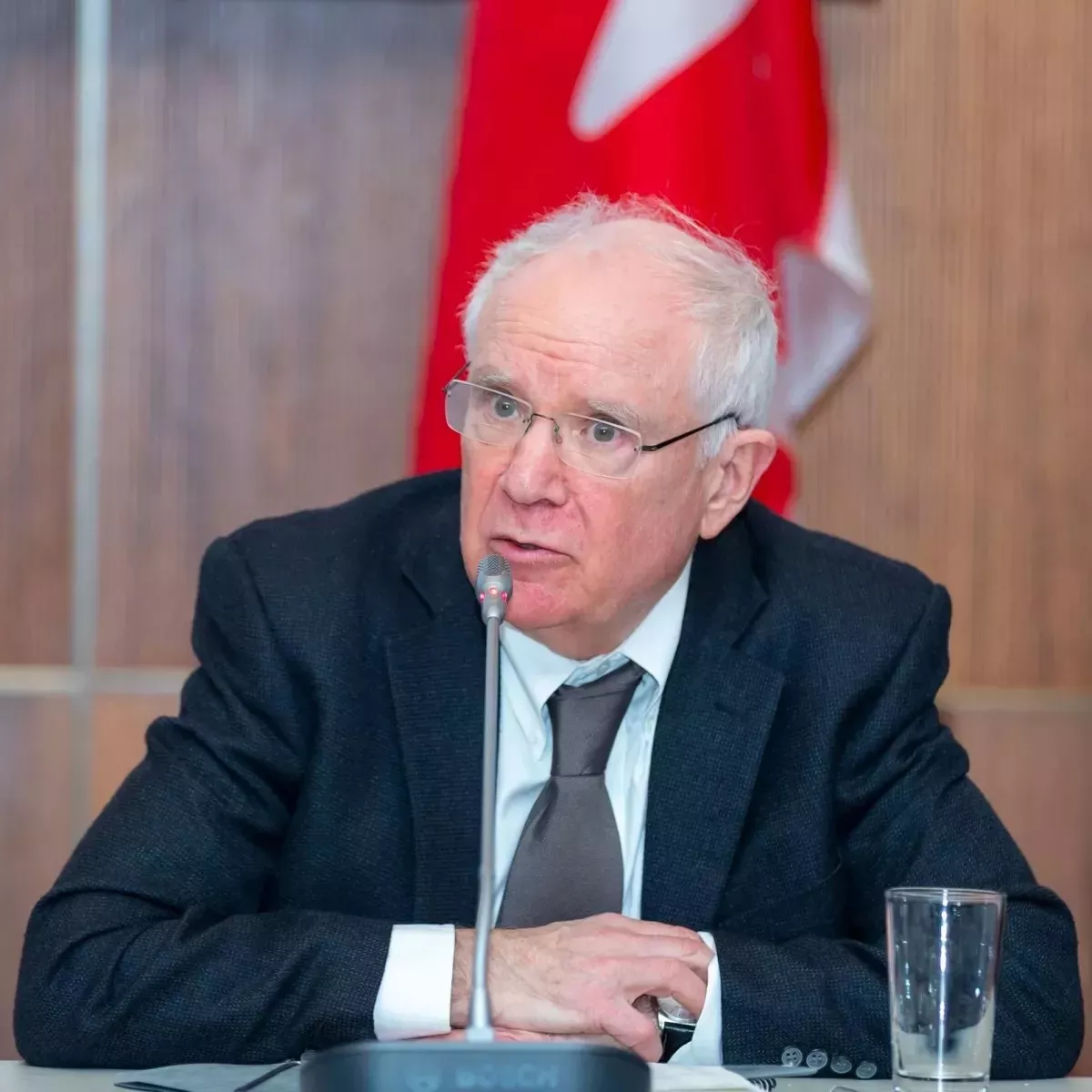
American political analyst and human rights advocate Aaron Rhodes, former Executive Director of the International Helsinki Federation for Human Rights, believes that Trump is likely to follow through on his statement that the U.S. would strike Iran if the regime’s military apparatus kills protesters.
“According to available information, thousands of people have already died, and Trump generally does what he promises. Meanwhile, reports of casualties among protesters continue to rise, and the regime has shown almost no response to U.S. warnings, nor any effort to moderate its aggression toward demonstrators—the repression is blatant. The President will act on his statement if he personally decides to do so. He will not be deterred by the War Powers Resolution, which is designed to limit the president’s ability to initiate military action without Congress’s approval,” Rhodes said.

Meanwhile, Israeli political analyst, international affairs expert, and Rabbi Mikhail Finkel believes the world is witnessing a calm before the storm.
“Embassies from many countries are being evacuated from Iran, and the U.S. State Department has urged all American citizens there to leave by any means possible. At the same time, Israel has announced that all hospitals are preparing for emergency operations: doctors’ leave and vacations have been cancelled, as have those of many military personnel. What does this all point to? Only one thing—a war is looming. Just before the New Year, the Israeli prime minister met with Trump and presented him with various options for strikes against Iran. Why now? Because Tehran has not learned the lessons of the 12-day war,” Finkel said.
According to the expert, Iran should not have resumed work on rebuilding the bombed nuclear facilities in Isfahan, Natanz, and Fordow, where uranium was enriched for the purpose of creating a nuclear bomb.
“What does Iran do after the June war? It declares: ‘We will immediately start rebuilding the bombed facilities.’ And secondly: ‘We will not abandon our nuclear program.’ The United States, Europe, and the international community offered a reasonable alternative: if you want a peaceful nuclear program for power plants, we can build them, or even Russia can. But Tehran insists on enriching uranium itself. The whole world asks the Iranian regime: ‘Why enrich uranium to weapons-grade levels? Low-enriched uranium is sufficient for peaceful nuclear energy.’ Yet Iran has provided no clear answer,” the analyst said.
The political scientist also recalled that the U.S. had proposed that Iran hand over 400 kilograms of highly enriched uranium hidden in June, but Tehran refused.
“Iran is acting arrogantly, declaring that it will rebuild the bombed reactors and refusing to hand over its highly enriched uranium. Overall, it behaves as if nothing can stop it. In addition, with China’s help, over the past six months, Tehran has purchased a large number of electronic chips and developed new ballistic missiles, significantly strengthening its arsenal with this deadly weaponry. According to intelligence reports, Iran now possesses around 4,000 ballistic missiles and a large number of cruise missiles aimed at U.S. military bases in the Middle East and Israel,” the expert said.
He believes that the U.S. has already decided to strike Iran again, targeting its nuclear facilities as well as the sites where the 400 kilograms of enriched uranium are stored.
“The United States is expected to target missile depots—the so‑called underground Iranian ‘cities’ where these weapons are stored—destroy launch sites, and strike IRGC [Islamic Revolutionary Guard Corps] military bases, which function as the ayatollah’s personal army. In addition to the regular armed forces, these units are fiercely loyal to him, much like the SS was to the Third Reich. This time, the goal is to significantly weaken the regime and support the uprising of Iran’s long‑suffering, multinational population—that is, to topple the current leadership and establish a more stable, representative political system,” the expert said.
He also noted that Trump had previously declared that the killing of protesters would constitute a red line. According to representatives of the protesters’ coordinating committee, the Iranian regime has already killed more than 12,000 people across the country, meaning that all red lines have now been crossed.
According to Finkel, there is virtually no chance that Israel would launch a preemptive strike, as the United States is likely to ask it to stay out of the conflict.
“However, if Iran strikes Israeli territory, we will intercept everything headed in our direction. Over recent months, the State of Israel has further strengthened its missile defence capabilities, including the deployment of an additional layer of air defence—state‑of‑the‑art laser systems. Iranian missiles and drones would also be intercepted by our allies—the British, the French, and Arab states such as Jordan, the United Arab Emirates, and even Saudi Arabia. I also do not rule out that Israel would reserve the right to carry out retaliatory strikes against Iran.
There will undoubtedly be Iranian attacks on U.S. military bases in the region, but at this stage, I do not believe the Americans are planning a ground operation. Their objective is to paralyse all capabilities using the most advanced types of weaponry, including electromagnetic pulse systems that disable electronics, hypersonic weapons, and systems that affect soldiers’ psychological state—technologies that were reportedly used during the special operation in Venezuela,” he said.
The political analyst believes that the Americans may begin actively supporting the protesters—dropping containers of weapons, supplies, medical equipment, medicines, and so on—and may even offer amnesty to military and police personnel loyal to the regime to encourage them to switch sides.
“I believe this entire operation could take up to four weeks until the regime collapses. This would be President Trump’s war, aimed at changing the ayatollahs’ regime, turning Iran into a normal state, reintegrating it into the family of free nations, and bringing the Iranian economy—like Venezuela’s—under American control. Then Iran’s entire oil production would work for the United States, significantly weakening China. Of course, the long‑planned construction of a major gas pipeline, allowing Iranian gas to flow to Europe, will also be considered,” Finkel concluded.







 editor@caliber.az
 +994 55 444-88-98
 Азербайджан, Баку, ул. Низами, 203, Af Business House, 5-й этаж