










Biennale controversy continues further as artists threaten organizers with legal action
More than 100 participants in the 61st Venice Biennale have threatened legal action against the Biennale Foundation, alleging that organizers failed to honor their requests to withdraw from consideration for the newly introduced Visitor Lion awards as an expression of their protest against the participation of Israel and Russia.
In a statement published on June 3, a total of 67 artists along with representatives from 39 national pavilions, said Biennale leadership neither acknowledged nor acted upon a May 20 letter requesting their removal from the public voting ballots, as an article by Hyperallergic highlights.
The Visitor Lion awards, determined by visitor votes, were introduced shortly before the exhibition opened after the Biennale's original awards jury resigned en masse amid growing controversy surrounding the participation of Israel and Russia. Following the jury's resignation, dozens of artists announced they would withdraw from awards consideration in solidarity.
According to the signatories, they first communicated their intention to withdraw on May 9, when the Biennale, which took place under the theme "In Minor Keys", opened to the public. Nevertheless, they remained listed as eligible candidates when digital voting ballots were distributed to visitors on May 14.
“We view this lack of responsiveness as not only highly disrespectful of the undersigned participants in the Biennale, but also of the audience,” the group said, adding that it would begin taking legal steps from June 3.
The Biennale Foundation has disputed claims that it ignored the artists' request. In a statement provided to Hyperallergic, the Foundation said it acknowledged receipt of the letter via email on May 28. According to the Foundation, the artists remained on the ballot to preserve visitors' freedom of expression, although votes cast for participants who had withdrawn would neither be counted toward the awards nor published.
In their latest correspondence, the artists emphasized that their objection was not to public voting itself but to the introduction of the Visitor Lion awards after the exhibition had already begun. They argued that the move contradicted the award process under which participants originally agreed to exhibit their work.
The dispute follows months of tensions surrounding the Biennale. In April, the exhibition's original jury, selected by late curator Koyo Kouoh, announced that countries whose leaders are facing charges before the International Criminal Court would not be considered for the Golden Lion awards, a decision that effectively excluded Israel and Russia from award eligibility.
The decision was welcomed by members of the "Art Not Genocide Alliance", a coalition that has campaigned for the exclusion of Israel and Russia from the Biennale.
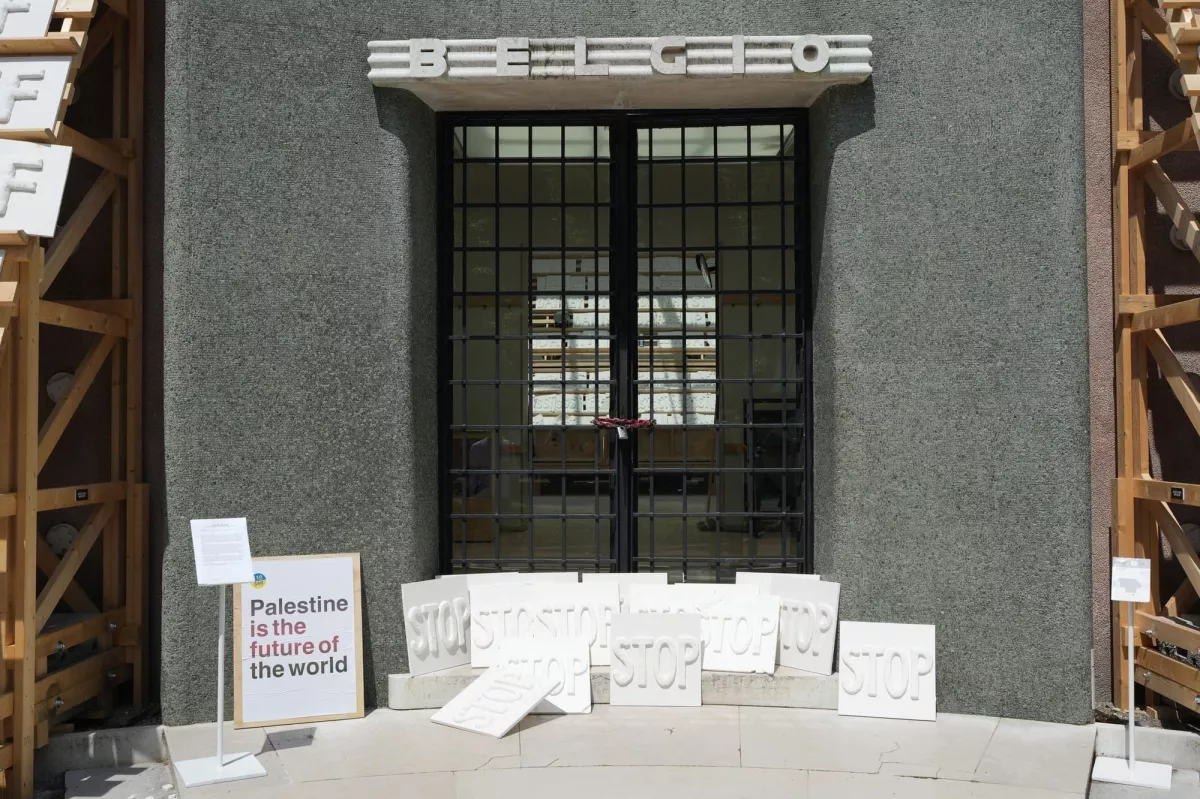
On May 8, during the exhibition's final preview day, 27 of the 100 national pavilions were either partially or fully closed as part of a historic protest staged by cultural workers in support for Palestine and for workers’ rights. Several artists participating in "In Minor Keys" also altered their installations in support of the action.
The same day, ANGA organized a large protest march toward the Israeli pavilion in the Arsenale complex, which had been cordoned off by Italian police.
By Nazrin Sadigova







 editor@caliber.az
 +994 55 444-88-98
 Азербайджан, Баку, ул. Низами, 203, Af Business House, 5-й этаж