










Existing military infrastructure in Greenland in nutshell Who protects Arctic island?
Greenland’s security has moved back into the international spotlight as renewed interest from Washington highlights long-standing questions over who protects the vast Arctic island and what military infrastructure exists there. Rich in natural resources and increasingly accessible due to climate change, the world’s largest island has been in the strategic sights of the United States for more than a century.
Last week, Denmark and seven other European countries deployed small contingents of troops to Greenland to take part in military exercises. The deployments were largely symbolic, but they came amid sharp rhetoric from US President Donald Trump, who has openly expressed interest in bringing Greenland under American control. Trump threatened tariffs of up to 25% on the eight allied countries if they continued to oppose his plans, a warning he later withdrew while attending the World Economic Forum.
Greenland is formally part of the Kingdom of Denmark, having ceased to be a colony in 1953, when it was incorporated into the Danish state and its population gained Danish citizenship. In the event of an armed incursion, Danish soldiers stationed on the island are authorized to respond immediately. A 1952 military directive, which the Danish Ministry of Defence, in light of the heightened security tensions, recently confirmed remains in force, allows troops to engage in combat without waiting for further political instructions.
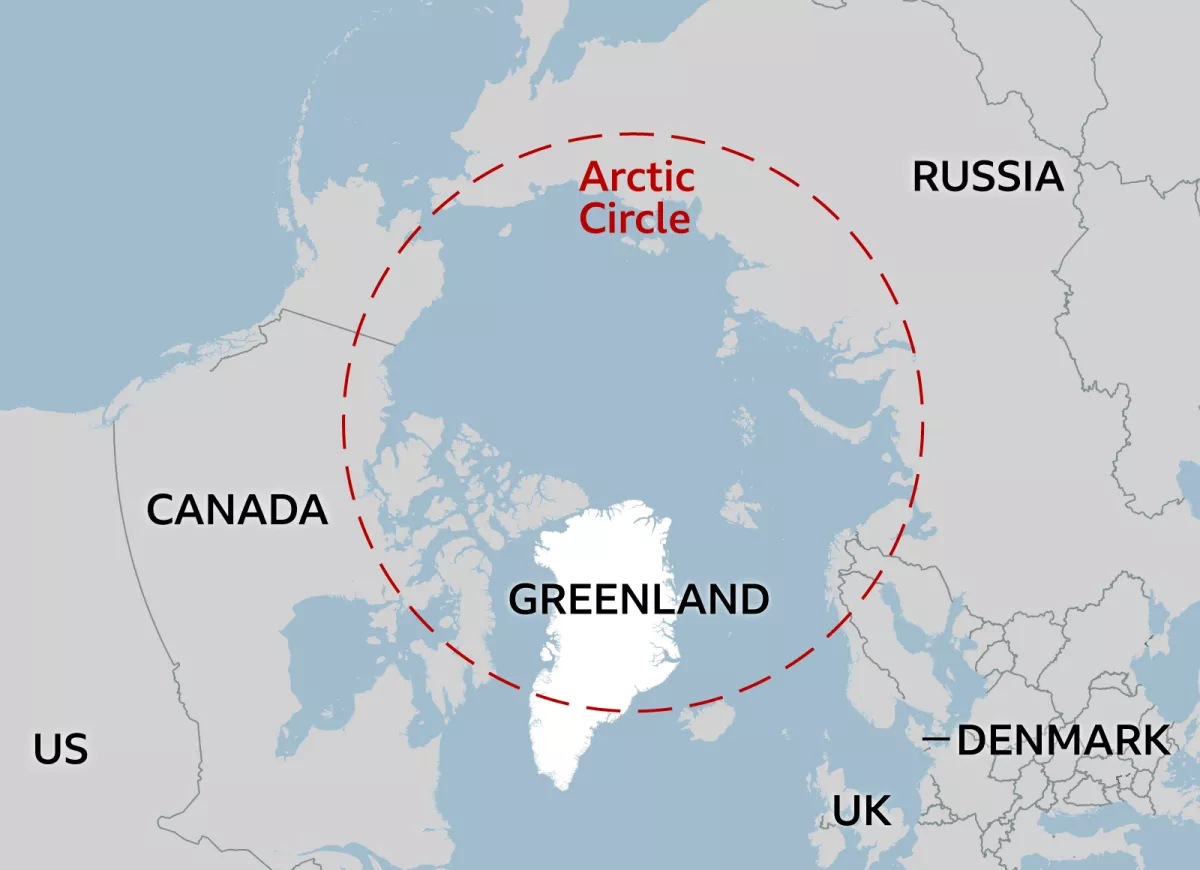
Although Trump’s proposal may appear improbable, it reflects a longer US interest in Greenland’s strategic value. The island lies just 26 kilometers from Canada at its closest point and occupies a critical position between North America and Europe. Washington explored acquiring Greenland several times in the 19th and 20th centuries. An 1867 US State Department report highlighted its strategic location and natural wealth, while a formal offer to buy the island was made in 1946 under President Harry Truman.
Who protects Greenland?
Greenland’s colonial history dates back to 1721, when Norwegian priest Hans Egede arrived to establish missions. Danish control lasted until 1953, when Greenland’s status was unilaterally changed to that of a constituency within the Danish Kingdom. Over time, Greenlanders pushed for greater autonomy, leading to the introduction of Home Rule in 1979 and the creation of the island’s first local government. Subsequent reforms have expanded self-government with the island today being a semi-autonomous territory, although Copenhagen retains authority over foreign policy, defence, national security, the judiciary, and monetary affairs.
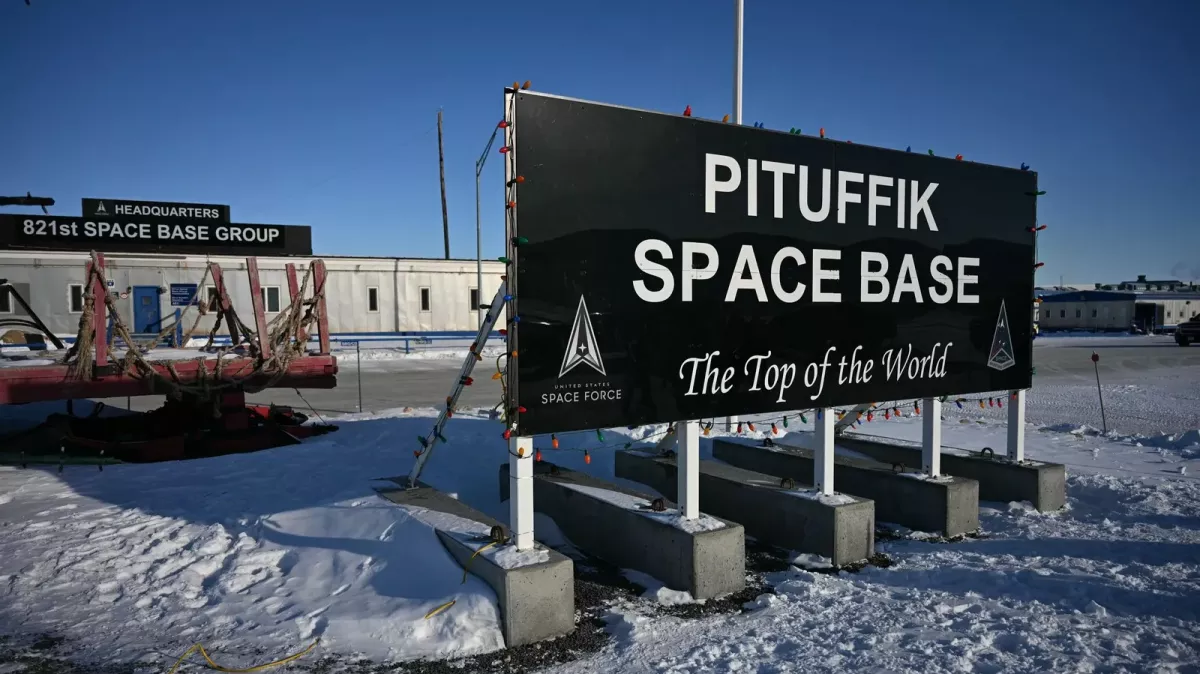
Despite its size, Greenland hosts limited military infrastructure. There are only three military bases on the island, the largest being the US-operated Pituffik Space Base. Established during the Cold War, Pituffik remains Washington’s only permanent military installation in Greenland.
Day-to-day defence responsibilities fall to Denmark’s Joint Arctic Command, which oversees Greenland and the Faroe Islands as part of the Danish Kingdom. The command, headquartered in Nuuk, has around 150 military and civilian personnel. Its core tasks include maritime surveillance, search and rescue, and the enforcement of Danish sovereignty in Arctic waters.
The foundations of the US military presence were laid during the Second World War, when Nazi Germany occupied Denmark in April 1940, cutting Greenland off from Copenhagen. Danish authorities subsequently signed an agreement granting the United States broad freedom to deploy troops, build bases, and operate on the island. This led to the creation of a network of military installations designed to prevent German domination of the Arctic.
Greenland also played a crucial role in wartime resource supply. The island was home to the world’s only known natural deposits of cryolite, a mineral essential for large-scale aluminium production. Access to cryolite was vital for aircraft manufacturing and Allied air superiority. The mine remained operational until its closure in 1987.
At the height of World War II, the United States operated 17 bases in Greenland, many of which served as key resupply hubs for transatlantic air routes. Most were closed after the war. During the Cold War, Pituffik became the central US installation, once housing several thousand troops. Following the collapse of the Soviet Union, US forces were sharply reduced, with around 200 personnel stationed there today.
Tricky nature of Greenland's ties to EU, NATO
Greenland is covered by NATO through Denmark, but it is not part of the European Union. The territory left the EU in 1985 following a dispute over fisheries policy and is now classified as an Overseas Country or Territory, maintaining limited cooperation agreements with the bloc.
Within NATO, Greenland falls under Allied Command Operations, led by the Supreme Allied Commander Europe, a position always held by a US officer and currently filled by US Air Force General Alexus Grynkewich. Recent NATO reforms integrated all Nordic member states into Joint Force Command Norfolk in Virginia, strengthening the alliance’s focus on the High North. Several countries had previously been under NATO’s Brunssum command in the Netherlands, responsible for the alliance’s northeastern flank.
Legal uncertainty surrounds how NATO’s collective defence clause would apply to Greenland. Many experts argue that Article 5 was designed to respond to attacks by non-NATO states and would not clearly apply if a NATO member were to attack Danish territory, as cited in an article by the Spanish El Pais.
Similar ambiguity exists within the European Union. Greenland’s OCT status raises questions over whether the EU’s mutual defence clause, which obliges member states to provide “help and assistance by all means at their disposal,” would be triggered.
While EU leaders, including European Commission President Ursula von der Leyen, Defense Commissioner Andrius Kubilius, and French President Emmanuel Macron have said last week that Article 42.7 would apply in the event of an attack, any EU response would require unanimity, leaving room for potential political obstruction by countries that prioritize maintaining good relations with Washington.
By Nazrin Sadigova







 editor@caliber.az
 +994 55 444-88-98
 Азербайджан, Баку, ул. Низами, 203, Af Business House, 5-й этаж