










New US National Security Strategy: what it contains and why it matters From deterrence to artificial Intelligence
The Trump administration has recently released the new US National Security Strategy, the contents of which reflect the essence of the geopolitical course that Washington is pursuing — and, in fact, has already begun to pursue — under the current leadership.
Starting with foreign policy, the main conclusion is that the United States is fundamentally reshaping its priorities, effectively reviving the Monroe Doctrine. Washington now considers the entire Western Hemisphere (North and South America) its primary sphere of interest, where there should be no place for the influence of Russia, Iran, and especially China — which is defined as the United States’ main geopolitical rival.
The strategy notes that Washington will actively counteract “hostile foreign incursion,” a term referring both to the use of soft economic power (a direct message to China) and the construction of military infrastructure by states competing with the US. Judging by this, the United States will strengthen its presence in the Caribbean and Latin America, which aligns with the ongoing pressure on the Maduro government in Venezuela.
American geopolitics is shifting from supporting democracies worldwide and maintaining global leadership to a form of dry pragmatism. The type of political regime in a partner country will no longer be a decisive factor for the United States when building political or economic relations.
Another important signal of major change is the fact that the US is distancing itself from Europe — something stated explicitly in the strategy. Washington urges Europeans to take responsibility for their own countries and their defence, rather than relying on the American security umbrella in the event of a military conflict. Unsurprisingly, this has not been received warmly by European governments, which are now receiving a clear message from their main ally: the US will not come to their defence. The United States will continue helping Europe arm itself and will keep supplying weapons, but in the event of a hypothetical war between European states and Russia, European capitals should not expect direct American involvement.
Equally important is that the doctrine no longer views Moscow as the principal adversary. The stated US objective in relations with Russia is stabilisation, and the strategy emphasises Washington’s intention to seek a peaceful resolution to the war in Ukraine. Of course, this does not mean that Moscow and Washington have become friends, but overall, the United States is signalling a desire to reduce tensions.
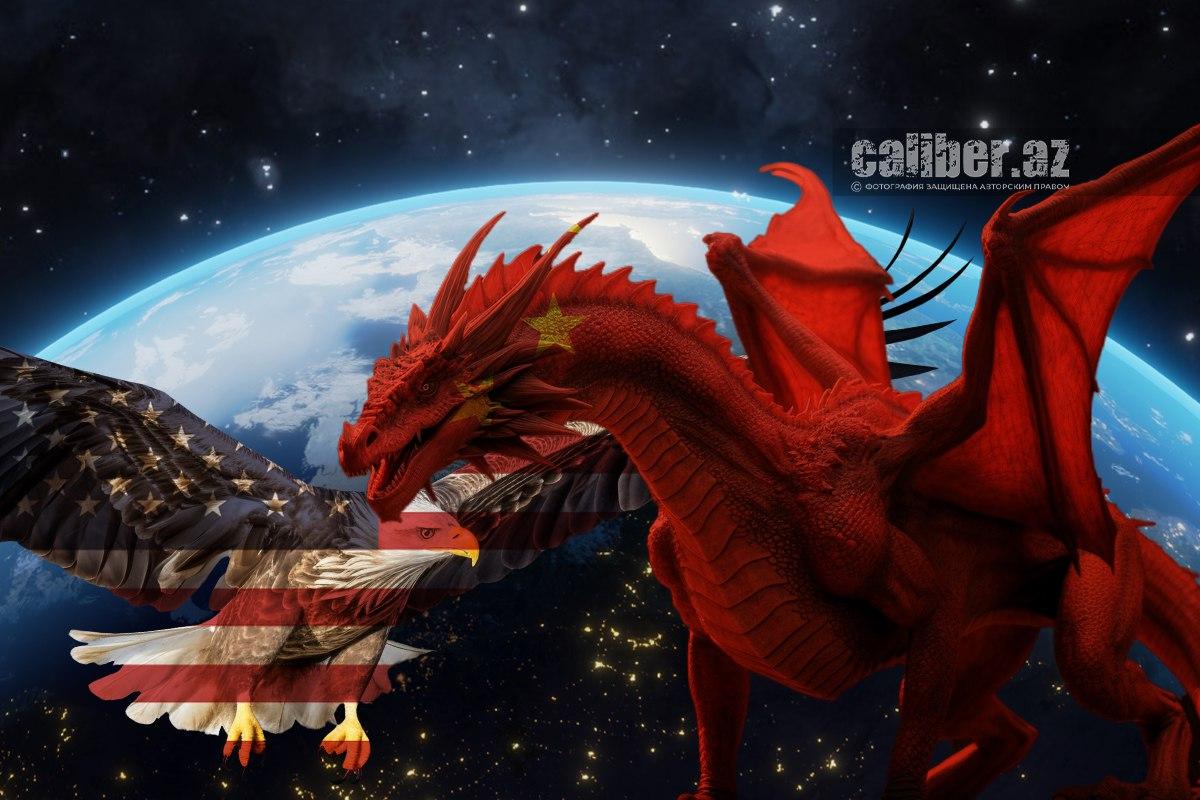
From now on, the United States is turning away from Europe and directing its attention towards a rising China, focusing on containing it through regional alliances composed of its own partners (Japan, South Korea, the Philippines, etc.). Particular emphasis is placed on protecting the production of semiconductors — an industry of critical importance to Washington — in which Taiwan remains the global leader.
In its defence doctrine, the US highlights the need for precise, short-term operations and the development of capabilities for rapid strikes and “selective coercion”.
A major domestic priority is given to cybersecurity and the regulation of artificial intelligence. In addition, the strategy once again favours strict control over migration policy and border security. Migration is framed as a potential risk to social and economic stability. Legal migration will not be abolished, of course, but pressure on irregular migrants will be increased, and entry into the US under legal pathways will become significantly more difficult.
Overall, global competition for spheres of influence will intensify between two great powers whose decisive confrontation still lies ahead. Whether China or the United States emerges victorious will shape the future of the world for many years to come.
By Riyad Hamidov







 editor@caliber.az
 +994 55 444-88-98
 Азербайджан, Баку, ул. Низами, 203, Af Business House, 5-й этаж