










SANA: Damascus hosts EU officials for discussions on future cooperation PHOTO
A senior official at Syria’s Ministry of Foreign Affairs and Expatriates has held talks with a visiting delegation from the European Union, according to state media.
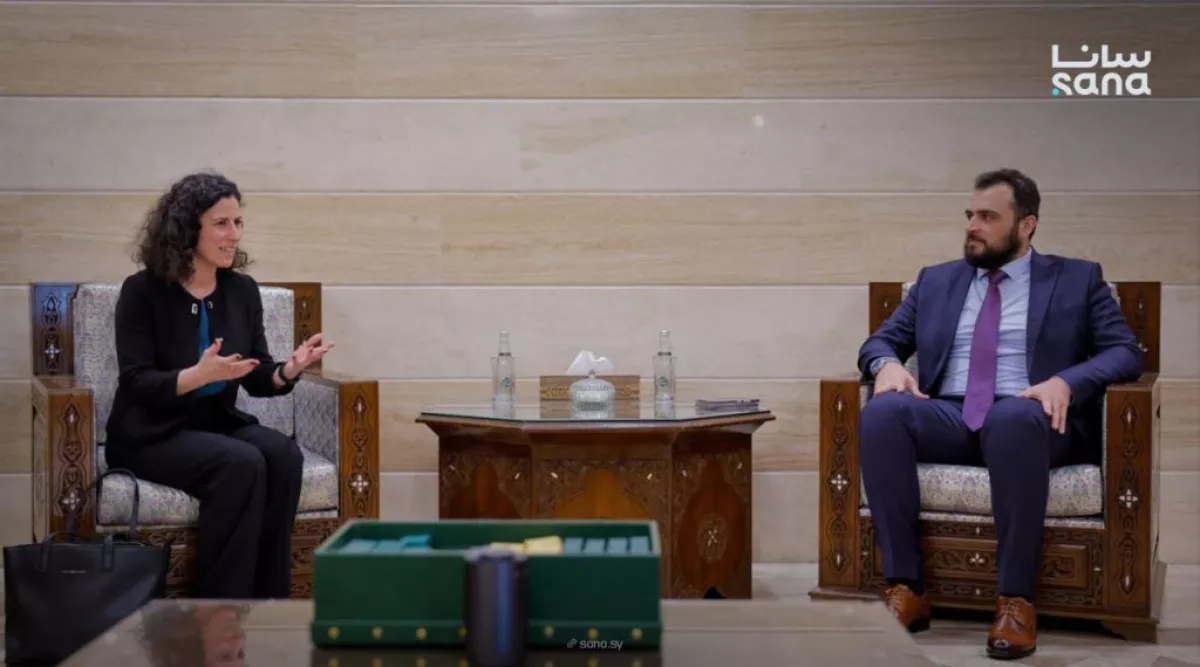
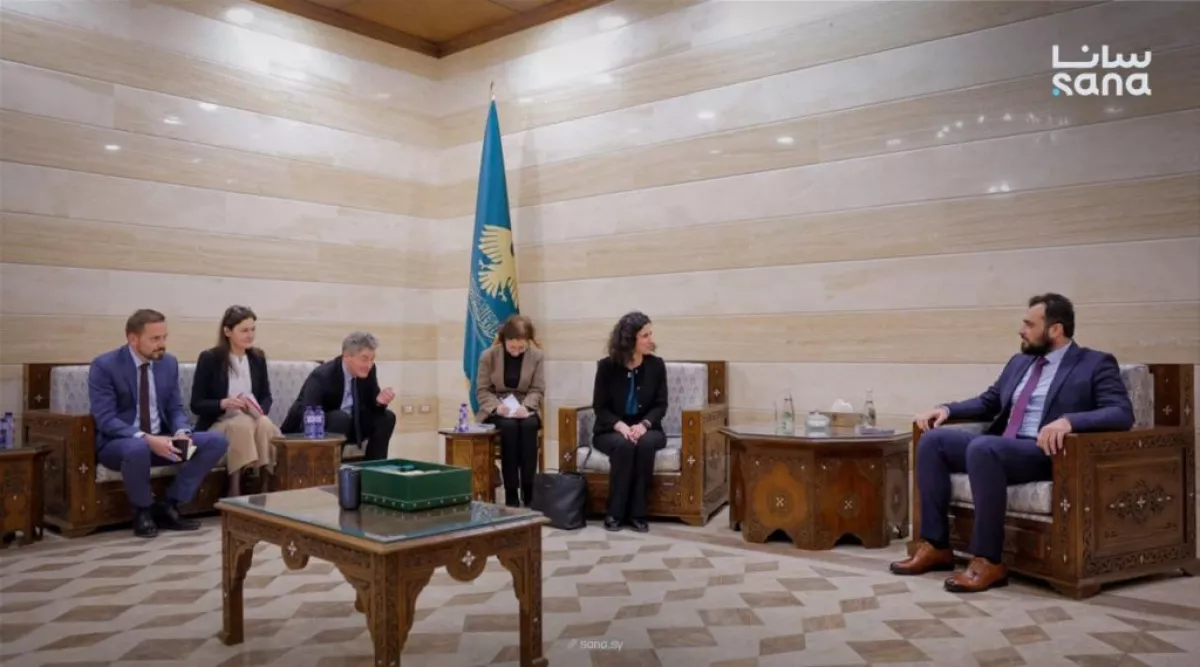
Director of the International Cooperation Department at the Ministry of Foreign Affairs and Expatriates, Qutaiba Qadish, met the EU delegation led by Anna Pierz, Head of the MENA BI (Middle East and North Africa – Bilateral Instruments) Unit for Syria and the Middle East at the European Commission, Caliber.Az reports via SANA.
During the meeting, the two sides discussed local and regional developments and explored ways to strengthen cooperation between Syria and the European Union across a range of sectors, Syria’s state news agency SANA reported.
Relations between the European Union and Syria were largely strained during Bashar al-Assad’s presidency, particularly after the Syrian conflict began in 2011 and until his eventual ousting from power.
Before the uprising, the EU maintained diplomatic and economic ties with Damascus and was among Syria’s main trading partners. Negotiations on an EU–Syria Association Agreement, aimed at strengthening cooperation, began in the 2000s but were never fully implemented.
Relations deteriorated sharply after anti-government protests erupted in 2011 and escalated into conflict. The EU condemned the Syrian government’s crackdown and imposed wide-ranging sanctions targeting officials, state institutions and key sectors, including oil exports and financial services. Bilateral cooperation programmes with Syrian authorities were also suspended.
The EU says it supported the Syrian people over the past 14 years, contributing to efforts to reach a political settlement and providing financial assistance. EU leaders discussed the situation during European Council meetings in 2024 and 2025, describing it as an opportunity to reunite and rebuild the country. They stressed the need for an inclusive, Syrian-led political process in line with UN Security Council Resolution 2254, as well as the protection of civilians, preservation of national unity and safe, voluntary refugee returns under UNHCR standards.
On February 24, 2025, the EU suspended several sanctions, and on May 28, 2025 lifted all economic sanctions except those linked to security concerns, including restrictions on weapons and technology that could be used for internal repression. The EU said it would maintain sanctions related to the Al-Assad regime and remain ready to impose further measures against human rights violators and those fuelling instability.
By Aghakazim Guliyev







 editor@caliber.az
 +994 55 444-88-98
 Азербайджан, Баку, ул. Низами, 203, Af Business House, 5-й этаж