










Thai voters stand at crossroads ahead of consequential elections
Thailand’s snap elections on February 8 are emerging as a potentially decisive moment for the country, with recent opinion polls pointing to a surge in support for the progressive reformist People’s Party (PP). The party, which draws strong backing from younger voters, already holds the largest number of seats in the lower house but remains outside government. A PP victory would likely be met with deep unease by Thailand’s military and pro-monarchy establishment, analysts warn, and could trigger another period of political instability and unrest if tensions escalate.
The elections will be held alongside a referendum on whether Thailand should adopt a new constitution and come amid prolonged political turmoil. Prime Minister Anutin Charnvirakul dissolved parliament last month as border clashes with Cambodia intensified and a looming no-confidence vote threatened his government, following accusations that he had failed to honour commitments to coalition partners, according to an analysis by World Politics Review.
Anutin currently heads a weak interim administration. His Bhumjaithai Party won 71 of the 500 seats in the 2023 general election. That contest was won by Move Forward, the predecessor to the People’s Party, which secured 151 seats, while Pheu Thai, the populist party linked to former prime minister Thaksin Shinawatra, the father of Paetongtarn Shinawatra who led the party until 2025 and also served as the government leader for a short while, finished second with 141 seats.
Although Pheu Thai initially sought to form a coalition with Move Forward, the military-appointed Senate blocked that outcome. Pheu Thai instead allied with pro-military parties, including Bhumjaithai, a move that angered many reform-minded voters but handed Anutin’s party influence far beyond its electoral weight.
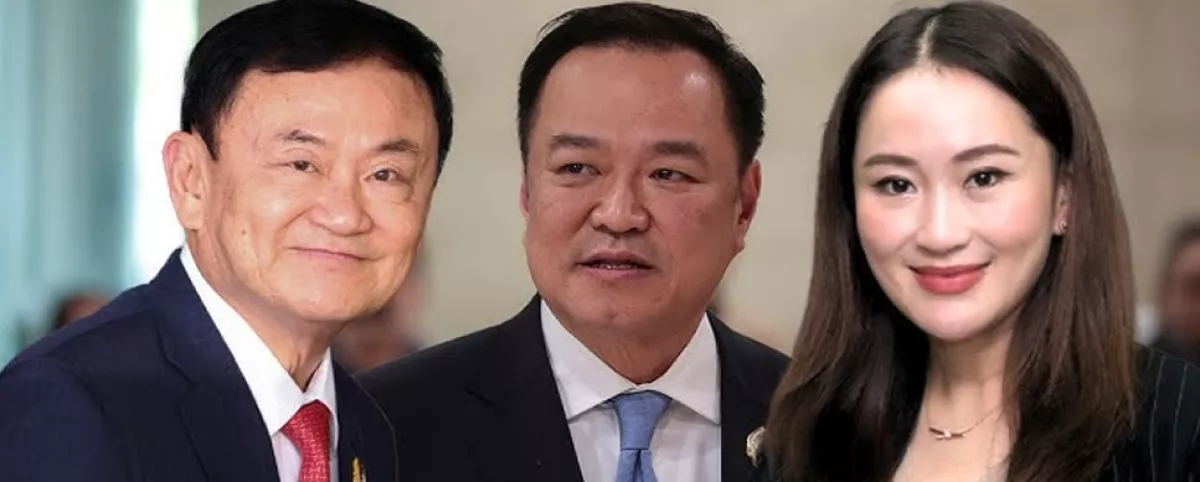
The Pheu Thai-led government later collapsed amid its handling of the conflict with Cambodia and Thaksin’s continued behind-the-scenes manoeuvring, the analysis says. Anutin then relied on support from the People’s Party after promising a series of reforms, but his failure to deliver cost him that backing and ultimately led to parliament’s dissolution.
Meanwhile, clashes with Cambodian forces have persisted since May, with only brief pauses. A ceasefire agreed last summer quickly fell apart, and although the fighting began near the border, Thai forces carried out strikes deep inside Cambodia in November. A new ceasefire signed in December is also widely seen as fragile.
The conflict has fuelled nationalist and pro-military sentiment inside Thailand, the publication notes, raising speculation that the army may have allowed the fighting to drag on to bolster support for Bhumjaithai and other conservative parties. The military is particularly wary of the People’s Party, which has pledged to end conscription, reform laws protecting the monarchy and strengthen civilian oversight of the armed forces.
Despite the wartime backdrop, polling suggests the PP remains on course for a strong showing. One recent survey found that twice as many voters intend to back the People’s Party as Bhumjaithai.
A PP victory would raise difficult questions about how the establishment might respond. In past elections, courts aligned with military and royalist elites have intervened to curb reformist movements. However, unlike in 2023, the Senate will not have a role in choosing the prime minister this time, limiting its ability to block a PP-led coalition. That would leave the courts—or, as has happened repeatedly in Thailand’s modern history, a military coup—as the only mechanisms to prevent a progressive government from taking power.
If, instead, Bhumjaithai benefits from the wartime climate and outperforms expectations, Anutin could remain prime minister at the head of a pro-military coalition. Such an outcome would satisfy the royalist and military establishment but, according to the analysis, would do little to address Thailand’s economic stagnation or stem the emigration of skilled workers. While large-scale protests would be less likely in that scenario, meaningful reform would also appear improbable.
Even in the event of a People’s Party win, the article cautions, there is no guarantee that the result would be allowed to stand unchallenged.
By Nazrin Sadigova







 editor@caliber.az
 +994 55 444-88-98
 Азербайджан, Баку, ул. Низами, 203, Af Business House, 5-й этаж