










“The EU is stalling dialogue with Azerbaijan on the Zangezur Corridor” Expert opinions on Caliber.Az
The Zangezur Corridor will have a transformative impact on the Eurasian transport landscape. This was stated by Hikmet Hajiyev, Assistant to the President of Azerbaijan and Head of the Foreign Policy Affairs Department of the Presidential Administration, in an interview with EU Today.
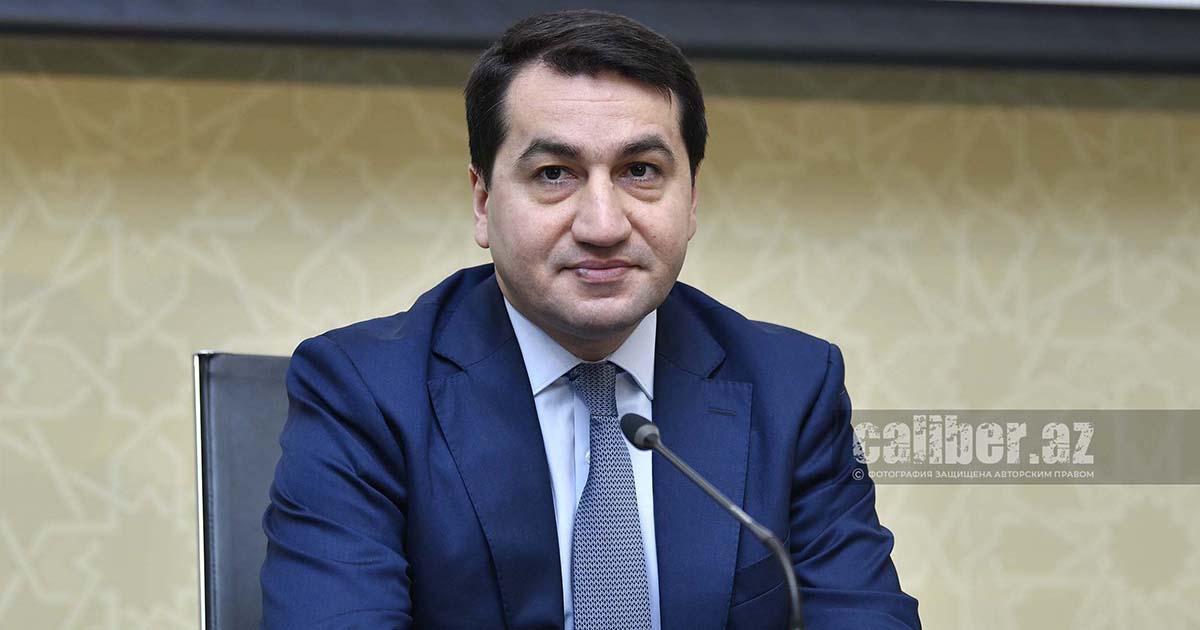
Hajiyev stressed that Azerbaijan plays a key role in this process, and that Baku “would like also to see European Union as part of this new transport composition,” including within the framework of the EU’s Global Gateway initiative. He presented the corridor as a practical component of “Azerbaijan’s winning the peace strategy.”
Baku’s appeal to the EU regarding the Zangezur Corridor was by no means accidental—the European Union has still not articulated its position on participating in the corridor’s development and is not conducting negotiations with Azerbaijan on this matter, despite actively seeking cooperation with Central Asian states, including on the development of the Middle Corridor—an aspect repeatedly highlighted in EU reports.
There is a growing impression that the European Union is almost deliberately slowing down its dialogue with Azerbaijan on the Zangezur Corridor, pretending that it is interested only in the Baku-Tbilisi-Kars route or clearly underestimating the multifunctional nature of this project. From a logistical strategy perspective, there is no such thing as an “extra” corridor — the advantage belongs to those who play on all fronts. This is precisely what the United States is doing: as one of the main beneficiaries of the TRIPP segment, Washington is now also strengthening ties with Tbilisi.
It appears that the EU is currently acting against its own interests. By delaying dialogue with Baku on the Zangezur Corridor, Brussels is depriving itself of room for manoeuvre and the opportunity to reach a more favourable agreement while there is still space and, as the saying goes, “the trams are still running”.
What do experts and analysts think about this? Azerbaijani and Russian political scientists shared their views on the issue with Caliber.Az.

Doctor of Law, Ambassador Extraordinary and Plenipotentiary, Head of the Department of International Relations and Foreign Policy at the Academy of Public Administration under the President of the Republic of Azerbaijan, Professor Namig Aliyev believes that Hikmet Hajiyev’s statement reflects Baku’s current strategic orientation and points to a broader challenge than a simple proposal addressed to the European Union.
“The Zangezur Corridor, as well as its Armenian segment TRIPP (Trump Route for International Peace and Prosperity), is a new transport route intended to link mainland Azerbaijan with Nakhchivan through Armenian territory. The project includes railway and motorway connections, as well as planned communication, energy, and logistics lines. Azerbaijan views the Zangezur/TRIPP route not merely as a project, but as part of a wider transport and logistics system that enhances the country’s export, transit, and economic potential.
In this context, Hikmet Hajiyev is inviting the EU to ‘join’ the Zangezur Corridor/TRIPP framework — in essence, offering Brussels the role of an active partner in the operation and development of the corridor, rather than that of a mere observer. This is particularly relevant within the EU’s Global Gateway initiative, through which the Union finances and invests in infrastructure projects, including those in the South Caucasus.
For Baku, EU participation is a way to integrate the project — which was named after US President Donald Trump on August 8 — into the European logistics network, reduce risks associated with its trans-regional nature, attract investment and enhance its international standing. In this formulation, Baku is effectively saying that this corridor is not only a national interest; it is a route that benefits the United States, the European Union and Central Asia,” the political analyst emphasised.
Answering the question, “Why is this important for Europe, yet it is not in a hurry?” Namig Aliyev said that, from the EU’s perspective, potential participation in the Zangezur Corridor offers several significant advantages.
First, the corridor could become a logical addition to the European transport map, strengthening links between Europe, the Caspian region, the South Caucasus and Central Asia.
Second, for the EU, participation through Global Gateway formally represents “a contribution to sustainable infrastructure, transport, and digital and energy connectivity,” which fully corresponds to the priorities of this initiative.
In addition, in his view, such a corridor provides both Ukraine and Europe with an opportunity to reduce dependence on routes running through Russia or Iran (given the geopolitical tensions) and to diversify supply chains from Asia and the Caspian region.
“EU participation would strengthen the political and economic resilience of the entire concept, turning it from a regional project into an international transport artery. However, despite Baku’s proposal, the European Union’s position remains cautious. In my view, there are several reasons for this.
The Armenian segment of the corridor has already been placed under American patronage — TRIPP was presented as a US initiative and handed over to a private company under a 99-year lease. This raises certain questions, particularly the following: ‘Can the European Union be an equal partner to the United States if the route is formally outside European jurisdiction?’
The EU is forced to balance between its desire for transport diversification and the risks of straining relations with major regional players. It may also fear that joining the project before all mechanisms are fully worked out could entail reputational or even legal risks,” the political analyst said.
According to the expert, judging by public statements from EU representatives and recent meetings, Brussels is not rejecting the idea of cooperation but wants “greater clarity” regarding the legal status, governance format, monitoring mechanisms, and guarantees of stability.
“In other words, in my view, Europe tends to see the corridor as a promising project, but first wants to ‘understand the framework’ so that its participation aligns with its standards—transparency, respect for rights, stability, the absence of external military escalation, and so on. In this sense, Brussels’ position is not so much ‘vague’ as cautious, reflecting a balance between its logistical interests and its desire to safeguard its values and strategic priorities in the region,” Aliyev stated.

Meanwhile, Russian political scientist Svyatoslav Andrianov — Director of the International Public Organisation “Centre for Political Analysis and Information Security,” member of the German Council on Foreign Relations, and Chairman of the Berlin Committee for Strategic Partnership in Eurasia — believes that the opening of the Zangezur Corridor, alongside the Baku–Tbilisi–Kars railway, will benefit all Central Asian states and strengthen Azerbaijan’s position as a global logistics hub. At the same time, global actors have their own considerations and plans regarding this issue.
“First and foremost, this concerns Türkiye, Iran in coordination with Russia, and of course the EU, whose contradictions with Washington have sharply intensified since Donald Trump’s election as US president. While the latter has actively engaged in the process by implementing a plan to establish logistics capacities under its control, Brussels is delaying the articulation of a clear position, including due to divisions within the EU bureaucracy concerning Yerevan. And this is despite the fact that Armenia’s prime minister signed a joint declaration with the president of Azerbaijan back in August of this year and has repeatedly stated that the future corridor will benefit not only the Armenian people, but also Iran and Russia,” the political scientist said.
He noted that a situation is emerging in which, beyond Azerbaijan, Armenia, and the Central Asian countries, this transport corridor will even benefit their “sworn frenemies” — Russia, Iran, and the United States.
“Can this make Brussels happy? Is Europe truly interested in further normalising relations between Armenia and Azerbaijan? Is it in its interest for Baku to strengthen its political and economic influence in the South Caucasus, or will the Brussels bureaucracy continue to prefer playing on contradictions and old grievances, following the principle of ‘divide and rule’? These are, of course, rhetorical questions that have little to do with economic rationality.
And the longer the EU delays forming a position on Zangezur, the less room for manoeuvre it leaves itself — at least if we reason in terms of economic logic, which the European Union has repeatedly abandoned in recent years in favour of an ‘economy of conviction,’ where ideology outweighs business, and where billion-euro losses can be tolerated for the sake of political principles.
Whether the ‘voice of reason’ will prevail in Brussels this time, we will see in the coming months. In my view, it will not — because over the past decade the EU has finally turned into an entirely ideologised union, where any attempt to place economic pragmatism above political doctrine is effectively treated as heresy,” Andrianov concluded.







 editor@caliber.az
 +994 55 444-88-98
 Азербайджан, Баку, ул. Низами, 203, Af Business House, 5-й этаж