










Who will rule Iran? Race between Islamic Republic’s “dark horses” begins
The assassination of Iran's Supreme Leader Ali Khamenei, who led Iran for nearly four decades as its political and spiritual authority, has triggered one of the most uncertain transitions in the history of the Islamic Republic. He had ruled since 1989, when he was selected to succeed the Republic’s founder, Ruhollah Khomeini.
The escalating confrontation between Iran and a joint American-Israeli campaign, which brought upon a wave of retaliatory Iranian strikes across multiple countries in the region, is still unfolding, yet questions are mounting over who will ultimately steer the Islamic Republic through this volatile period.
Reaction inside the country has been sharply divided following the announcement of his passing. Some mourn the death of a figure who dominated Iran’s political life for nearly 40 years, while others see it as a potential opening for long-awaited change.
Speculation over succession had intensified for years, fuelled not only by the 86-year-old leader’s advanced age but also by a series of targeted killings of senior Iranian officials in recent years during American and Israeli operations, raising the possibility that he, too, could be targeted.
Although Khamenei did not publicly designate a successor during his reign, Iran’s Assembly of Experts had reportedly been reviewing potential candidates behind closed doors.
Who rules Iran now?
Following official confirmation of his death by state media, a Provisional Leadership Council (PLC) assumed authority until the Assembly of Experts appoints a permanent successor. Under the constitution, the council must consist of the sitting president, the head of the judiciary and a cleric from the Guardian Council selected by the Expediency Discernment Council.
That currently places reformist President Masoud Pezeshkian alongside hardline judiciary chief Gholamhossein Mohseni Ejei — an unusual pairing reflecting Iran’s internal political balance. According to reporting by Al Jazeera, the Guardian Council selected Ayatollah Alireza Arafi, a cleric who heads the powerful Basij paramilitary force, to complete the council’s composition.
Iran’s armed forces, including the Islamic Revolutionary Guard Corps (IRGC), as well as the judiciary, continue to function through their established chains of command.
Who will determine the new supreme leader?
The next supreme leader will be chosen by the Assembly of Experts, an 88-member clerical body elected every eight years. However, all candidates for the assembly must first be vetted by the Guardian Council, which frequently disqualifies those deemed insufficiently loyal to the Islamic Republic. The constitution requires the assembly to convene and appoint a successor as soon as possible.
The supreme leader must be a male Islamic cleric possessing political competence, moral authority and loyalty to the Islamic Republic. A constitutional amendment in 1989 removed the requirement that the leader be a Grand Ayatollah — a change that enabled Khamenei’s own appointment and subsequent elevation in religious rank.
Pool of potential successors
Many analysts believe one of Khamenei’s son, Mojtaba Khamenei, is emerging as a leading contender, despite the fact that hereditary succession conflicts with Shiite political theology, which emphasizes religious qualification over lineage. An earlier article in the Foreign Affairs magazine highlighted the 57-year-old cleric’s growing political influence and reported efforts to position him as both a capable Islamic jurist and a modernizer able to address economic hardship and political unrest.
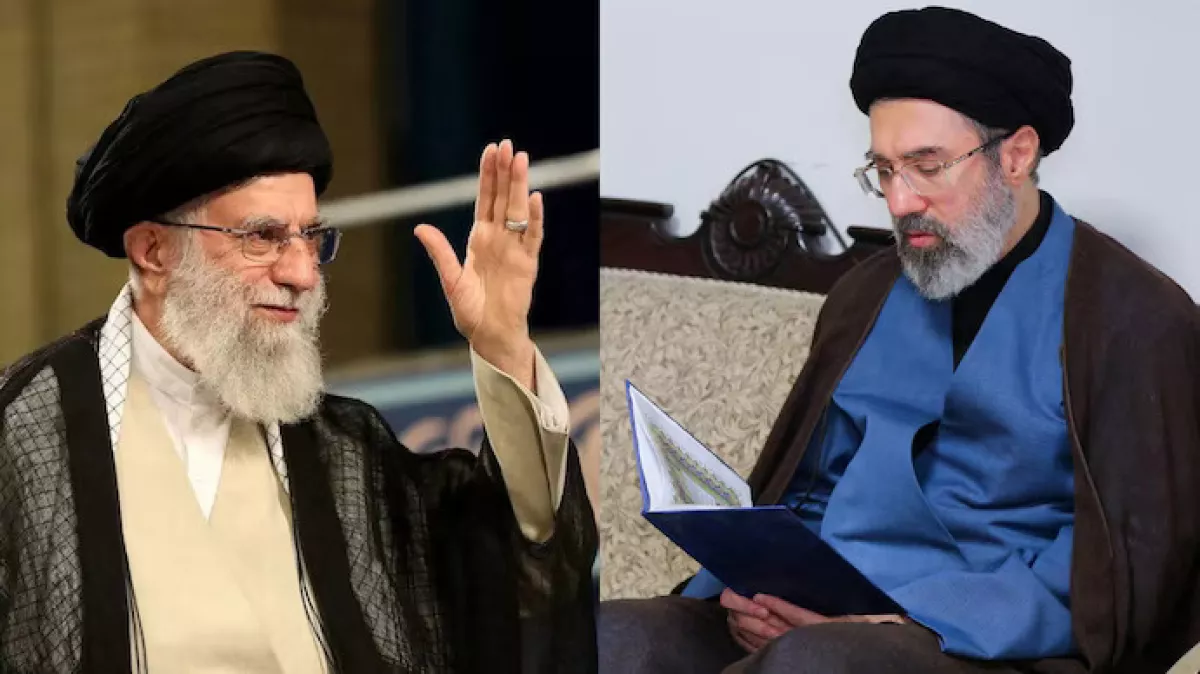
Shiite doctrine holds that authority derives from divine duty rather than inheritance. Even Khomeini invoked that principle in the late 1980s when he prevented his own son from succeeding him. Khamenei himself once criticized monarchical systems, deriding in January 1990 the practice of transferring sovereignty from father to son. Yet recent moves to frame Mojtaba as a legitimate clerical authority suggest an evolution in that stance.
Despite attempts to bolster his credentials, there is limited evidence that Mojtaba fully meets the constitutional requirements for supreme leadership. He has published few theological works, rarely appears in public, and has kept his teachings largely private. Supporters, however, argue that his leadership could revitalize what they describe as a stagnant governing system.
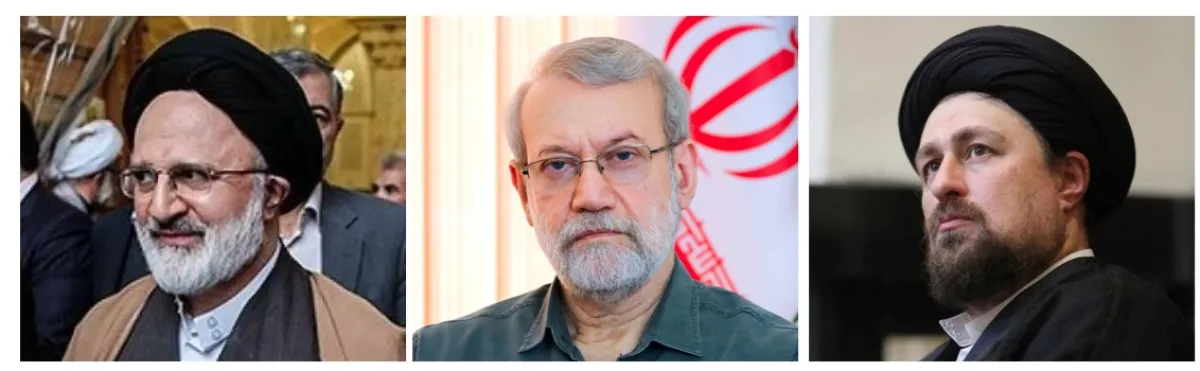
However, his path to succession is far from assured. Khamenei previously elevated former president Ebrahim Raisi, though Raisi later fell out of favour before his death in a helicopter crash in May 2024. Other names frequently mentioned include Ali Asghar Hejazi, the powerful security chief within the supreme leader’s office, widely regarded as one of Khamenei’s most trusted aides and a constant presence in his private meetings.
Another prominent figure is Ali Larijani, an Iraqi-born Iranian politician and former IRGC officer who has served as secretary of the Supreme National Security Council since 2025. He is widely expected to remain influential regardless of who ultimately assumes the top post.
A figure that has emerged as another serious candidate in recent months is Hassan Khomeini, the grandson of the father of the Islamic Revolution, Ruhollah Khomeini. According to US media reports, he is close to Iran's reformist movement headed by the sitting president while being respected by the hard-line clerics due to his ancestral background.
Yet most potential “dark horse” candidates share Khamenei’s hardline ideological outlook, making sweeping policy shifts unlikely no matter who prevails.
Beyond the Islamic Republic's establishment, the two rival opposition figures are also positioning themselves for a possible post-Khamenei Iran. Following US strikes, opposition leader Maryam Rajavi and exiled crown prince Reza Pahlavi issued separate messages urging national unity while outlining sharply different visions for the country’s future.
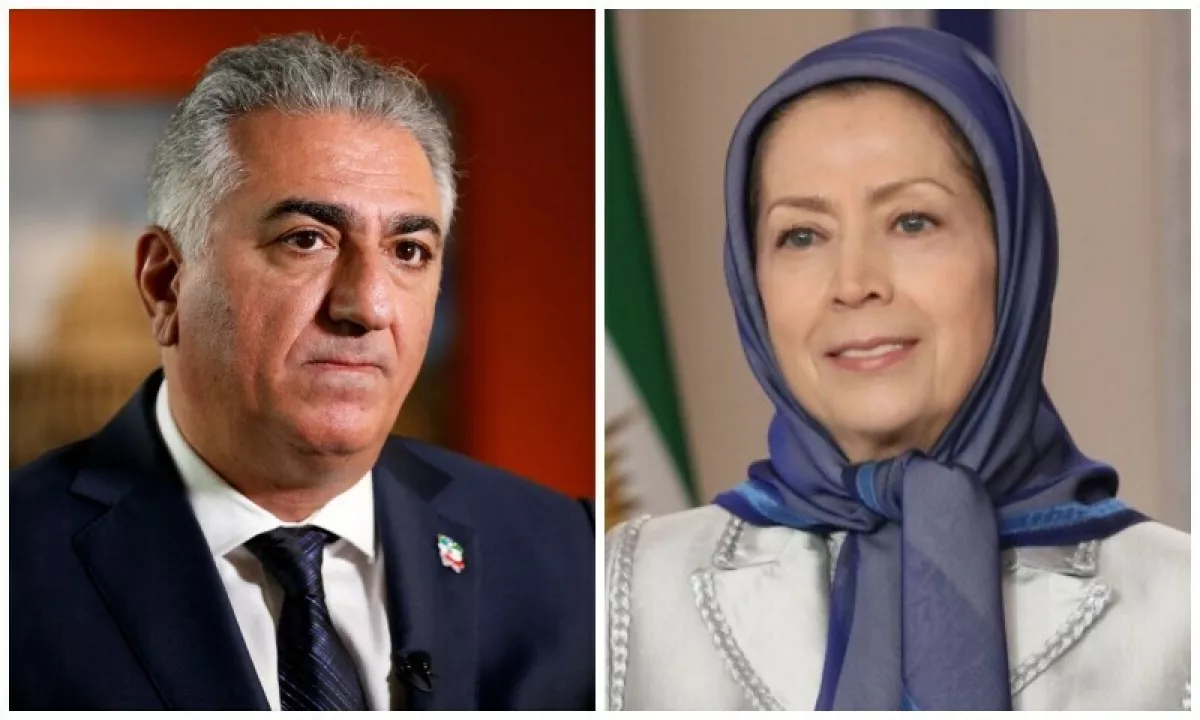
Rajavi is the president-elect of the Paris-based National Council of Resistance of Iran (NCRI). In a message to Iranians, she called on Iranians to overthrow the country's ruling clerical regime and to create a democratic republic. Founded after the 1979 Islamic Revolution, the NCRI presents itself as a government-in-exile. According to the party, it has a ready blueprint for a six-month transitional administration that would organise free elections and transfer sovereignty to the people.
Both exiled leaders also appealed directly to Iran's military and security forces to make way for a democratic transition of power.
By Nazrin Sadigova







 editor@caliber.az
 +994 55 444-88-98
 Азербайджан, Баку, ул. Низами, 203, Af Business House, 5-й этаж