










Ancient Roman staircase unearthed beneath Cologne museum site
The sound of jackhammers is nothing new in Cologne, a city layered with more than two millennia of history. But what archaeologists have just uncovered beneath the construction site of the future MiQua Jewish Archaeological Museum has exceeded even their expectations.
During excavation work near Cologne’s City Hall, researchers discovered a massive 4th-century foundation, a remarkably well-preserved 1st-century staircase leading from the banks of the Rhine River, and — most strikingly — a rare 2nd-century private Roman altar known as a lararium. The shrine is believed to be the first of its kind ever found north of the Alps, according to a report by ZME Science.
The finds were made at the site of the MiQua museum, which is being built in the historic heart of the city and designed to incorporate archaeological remains directly into its structure.
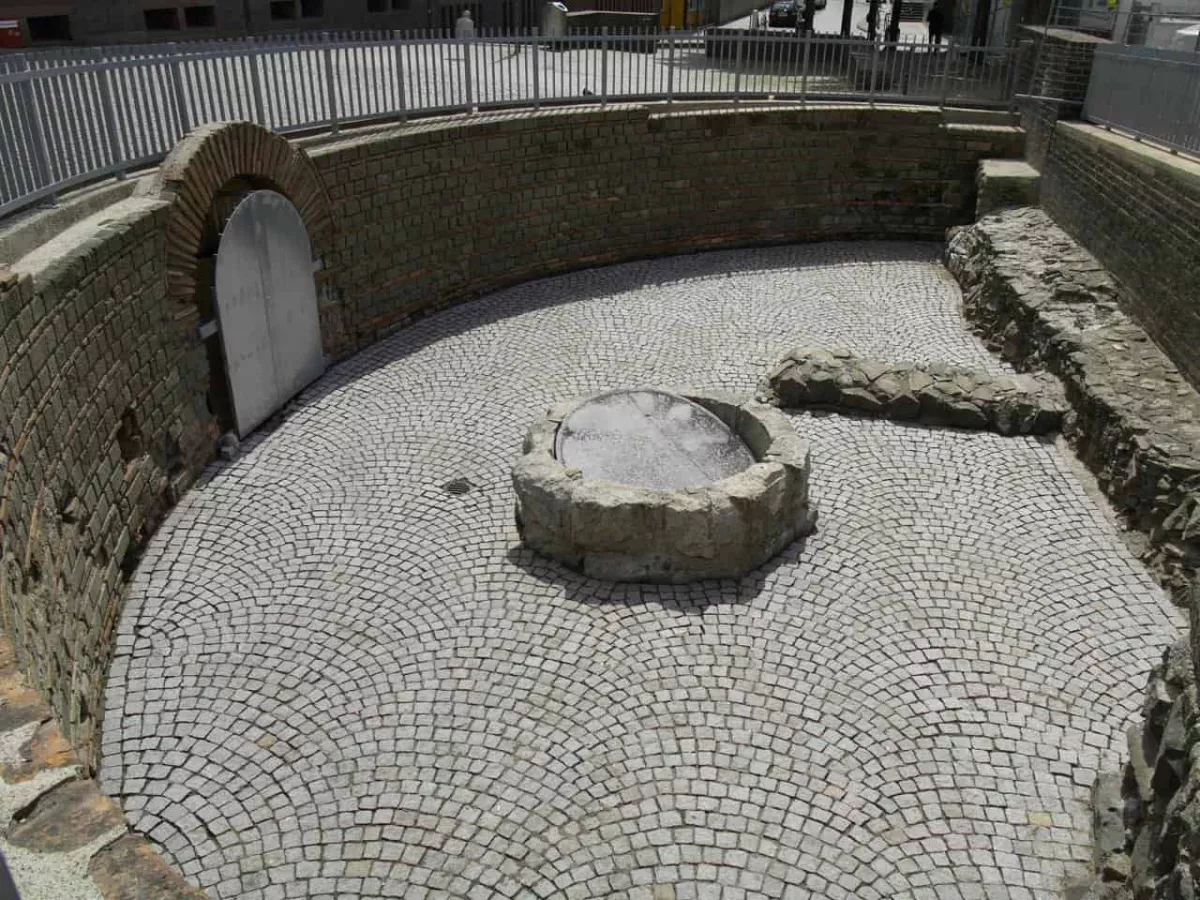
Window into Roman Cologne
Modern Cologne stands atop the ancient Roman city of Colonia Claudia Ara Agrippinensium, once a major political and administrative center of the Roman Empire. The provincial governor resided here in a sprawling palace complex known as the Praetorium, long recognised as one of the most significant Roman structures in northern Europe.
While parts of the palace have been known for decades, the latest excavations reveal that substantial sections remained hidden beneath layers of later development.
Among the most remarkable discoveries is a nearly 2,000-year-old stone staircase. In the 1st century, this part of the city sloped steeply toward the Rhine. To manage the terrain, Roman architects constructed terraces and connecting stairways linking the elevated ceremonial halls of the governor’s palace with the lower riverfront.
Such staircases rarely survive. In medieval Europe, Roman stonework was frequently dismantled and reused as building material. Archaeologists believe this staircase endured because it was intentionally buried early in the palace’s history, when expansion projects required filling lower levels with earth and rubble to create a stable platform. Ironically, the Romans’ own redevelopment preserved the structure from later stone robbers.
Rare glimpse of private Roman faith
Even more extraordinary is the discovery of the lararium — a small household shrine dedicated to the Lares, protective spirits of the family and ancestors.
Lararia were common in Roman homes across Italy, from modest apartments to grand villas. Families would leave offerings of food, wine, or light to safeguard their household. However, such shrines are almost never found in the northwestern provinces of the empire, where centuries of rebuilding typically erased delicate domestic structures.
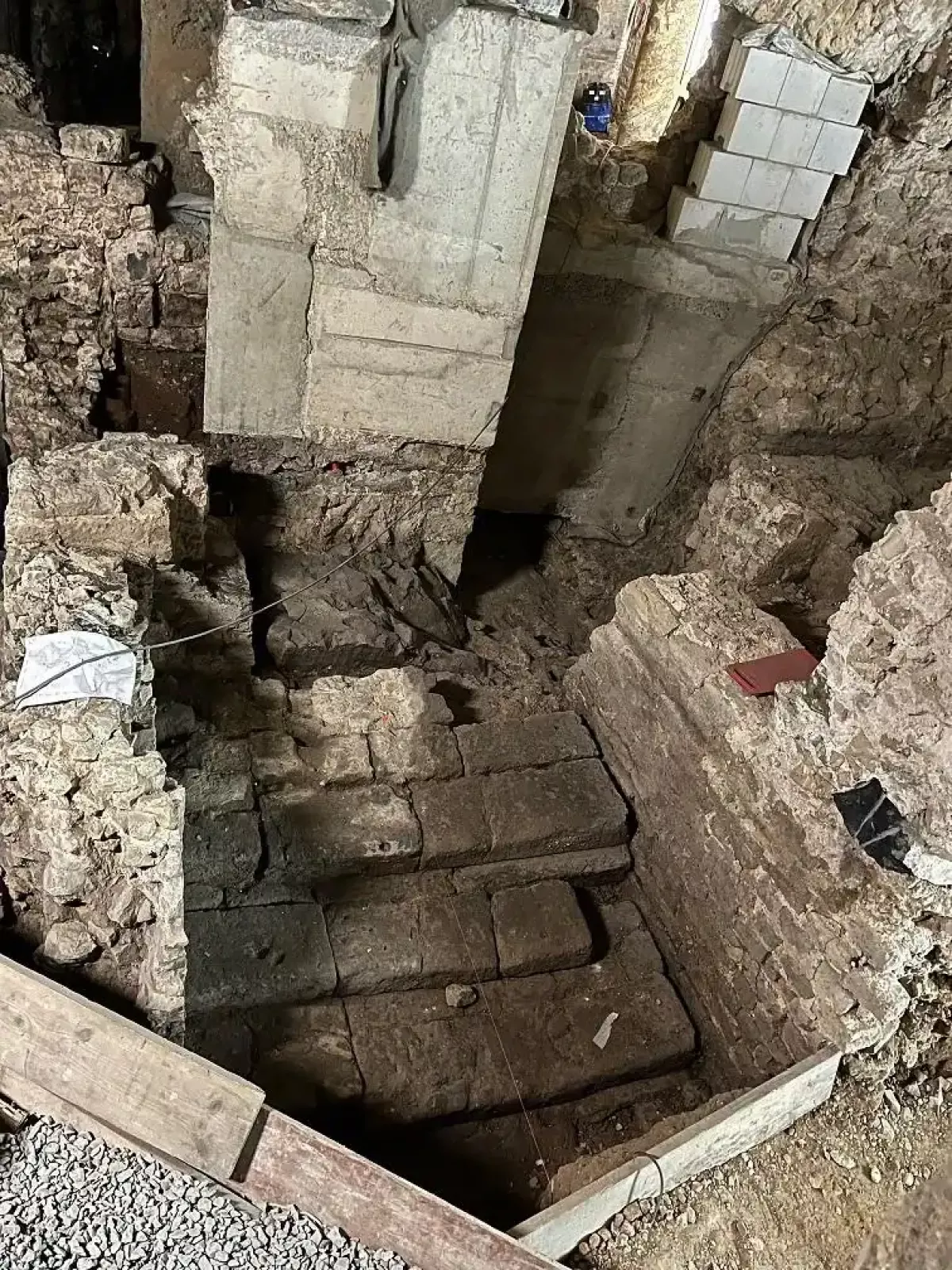
While similar altars have been preserved in places like Pompeii and Herculaneum, thanks to volcanic ash from Mount Vesuvius, this is the first known example discovered north of the Alps.
Experts say the find offers rare insight into the personal religious practices of Roman elites stationed far from Italy. Rather than worshipping in grand public temples alone, high-ranking officials in Cologne maintained intimate rituals reflecting traditions carried from the Mediterranean heartland.
Archaeologists also re-examined the enormous 4th-century basilica foundation on the site. Measuring four meters thick, the structure was constructed using cocciopesto — a specialised Roman mortar made by mixing crushed ceramics and gravel into lime. The technique created an exceptionally durable material capable of withstanding centuries of environmental stress.
Layered with volcanic tuff, basalt, and limestone, the foundation demonstrates the advanced engineering required to stabilize monumental buildings near the Rhine River.
The MiQua museum plans to integrate the newly discovered remains directly into its exhibition space. Future visitors will be able to walk through underground areas once used by Roman officials and stand near the private altar where offerings were made nearly 2,000 years ago.
By Sabina Mammadli







 editor@caliber.az
 +994 55 444-88-98
 Азербайджан, Баку, ул. Низами, 203, Af Business House, 5-й этаж