










Battlefields in Ukraine expose Russian Su-35's challenges Analysis by 19FortyFive
The Russian Su-35 is often marketed as the country’s most capable operational fighter, a so-called “fourth-generation-plus” jet meant to offer near–fifth-generation performance without stealth. In aerodynamic terms, the aircraft represents the peak of the Soviet and Russian design philosophy, excelling at low- to medium-speed maneuverability, endurance, and weapons carriage.
In permissive or semi-contested environments, it remains an effective and formidable platform. However, a recent analysis by a defence journal argues that while the aircraft’s raw performance is impressive, it ultimately exposes the limits of Russia’s current aerospace model.
Developed as a deep modernization of the Su-27 Flanker lineage, the Su-35 was designed to extend the life of a proven airframe and bridge the gap to the repeatedly delayed Su-57.
Rather than adopting a clean-sheet design, the program relied on incremental upgrades, prioritizing kinematics, long-range weapons, and a powerful radar. This approach also made the aircraft attractive to export customers unable or unwilling to purchase stealth fighters.
However, these strengths come with significant trade-offs, as an analysis by the American 19FortyFive outlet notes, stating that the Su-35 “has excellent kinematics, thrust-vectoring maneuverability, long firing range, and the ability to carry heavy weapons.”
“But these characteristics come at the cost of a large radar signature and a weaker data-fusion and network-centric warfare system than those of leading Western and Chinese fighters,” the journal writes. The aircraft’s radar, engines, and airframe all prioritize performance over signature reduction, leaving it non-stealthy by modern standards and highly vulnerable in contested airspace.
This lack of stealth, the article argues, is the Su-35’s defining weakness.
“The shortcoming is obvious: the lack of stealth poses a serious problem,” he writes, adding that the aircraft is also “a sign of stagnation in the transition to true next-generation air power.”
Its large radar cross-section limits survivability against modern integrated air defenses and fifth-generation fighters, which could potentially launch missiles before the Su-35 even detects their presence.
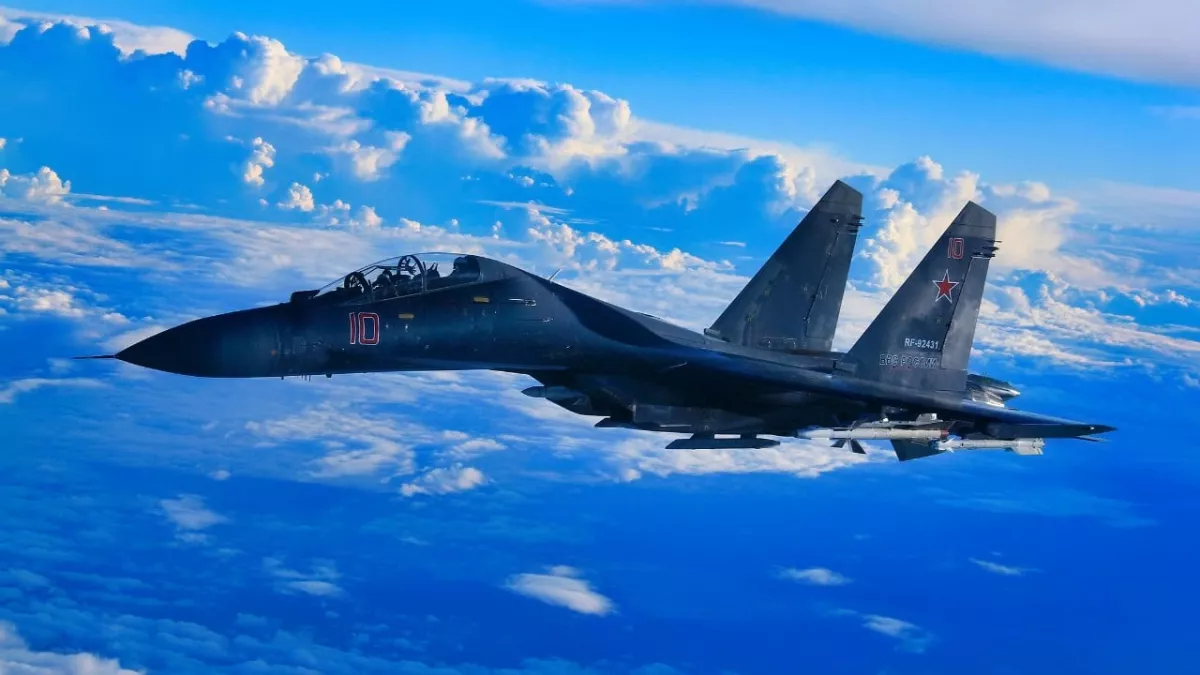
Operational experience has reinforced these concerns. In Ukraine, Su-35s have largely been employed from standoff distances, avoiding deep penetration into defended airspace. Losses to modern surface-to-air missile systems highlight the gap between the jet’s advertised capabilities and its real-world survivability in high-intensity conflict.
The outlet concludes that the Su-35 ultimately marks the end of the evolutionary road for fourth-generation fighters in Russia’s aerospace industry, rather than the beginning of a true fifth-generation era.
Sanctions, budgetary pressure, and restricted access to advanced electronics have further strained production, limiting fleet size and export prospects. In this sense, the Su-35 stands as both a technically impressive aircraft and a symbol of the challenges facing Russia’s ambitions in modern air power.
By Nazrin Sadigova







 editor@caliber.az
 +994 55 444-88-98
 Азербайджан, Баку, ул. Низами, 203, Af Business House, 5-й этаж