










Boeing's X-32: Story behind forgotten rival to F-35 fighter jet
The concept behind the Boeing X-32 remains one of the most intriguing “what if” stories of the post-Cold War era. Developed in the 1990s as Boeing’s entry into the US military’s Joint Strike Fighter (JSF) competition, it ultimately lost out to what became the F-35 Lightning II.
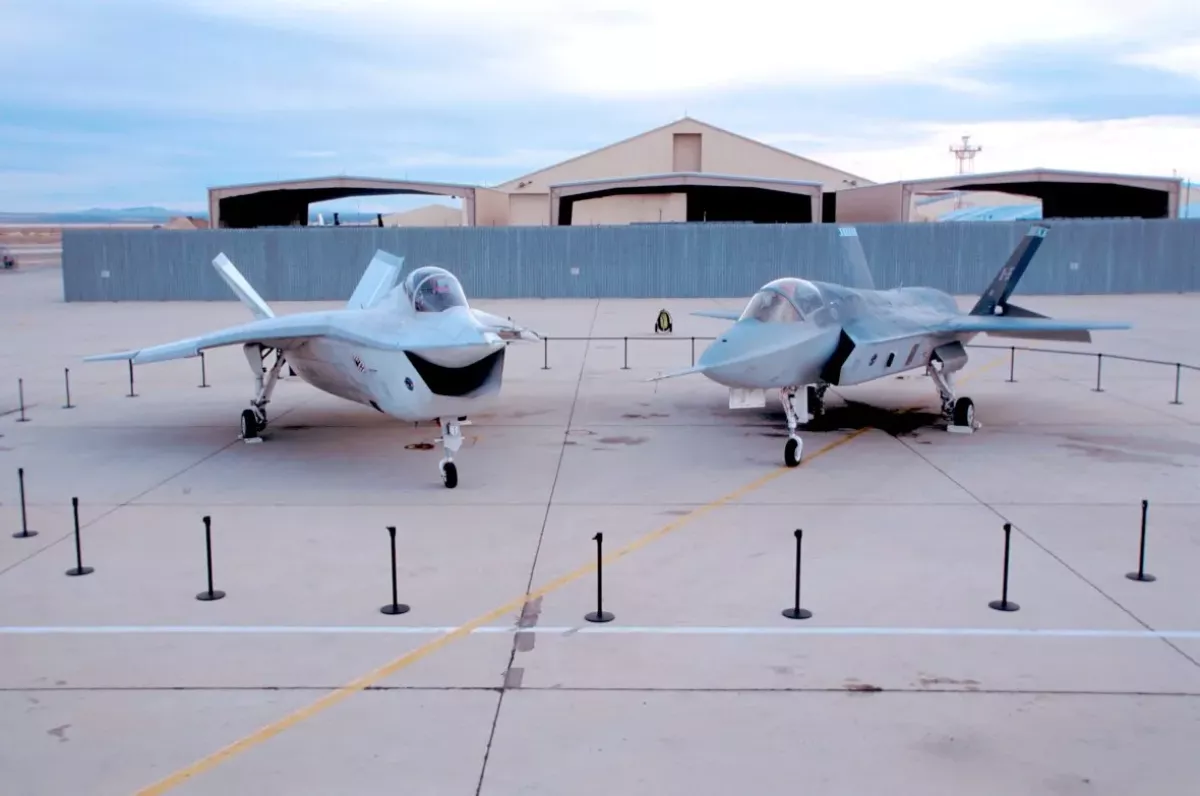
The X-32A variant made its maiden flight on September 18, 2000, serving as Boeing’s candidate for the US Air Force, while the X-32B was tailored for the Navy and Marine Corps. The reasons behind its defeat are explored in a review by 19FortyFive.
The goal of the JSF program was to develop a stealth-enabled, lightweight, multirole aircraft capable of both air-to-air combat and ground attack, while also incorporating short takeoff and vertical landing (STOVL) capabilities. The aircraft was intended to eventually replace platforms such as the F-16 Fighting Falcon, F/A-18 Hornet, and AV-8B Harrier II.
The program’s roots trace back to 1993, when the Defence Advanced Research Projects Agency launched the Common Affordable Lightweight Fighter project. This later merged with the Joint Advanced Strike Technology initiative before being renamed the Joint Strike Fighter program in 1995.
Why the X-32 fell short
According to the outlet's analysis, one of the X-32’s major shortcomings lay in the STOVL system of the X-32B variant. Hot exhaust gases were recirculated into the aircraft’s intake, reducing thrust and causing overheating—an issue that proved difficult to overcome.
The aircraft’s design also posed challenges for stealth. Its large chin intake and overall geometry made it harder to manage radar visibility, with exposed compressor blades increasing its radar cross-section and undermining stealth performance.
Additionally, the X-32’s delta-wing configuration, combined with the absence of horizontal tail surfaces, limited pitch control. This reduced manoeuvrability and complicated carrier landings—key requirements for naval operations.
Following the competition, the F-35 Lightning II family—F-35A, F-35B, and F-35C—entered service with the US Air Force, Marine Corps, and Navy. Meanwhile, the F-22 Raptor, developed under a separate program, remains exclusive to the Air Force.
The two X-32s were relegated to museum exhibitions. The first prototype, the X-32A, can be viewed at the Research & Development gallery of the National Museum of the United States Air Force at Wright-Patterson Air Force Base in the US state of Ohio, while the X-32B model is housed at the Patuxent River Naval Air Museum (PRNAM) in Maryland.
By Nazrin Sadigova







 editor@caliber.az
 +994 55 444-88-98
 Азербайджан, Баку, ул. Низами, 203, Af Business House, 5-й этаж