










Death of Thai princess throws question of royal succession into uncertainty
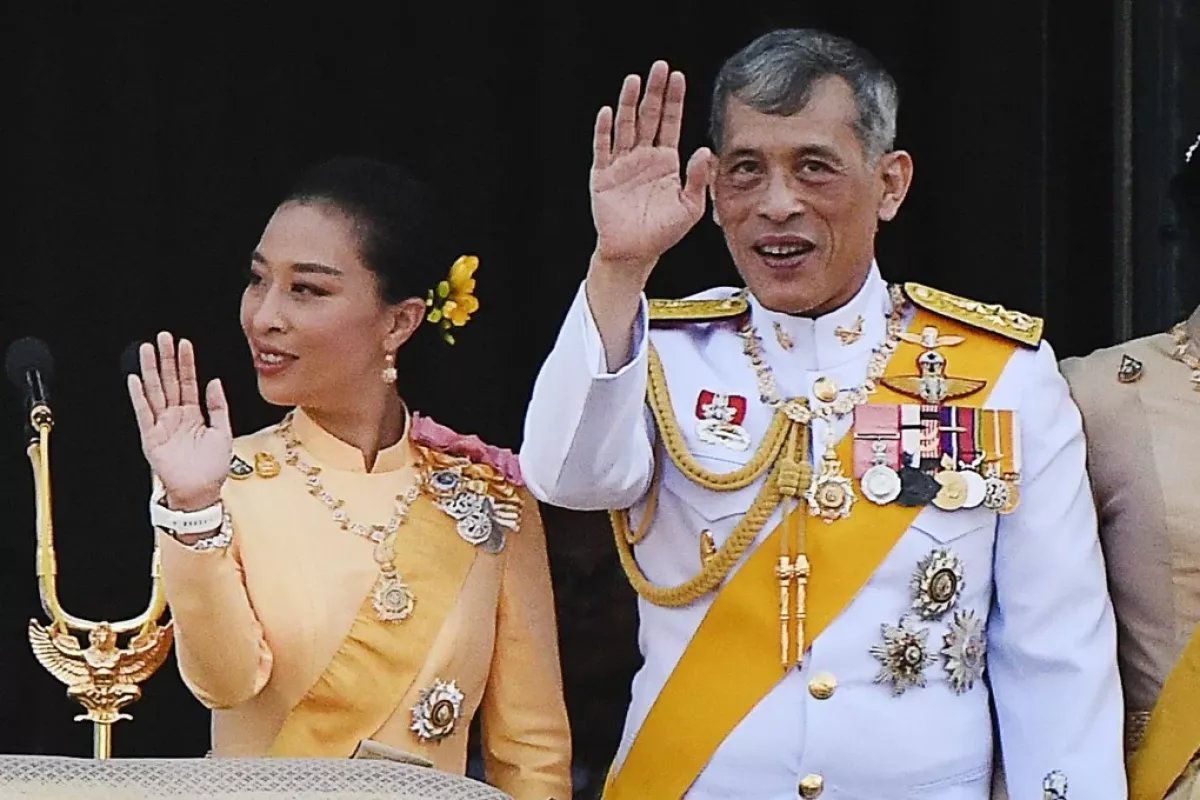
The Thai royal household has announced the death of Princess Bajrakitiyabha, who had remained in a coma for more than three years after suffering a sudden medical emergency.
Her passing marks the loss of one of Thailand's most accomplished and publicly respected royals, as international media outlets have noted, seeing as she was a figure widely viewed as a potential stabilizing force in the monarchy amid lingering uncertainty over the royal succession.
The 47-year-old princess collapsed back in December 2022 after developing a severe heart infection that led to irregular heart activity. Since then, she had been kept alive with the support of an artificial heart-lung machine. Her death was confirmed by the Royal Household Bureau on June 12.
The princess was the eldest child of King Vajiralongkorn and his first wife and cousin, Queen Somasawali.
A trained lawyer, she graduated from Thailand's prestigious Thammasat University before earning two postgraduate law degrees at Cornell University in the United States. She began her career at Thailand's mission to the United Nations in New York before returning home to serve in the Office of the Attorney General. Her latter employment gained her the nickname of "Prosecutor Princess" in her home country.
From 2012 to 2014, she served as Thailand's ambassador to Austria, where she developed close ties with the United Nations Office on Drugs and Crime (UNODC).
She later became a prominent advocate for criminal justice reform, focusing particularly on the treatment of vulnerable women in prison. Thailand has one of the world's largest female prison populations, and Princess Bajrakitiyabha frequently called for reforms to a justice system that often imposes severe penalties for relatively minor drug offences.
After returning to Thailand, she was appointed the UNODC's Ambassador for the Rule of Law in Southeast Asia, continuing her campaign for a more equitable criminal justice system.
In 2021, King Vajiralongkorn appointed her chief of staff of his private bodyguard, awarding her the rank of general—a move widely interpreted as a sign of her growing influence within the royal household.
Thai royal succession under question
Princess Bajrakitiyabha's death has once again thrust the question of Thailand's royal succession into the spotlight.
King Vajiralongkorn, 73, has never formally named an heir to the throne. Although Thai royal tradition favours a male successor, a constitutional amendment adopted in 1974 permits a woman to become monarch.
The king has seven children from four marriages—five sons and two daughters. Four sons from his second marriage were stripped of their royal status in 1996 and have lived in the United States ever since with their mother.
His youngest son, Prince Dipangkorn, born to the king's third wife, is widely regarded as the presumed heir. However, questions have periodically been raised about his ability to carry out the demanding responsibilities of the monarchy, an institution that continues to wield considerable influence in Thai society.
Against that backdrop, many royal observers viewed Princess Bajrakitiyabha as the monarchy's most capable and experienced member. With distinguished careers in law, diplomacy and public service, she was widely seen by many Thai royalists as the strongest candidate either to become Thailand's first reigning queen or to serve as regent should Prince Dipangkorn eventually inherit the throne.
Her collapse in 2022 had already fuelled speculation about the future of the monarchy, with foreign media reporting that Thailand's royal succession had been "plunged into uncertainty." Her death is now expected to intensify those questions, as the kingdom's future line of succession remains formally unresolved.
By Nazrin Sadigova







 editor@caliber.az
 +994 55 444-88-98
 Азербайджан, Баку, ул. Низами, 203, Af Business House, 5-й этаж