










Growing rocket failures reignite concerns over environmental cost of space race
As the global space industry enters what many describe as a renewed “space race,” launch activity is accelerating worldwide. Yet even as rocket technology becomes more advanced, failures remain an unavoidable part of development — including a recent Blue Origin launch failure that left clean-up crews dealing with the aftermath of a catastrophic explosion in late May. The incident has also reignited scrutiny over the environmental consequences of rocket launches when they go wrong.
The space industry’s rapid expansion is carrying a growing ecological cost, particularly when missions fail, as highlighted in a recent BBC piece.
When SpaceX’s Starship lifted off from Boca Chica, Texas on 20 April 2023, expectations were tempered despite the scale of the rocket, the most powerful ever built. The vehicle rose successfully, drawing cheers from onlookers as its 33 engines propelled it skyward. But just under four minutes into the planned 90-minute flight, it exploded and fell into the sea in what engineers later described as a “rapid unscheduled disassembly.” SpaceX owner Elon Musk called the outcome “exciting,” and the mission was still framed internally as a success.
From an engineering standpoint, it did provide valuable data. But the launch also had unintended consequences that only became fully apparent later: the explosion damaged the launch infrastructure itself and scattered debris across the surrounding area.
Boca Chica sits on the southern edge of the United States, bordering the Gulf of Mexico and adjacent to sensitive ecosystems, including state parks and wildlife refuge areas that host protected species and migratory birds. When the rocket engines ignited, the launchpad was engulfed in a dense cloud of dust and smoke. The blast reportedly excavated a crater beneath the structure and propelled fragments of concrete, metal, and soil up to 10 kilometers away. Local reports also described ash-like fallout over nearby communities, while conservation areas were found littered with debris.
Although no injuries were reported, the impact was significant enough for the US Fish and Wildlife Service to document environmental damage in the surrounding protected lands, and Starship operations were temporarily grounded.
SpaceX had previously agreed to strict environmental conditions and conducted limited static fire tests before launch, though not at full thrust. Following the incident, Elon Musk acknowledged that a “massive water-cooled steel plate” designed to protect the pad during liftoff had not been ready in time.
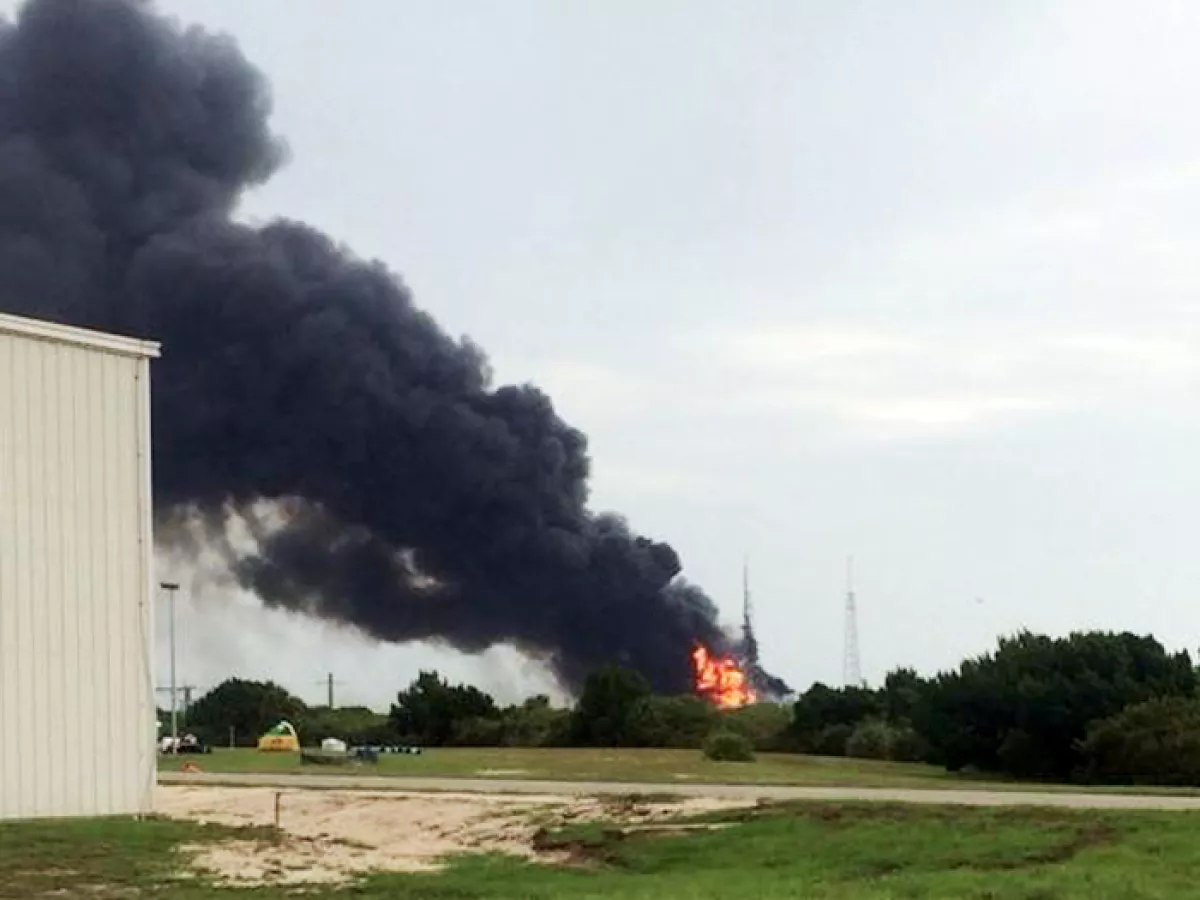
Environmental groups have since raised concerns about launching heavy rockets near sensitive habitats. “It’s hard to watch these huge explosions,” said Sarah Gaines Barmeyer, deputy vice president of conservation programmes at the National Parks Conservation Association (NPCA). “The amount of environmental destruction they cause with the debris, and the potential for fires, air and water pollution – we would like to see more security and testing before we’re launching spaceships near protected areas.”
In the aftermath of the Boca Chica explosion, several conservation organisations filed legal challenges against regulators over launch approvals. The NPCA has also warned about broader risks as commercial spaceports expand, including proposed sites along the US coast.
A similar set of concerns has emerged following the Blue Origin explosion in May 2026, which reportedly damaged its launch infrastructure and nearby buildings. Early indications suggest debris may also have entered surrounding waters, with material expected to wash ashore in the coming days. While the full environmental assessment is still underway, the incident has added to growing debate over how to balance the rapid expansion of spaceflight with the environmental risks posed when launches fail.
By Nazrin Sadigova







 editor@caliber.az
 +994 55 444-88-98
 Азербайджан, Баку, ул. Низами, 203, Af Business House, 5-й этаж