










Media: Russia acquires “Trojan horse” properties near European military sites
Russian intelligence agencies are reportedly turning properties across Western Europe into a network of “Trojan horses” aimed at coordinated sabotage, according to intelligence officials cited by The Telegraph.
Exploiting weak legal frameworks, clandestine Russian units are suspected of acquiring real estate near military bases, ports, civilian infrastructure, and key transport routes in at least a dozen European countries.
Officials warn that properties including holiday homes, warehouses, abandoned schools, city flats, and even islands could serve as launchpads for surveillance, sabotage, and covert attacks.
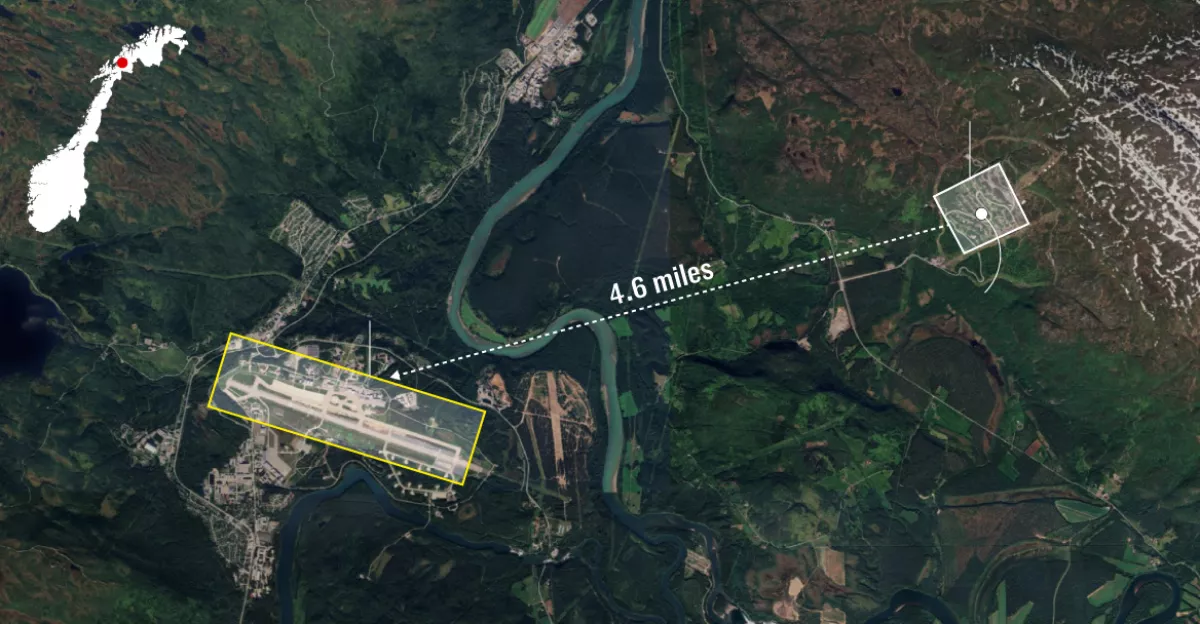
Russian cabins near Norwegian military base
Former and serving intelligence officers have expressed fears that explosives, drones, weapons, and operatives may already be pre-positioned for use in a crisis. Intelligence assessments suggest that Moscow’s operations are intended to test NATO’s response in the “grey zone,” using deniable attacks to disrupt transport, communications, and energy networks while complicating collective defence decisions under Article 5.
Britain is considered particularly vulnerable. Authorities have investigated suspicious property acquisitions near MI6 headquarters in London, the U.S. embassy at Nine Elms, and potential sites overlooking the Trident submarine base at Faslane and subsea cable landing points in Shetland.
Cyprus has also raised concerns about Russian-owned homes near RAF Akrotiri. Blaise Metreweli, MI6 chief, described Britain as “operating in a space between peace and war,” highlighting the risks posed by tactics just below the threshold of armed conflict.
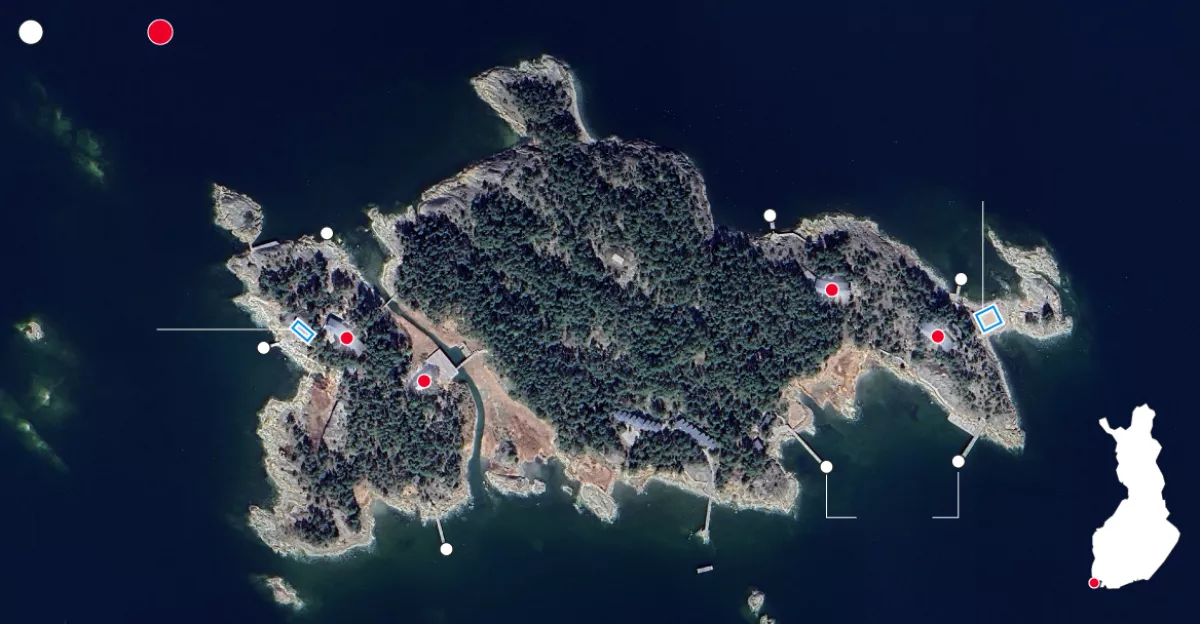
Russian 'military' island in Finland
Finland, widely regarded as the model for countering such activity, banned Russian and Belarusian property purchases in July 2025 after the company Airiston Helmi acquired 17 properties, including the island of Sakkiluoto. Investigators discovered buildings equipped with barracks, satellite dishes, security cameras, piers, and a helipad.
The owner received a suspended fraud sentence, while Moscow denied espionage allegations. Similar operations are believed to have been scaled down across Europe, turning hundreds of otherwise ordinary properties into listening posts, safe houses, and potential weapons depots.
Nordic intelligence reports highlight Kremlin-linked acquisitions near ports and military bases in Norway, Sweden, and Finland, including Russian Orthodox Church properties near Haakonsvern naval base and Västerås airport.
Outside the region, Russian-linked estates have been flagged near naval sites in Sicily, Crete, Greece, and strategic sites in London, Paris, and Geneva. Switzerland has raised concerns over Russian purchases near a federal chemical protection institute and villages near the Large Hadron Collider.
Experts warn that Europe’s response remains fragmented, with a patchwork of national laws and limited intelligence-sharing, leaving gaps for Russia to exploit. While China is reportedly pursuing a similar but more limited long-term surveillance strategy, Russia’s focus is immediate and potentially more dangerous, preparing to strike with pre-positioned assets in a future crisis.
By Aghakazim Guliyev







 editor@caliber.az
 +994 55 444-88-98
 Азербайджан, Баку, ул. Низами, 203, Af Business House, 5-й этаж