










New urban project to reshape one of most secluded places on Earth
Bhutan—often described as the world’s last Buddhist kingdom—remained largely closed to outsiders for centuries, only opening its doors to tourism in 1974. Even then, it adopted a strict “High Value, Low Volume” policy to protect its culture and avoid overtourism.
Now, the planned reopening of a major airport tied to the ambitious Gelephu Mindfulness City (GMC) signals a new chapter—one that aims to improve access while staying true to the country’s core values.
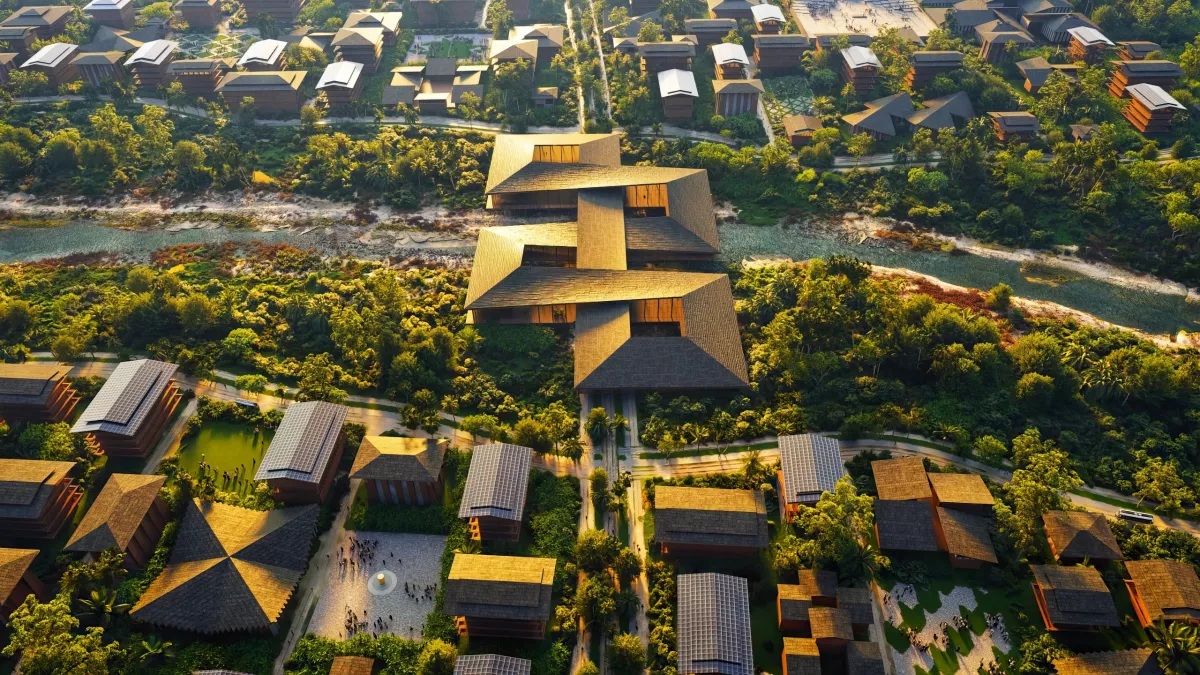
Set to open in 2029, Gelephu International Airport has already won “Future Project of the Year” at the 2025 World Architecture Festival. Its design features a latticed timber terminal made from Bhutanese wood, intended to regulate humidity naturally and reflect the surrounding mountain landscape. The airport located in the kingdom's south will also include wellness spaces for yoga, meditation, and gong baths, as highlighted in a BBC piece.
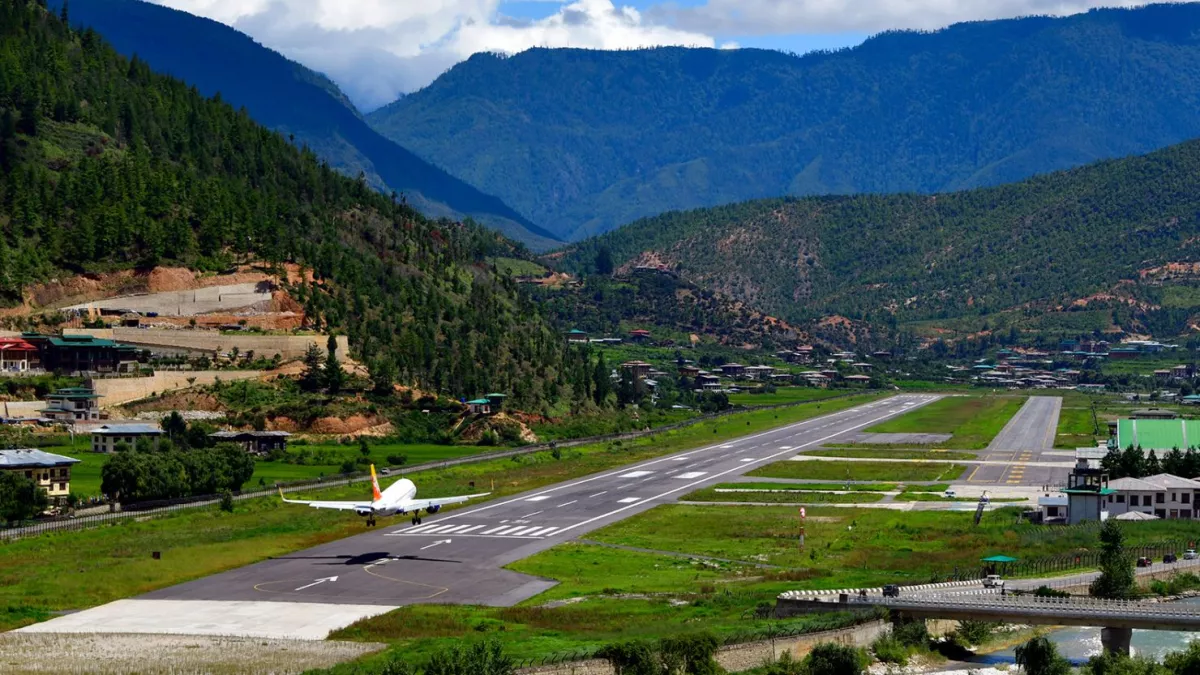
Currently, Bhutan has four airports, but only Paro International Airport handles international flights. Located at 2,243 metres above sea level and surrounded by steep mountains, it is considered one of the most challenging airports in the world. Fewer than 50 pilots are certified to land there, and it handled just 88,546 visitors in 2025.
Access is further limited by the fact that Paro is served only by Drukair and Bhutan Airlines, with typically just eight flights per day. As a result, travellers from Europe and North America often face long, multi-stop journeys with layovers in cities like Bangkok, Kathmandu, or Delhi.
Most visitors who arrive at the airport in western Bhutan continue on to nearby destinations such as Thimphu, Punakha Valley, Phobjikha Valley, and Bumthang, yet rarely venturing into the country’s biodiverse southern regions.
Diversify growth across kingdom
The new airport is expected to change that, opening up Bhutan’s subtropical south to a broader range of travellers. It will also serve GMC, a planned special administrative region envisioned by King Jigme Khesar Namgyel Wangchuck to eventually host up to one million residents by 2060.
Gelephu is also set to be connected to India’s Assam region via a 69 kilometres rail link—marking Bhutan’s first-ever railway.
The idea for Gelephu as a travel and economic hub dates back more than a decade, but the Covid-19 pandemic accelerated its development. Bhutan effectively shut down during the crisis until September 2022, severely impacting tourism and worsening a growing youth exodus.
Officials now hope GMC will create jobs, attract investment, and encourage travellers to explore beyond Bhutan’s traditional western circuit.
"GMC will create a lot of job and investment opportunities," said Lotay Tshering, former Prime Minister and current Governor of the project. "[But] we must have flights coming in… we must have passengers."
When completed, the new airport is expected to become Bhutan’s primary aviation hub.
"We envision [Gelephu] as a stopover [for international visitors]," added Tshering Dolkar. "Instead of flying through Hong Kong or Bangkok, travellers will opt to fly through Gelephu and spend some days on a jungle safari or in meditation."
Unlike Bhutan’s iconic mountain monasteries, Gelephu offers a subtropical landscape rich in biodiversity. Two national parks border the region, including Royal Manas National Park, home to elephants, tigers, rhinos, clouded leopards, golden langurs, and more than 360 bird species—including the critically endangered white-bellied heron.
"Southern Bhutan, where mountains give way to jungle, is a hidden sanctuary for the natural world," said Matthew DeSantis. "The south has become a haven for endangered species. [It's] one of the wildest places on our planet."
Authorities also hope to attract hikers with the upcoming 168km Lotus-Born Trail, set to open in 2028, linking the south with Bhutan’s spiritual heartland.
Staying true to core values
As with much of Bhutan’s development strategy, the Gelephu project is being shaped by spiritual and cultural considerations. Buddhist masters are being invited to design retreat centres and temples, while the country’s monastic body has proposed building a traditional dzong with guest accommodations and spaces for sacred study.
Rather than luxury resorts, the focus in the south will be on homestays and eco-camps.
"There aren't too many raw jungles left in the world," Tshering said. "[This area is home to] raw jungle with natural [untamed] tigers. That is the jewel we have."
By Nazrin Sadigova







 editor@caliber.az
 +994 55 444-88-98
 Азербайджан, Баку, ул. Низами, 203, Af Business House, 5-й этаж