










Scottish fossils confirmed to belong to life form that no longer exists on Earth
Scientists have confirmed that a fossil discovered in Scotland represents a completely new form of life, shedding light on a long-standing paleontological mystery.
The organism, known as Prototaxites, grew to an impressive height of around 8 meters around 370 million years ago. Initially collected in 1843, they were thought to be partially-rotten giant conifers which had been decomposed by fungi. A new study now challenges the original assumption that Prototaxites was a fungus due to its differing chemical make up, British media outlets highlight.
Researchers from the University of Edinburgh and National Museums Scotland were behind the recent breakthrough. They argue that Prototaxites represent an extinct evolutionary branch that no longer exists on Earth.
The organism exhibited a unique combination of anatomical and chemical traits that set it apart from all known life forms. Fossils were studied from the Rhynie chert about an hour from Aberdeen, which dates back 407 million years.
Sandy Hetherington, lead co-author and research associate at National Museums Scotland, said:
"They are life, but not as we now know it, displaying anatomical and chemical characteristics distinct from fungal or plant life, and therefore belonging to an entirely extinct evolutionary branch of life."
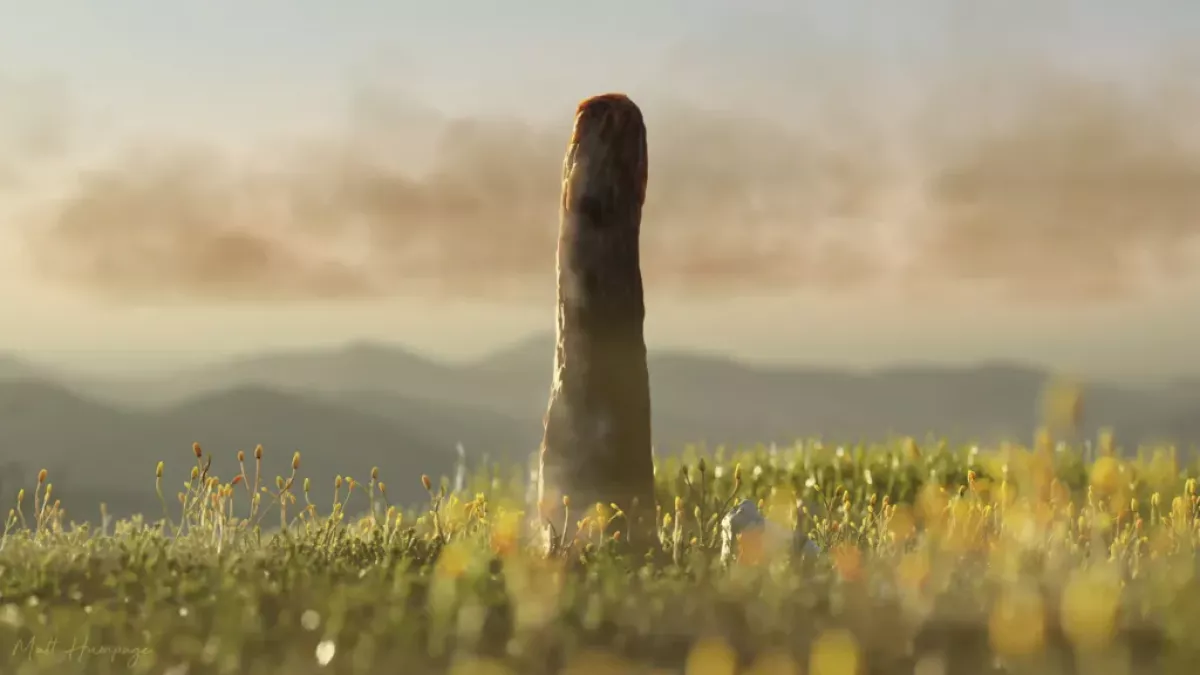
Scientific investigation revealed that Prototaxites did not derive energy through photosynthesis like plants and lacked the symbiotic relationships typical of lichens. It also appeared to be missing underground fungal root networks necessary to support its massive structure.
Hetherington expressed her excitement about contributing a major step in the debate over Prototaxites, which has been going on for around 165 years.
The fossil has now been incorporated into the collections of National Museums Scotland (NMS).
By Nazrin Sadigova







 editor@caliber.az
 +994 55 444-88-98
 Азербайджан, Баку, ул. Низами, 203, Af Business House, 5-й этаж