










Türkiye-Saudi Arabia-Egypt-Pakistan emerging bloc forms new regional balance Article by Türkiye Today
Türkiye Today newspaper has published an article, analysing the new geopolitical blocs forming in the Middle East. Caliber.Az reprints some excerpts from the piece.
“Heraclitus once said, ‘Opposition brings concord. Out of discord comes the fairest harmony.’
Five years ago, the idea that Türkiye, Pakistan, Saudi Arabia, and Egypt would hold a joint summit, let alone prompt serious discussions about a defensive alliance, would have been dismissed as a geopolitical fantasy.
Yet this quartet, shaped in large part by the momentum generated by the Iran war, has engaged in frequent consultations. Just last week, it convened for the third time at the Antalya Diplomacy Forum in Türkiye. While the West hasn't paid much attention yet, the meeting has already sparked a wave of coverage across Middle Eastern media.
The main question is whether a new military alliance is taking shape in the post-Iran war Middle East. However, most assessments suggest that a NATO-style pact or formal mutual defense treaty is unlikely. The reality is that these four countries have very different ideas of what constitutes a threat, and they each have other complicated international relationships to balance.
Beyond alliances
A strong defense relationship and mutual commitments among these countries do not necessarily require a formal alliance. In the post-American security environment, marked by a shift from a unipolar to a multipolar order, middle powers are diversifying their options and alliances to secure strategic autonomy. They hedge between seemingly competing partnerships.
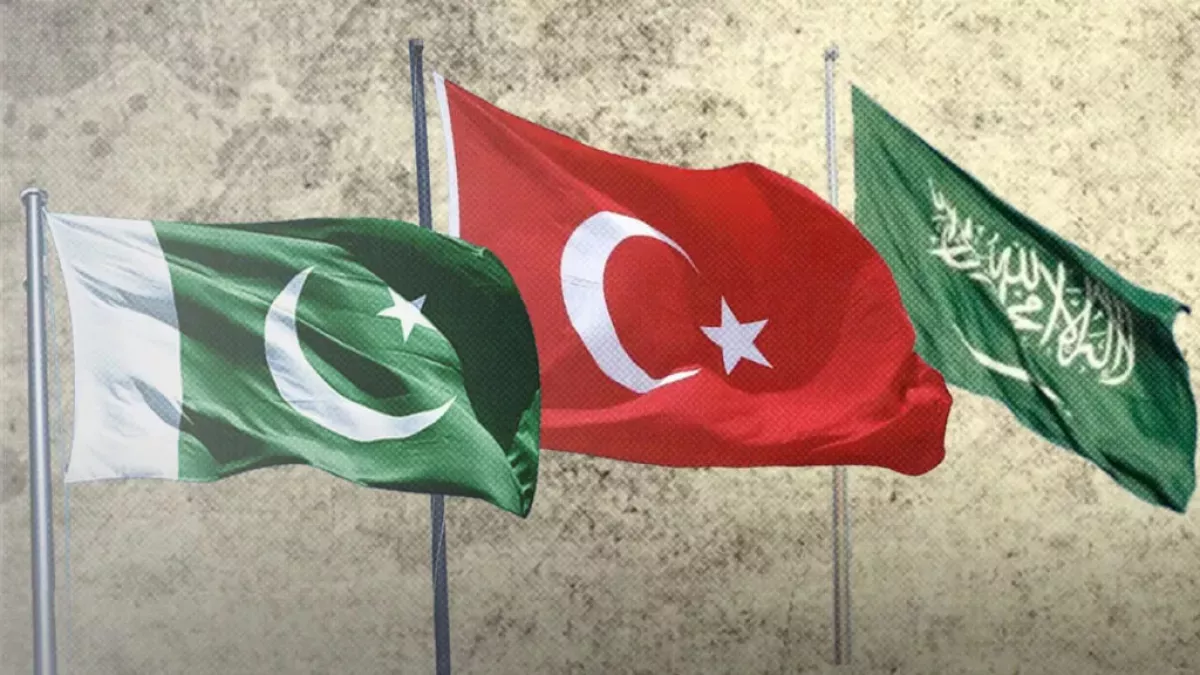
Türkiye has shifted toward normalizing and deepening ties with its neighbors. It has leaned heavily into mediation, while finding a balance between soft and hard power. While expanding defense industry cooperation across a wide geography, Türkiye supported friendly states and groups in places such as Syria, Libya and the South Caucasus.
Over the past decade, as the United States has signaled both rhetorically and in practice that it is stepping back from its role as the global policeman and arbiter, middle powers have stepped up to fill the vacuum, gaining more influence on the global stage.
Mediation has become the common thread pulling these countries closer together. The regional upheaval has been triggered by a series of shifts: the Oct. 7 Hamas attacks, the fall of the Assad regime in Syria, wars involving Iran and the U.S.–Israel axis, Israel’s expansionist policies in Gaza, the West Bank, Syria and Lebanon.
In this new reality, these countries are looking for fresh leverage and new power blocs to keep the regional balance from tipping too far in any one direction.
Post-American landscape
Regional states are increasingly advocating for regional ownership, seeking to play an active role in conflict resolution and in shaping their own destinies. The Iran war accelerated the already ongoing bilateral and trilateral consultation and cooperation among these four countries.
Saudi Arabia and Türkiye were instrumental in bridging the gap between Syria’s new administration and the United States. When President Trump held his first meeting with Syria's new leader, Ahmad al-Sharaa, the two were joined by Saudi officials on a phone call with President Recep Tayyip Erdogan. Since the regime change in Syria, Riyadh and Ankara have moved beyond just defense and economic deals, using constant diplomatic coordination to shape the new regional landscape.
Türkiye has also acted as a mediator in helping Gulf countries develop relations with Syria’s new leadership. In subsequent regional crises, Türkiye has consistently coordinated with its regional partners. The ceasefire process in Gaza, in turn, intensified Türkiye’s mediation and consultation efforts with Egypt.
Their bilateral relationships further reinforce cooperation among Saudi Arabia, Türkiye, Egypt and Pakistan. In 2025, Pakistan and Saudi Arabia signed a comprehensive defense agreement. Recently, Pakistan deployed an air force contingent to King Abdulaziz Air Base to support Saudi defense.
Türkiye and Pakistan maintain a close strategic defense cooperation, with Türkiye assisting in modernizing Pakistan’s navy and air force through submarine upgrades, corvette construction, and enhancements to F-16 aircraft. Türkiye also supported Pakistan during its 2025 conflict with India.
Between Saudi Arabia and Türkiye, growing trade and defense industrial cooperation—including joint production of Turkish Akinci UAVs in Saudi Arabia—stand out, alongside increasing foreign policy alignment in Syria, Libya, Sudan, Yemen and Somalia.
Egypt and Türkiye have expanded trade, cooperated on mediation initiatives, especially regarding Gaza, and during Erdogan’s visit to Cairo in February, the two countries signed a bilateral defense pact while expanding defense industry cooperation.
Cairo backed Riyadh’s 2015 campaign against the Houthis, and both countries continue to strengthen their defense ties. Additionally, Egypt relies heavily on financial support from Saudi Arabia.
These various bilateral partnerships are now being woven together into a single four-party framework—a regional coordination umbrella that aligns their political strategies.
An emerging bloc
While this web of bilateral partnerships is not formally consolidated under a single multilateral umbrella, the cooperation has already produced results. Pakistan, in coordination with Türkiye and Egypt, contributed to shaping the extended ceasefire between Iran and the U.S.–Israel axis.
After their second meeting in Islamabad, these four countries emerged as a primary channel for negotiations that are set to shape the future of the Middle East. According to a statement by Egypt’s foreign minister on April 18, 2026, they are currently hammering out a security deal designed to end the current conflict and prevent it from breaking out again.
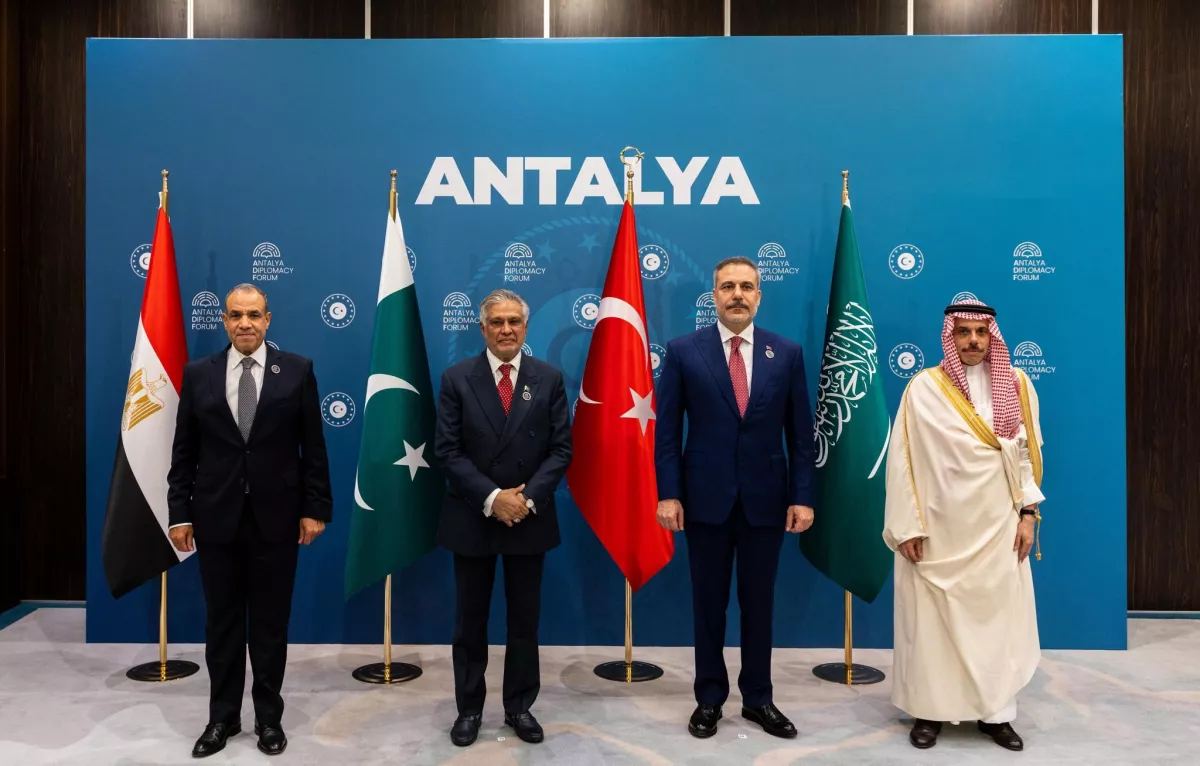
This quartet brings substantial capabilities to the table. Türkiye and Saudi Arabia are both G20 members; Saudi Arabia, as the world’s largest oil producer and leading exporter, provides financial strength. Türkiye, with NATO’s second-largest standing army, contributes manpower, a robust defense industry, and operational experience. Pakistan adds nuclear and missile capabilities, while Egypt’s strategic geography, controlling the Suez Canal at the junction of the Mediterranean and Red Seas, gives it critical leverage.
In recent months, the militaries of these four countries have been conducting joint exercises, both collectively and in bilateral formats. Interoperability among their armed forces is increasing, while trust and camaraderie continue to deepen.
Ultimately, this emerging configuration signals a broader trend: in the coming period, cooperation among middle powers will likely be shaped by regionalization as a defining common denominator,” the article notes.







 editor@caliber.az
 +994 55 444-88-98
 Азербайджан, Баку, ул. Низами, 203, Af Business House, 5-й этаж