










Baku, EBRD advance cooperation on water supply modernisation photo
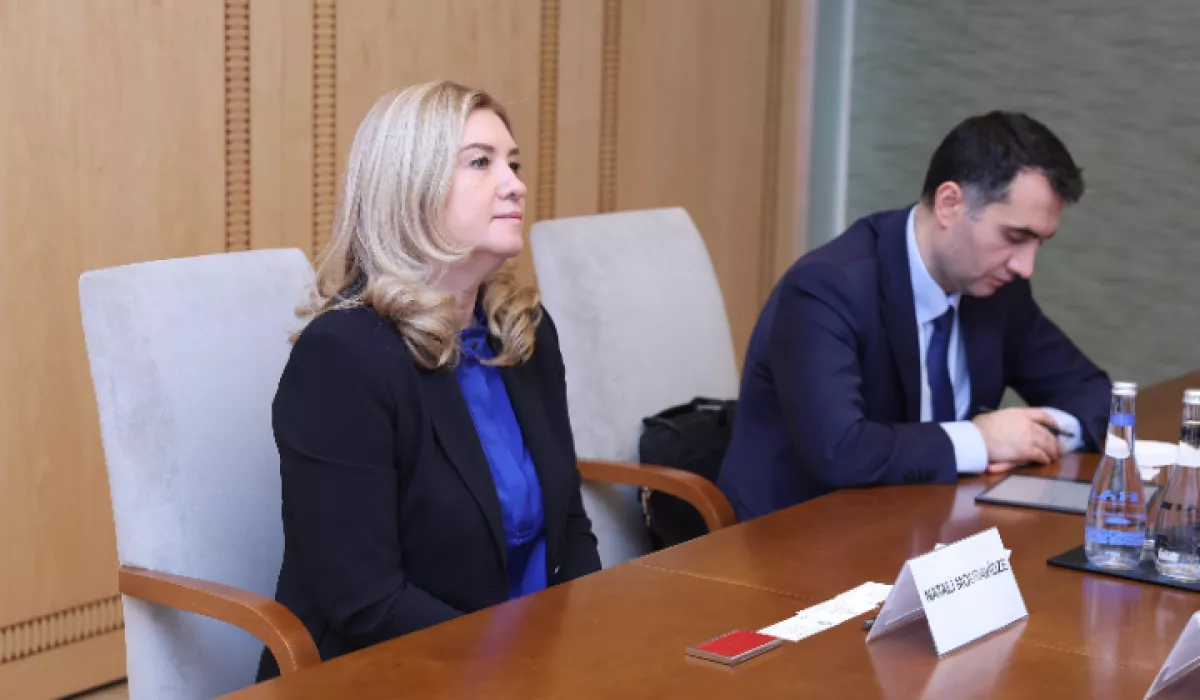
First Deputy Finance Minister of Azerbaijan Anar Kerimov met with Nataly Mouravidze, Head of the Resident Office of the European Bank for Reconstruction and Development (EBRD) in Azerbaijan, to discuss ongoing and planned cooperation projects.
According to Caliber.Az, the information was released by the Ministry of Finance.
During the meeting, the sides reviewed progress on projects expected to be signed in the near future and discussed priority areas related to water supply and the development of urban infrastructure.
Kerimov emphasised that the EBRD remains one of Azerbaijan’s principal partners in supporting private sector development, strengthening urban infrastructure, promoting environmental sustainability, and improving the quality of municipal services. He noted that the projects currently being implemented are of strategic importance and should be carried out gradually, in line with principles of fiscal sustainability and efficient financing.
“Kerimov added that the projects being implemented in the cities of Ganja and Sheki are significant not only in terms of modernising urban infrastructure and ensuring high-quality water supply for the population, but also in improving environmental standards in cities and increasing the efficiency of municipal services,” the statement said.
Mouravidze, in turn, expressed satisfaction with the long-standing cooperation with Azerbaijan. She highlighted that accelerating the implementation of water and urban infrastructure initiatives and structuring financing for subsequent phases in an effective and targeted manner remain among the EBRD’s key priorities.
She also underlined the bank’s interest in continuing cooperation in areas related to the green transition, climate financing, and the expansion of technical assistance mechanisms.
According to the ministry, the meeting also included a broad exchange of views on the large-scale water infrastructure development program planned for the Baku–Absheron region, including its financing mechanisms and other issues of mutual interest to both sides.
By Tamilla Hasanova







 editor@caliber.az
 +994 55 444-88-98
 Азербайджан, Баку, ул. Низами, 203, Af Business House, 5-й этаж