










Quiet takeover: Paris and Berlin strip European diplomacy of its autonomy Analysis by Matanat Nasibova
The Franco-German plan to reform the European Union’s foreign policy, including a proposed restructuring of the role of EU High Representative for Foreign Affairs and Security Policy Kaja Kallas, appears to be the latest stage in behind-the-scenes discussions over the future of the bloc’s top diplomat.
In the summer of 2026, diplomatic circles and European media were already discussing the possibility of abolishing the European External Action Service (EEAS) and replacing Kallas, amid criticism of her blunt rhetoric and the institution’s limited progress.
The latest initiative from Paris and Berlin appears to offer a more discreet political compromise. Rather than pursuing a high-profile dismissal that could deepen divisions within the EU and trigger resistance from Eastern European member states, the plan would gradually bring Kallas under the direct authority of European Commission President Ursula von der Leyen.
In practice, this would amount to a quiet form of bureaucratic neutralisation: instead of removing the EU’s top diplomat outright, Paris and Berlin would seek to reduce her political independence by reshaping the institutional framework around her. What began as behind-the-scenes discussions is now moving into the realm of concrete institutional reform.
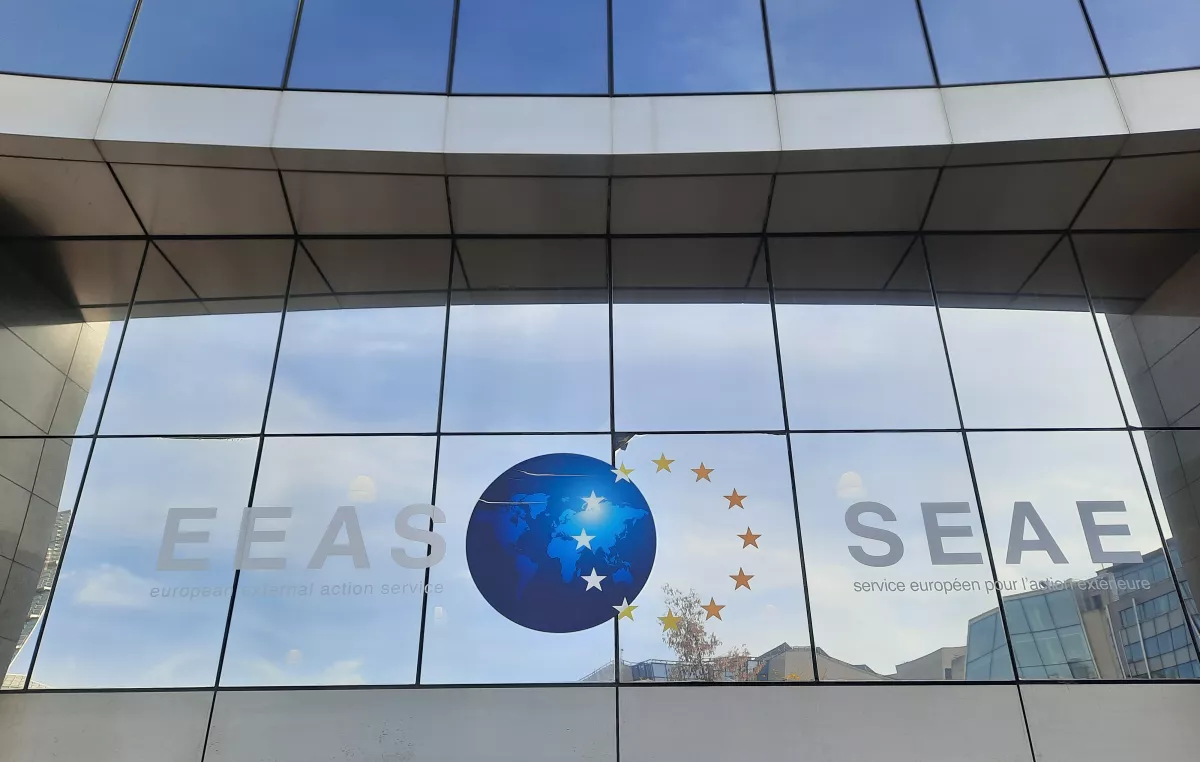
Back to the roots: Reshaping the EU’s diplomatic service
At the heart of the Franco-German proposal is a fundamental restructuring of the European External Action Service (EEAS). The diplomatic service would cease to operate in its current form, with most of its staff and core functions transferred back to the European Commission under a separate directorate — essentially restoring the arrangement that existed before the Lisbon Treaty came into force 15 years ago.
Kallas would formally retain her high-profile title and assume additional responsibilities covering migration, defence and development assistance. But the proposed changes would significantly curtail her independence, effectively reducing her to a conventional Commission vice-president reporting directly to von der Leyen.
In practical terms, the reform would amount to the gradual absorption of the EU’s diplomatic service into the Brussels bureaucracy, leaving the bloc’s top diplomat with far less room to pursue an independent foreign-policy agenda.
A battle of ambitions: What is driving the power struggle?
Behind the proposed restructuring lies a long-running power struggle between Kallas and von der Leyen, sharpened by disagreements over Ukraine, relations with the United States under Donald Trump, the Middle East and the EU’s geopolitical competition with China.
The dispute also reflects a deeper institutional rivalry between the European Commission and the EU’s diplomatic service, built into the bloc’s complex division of powers. But the personal ambitions of the two senior officials appear to have made the confrontation particularly intense.
Under the EU treaties, Kallas is responsible for coordinating the bloc’s foreign and security policy. In practice, however, von der Leyen has increasingly consolidated major policy decisions within the Commission, reinforcing her influence over areas traditionally associated with the High Representative.
The conflict escalated earlier this year when the Commission president proposed establishing a new intelligence centre under her authority. The initiative reportedly faced strong opposition from Kallas, who argued that it would duplicate an analytical capability already operating within her service.
The tensions have also acquired a personal dimension. Diplomatic circles have been circulating claims that Kallas privately described the Commission president as a “dictator”.
The Franco-German calculation: Cost savings and strategic autonomy
Paris and Berlin are promoting the reform as a way to overcome chronic decision-making paralysis, reduce administrative costs and strengthen central authority in Brussels. In Germany, there is a growing view that bringing diplomatic functions back under the Commission’s executive structure could allow the EU’s 2028–2034 budget to be allocated more efficiently, particularly toward defence and security.
Experts at the German Institute for International and Security Affairs (SWP) argue that, as confidence in the US security umbrella weakens, Europe is under increasing pressure to develop its own strategic capabilities. Bringing foreign-policy functions more firmly under the European Commission would also give France and Germany greater influence over the EU’s common approach to major global powers and issues directly affecting European security.
A revolt from within: Why the reform could stall
However, it would be premature to assume that control over EU foreign policy can simply be transferred to von der Leyen. Any fundamental change to the bloc’s institutional architecture would require the unanimous consent of all 27 member states, making the proposal extremely difficult to push through.
Smaller member states such as Malta, Cyprus, Ireland and Luxembourg are wary of allowing the larger powers to dominate EU decision-making. Poland, Czechia, Hungary and Slovakia, meanwhile, remain deeply sceptical of any further concentration of authority in Brussels.
The Franco-German initiative also faces opposition from a group of countries led by Italy, Croatia, Slovenia and Greece, which have reportedly pushed back against the proposal in defence of the principle of institutional equality among member states.
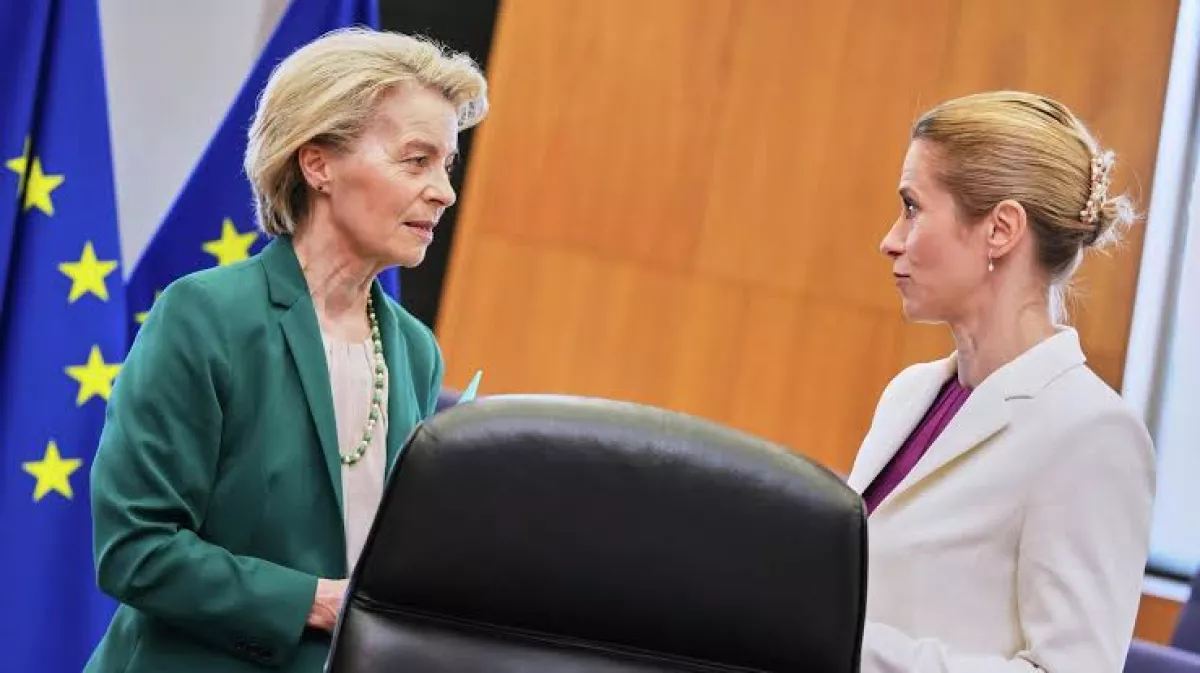
The anatomy of a compromise: Who will shape EU foreign policy?
International analysts broadly expect the outcome to be a compromise. The European External Action Service (EEAS) could be significantly downsized or restructured, while Kallas would operate under tighter constraints within the European Commission. At the same time, key policy levers — including trade, energy, sanctions and enlargement — could increasingly be brought under a single centre of decision-making.
Under such an arrangement, Ursula von der Leyen could emerge as the de facto architect of EU foreign policy, even if the post of High Representative is formally preserved.
But the durability of such a system would depend on von der Leyen’s ability to balance the competing national interests of the 27 member states against resistance from the EU’s diplomatic establishment. The more power is concentrated at the centre, the greater the risk that efforts to streamline European foreign policy could instead deepen the political divisions they are intended to overcome.







 editor@caliber.az
 +994 55 444-88-98
 Азербайджан, Баку, ул. Низами, 203, Af Business House, 5-й этаж