










Early Christian heritage of the Caucasus: Yeddi Kilsa complex Exploring history on Caliber.Az
Azerbaijan possesses a rich historical and cultural heritage that includes numerous unique architectural and archaeological monuments from different eras. Among them, early Christian structures occupy a special place, serving as important evidence of the spread of Christianity. To this day, they continue to impress with their monumentality, harmony with the surrounding landscape, and distinctive atmosphere of spirituality.
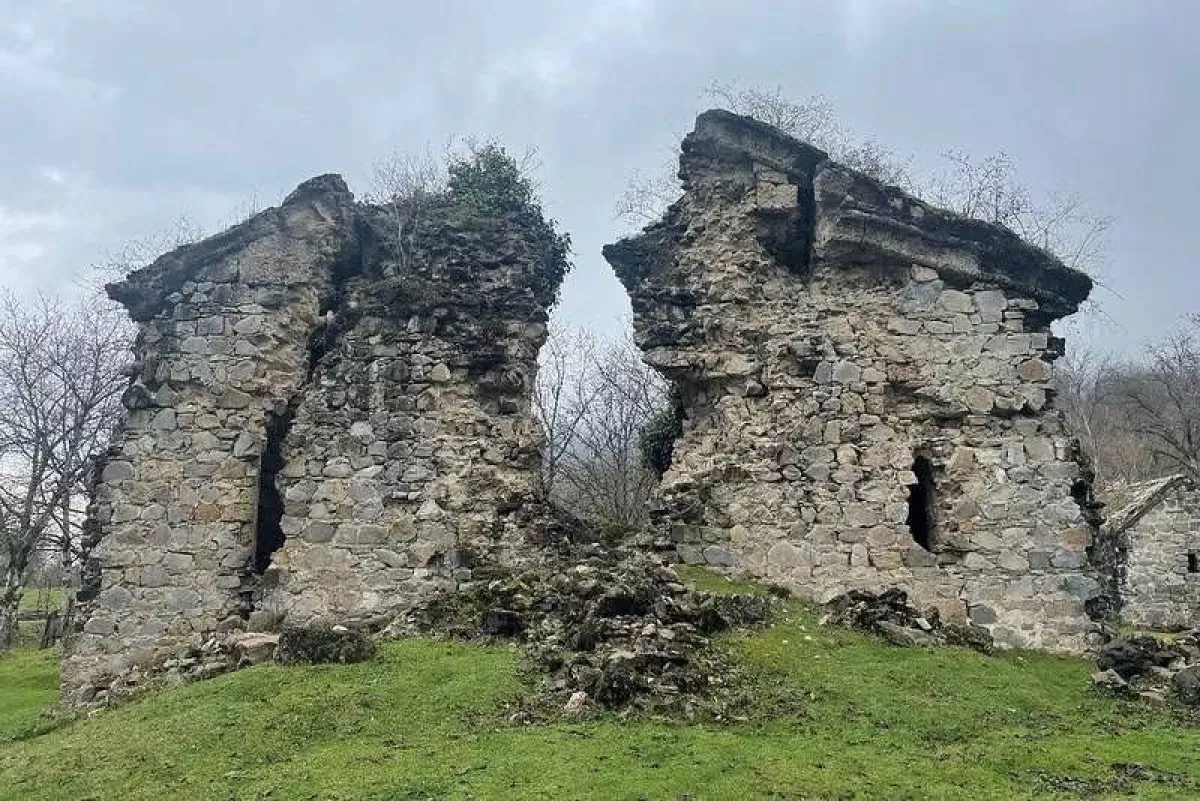
One of the most remarkable monuments of this period is the Yeddi Kilsa (“Seven Churches”) monastic complex, located in Azerbaijan’s Gakh District. It is situated in the upper northern part of the village of Lekit, amid a dense forest and not far from the road. The very location of the complex creates a sense of seclusion, emphasising its unique character and majestic tranquillity. Surrounded by natural slopes and lush greenery, the monastery blends harmoniously into the surrounding landscape, becoming an integral part of it.
Yeddi Kilsa stands out among the country’s other religious monuments due to its distinctive architectural composition. The ensemble consists of seven separate religious structures, including two larger churches that most likely served as the principal places of worship, as well as five smaller chapels.
The question of the monument’s dating remains a matter of scholarly debate. Some researchers trace its origins to the 4th–5th centuries, while others believe it was built in the 5th–6th centuries, during the period of active development of Christian culture in Caucasian Albania. At the same time, researcher Akhundov, who prepared the first detailed plan of the complex, dated it to the 7th century.
A thorough study of the ensemble began only in the 20th century. In 1980, archaeological excavations were carried out on the territory of Yeddi Kilsa.
A significant contribution to the study of the monument was made by archaeologist Aliya Karakhmedova. She conducted extensive research into the monastery’s architectural features, the layout of its churches, the construction materials used, and the various structures within the complex. According to Karakhmedova’s findings, it was a “basilica complex” consisting of two basilicas and five chapels arranged along a west-to-east axis.
“The landscape was thoughtfully incorporated into the planning of the complex. The lower flat area is enclosed in a semicircle by hillsides divided into terraces, some of which were artificially filled to level the terrain. These terraces retained their original layout for a long period and underwent no major alterations. All of them are reinforced by retaining walls built from cobblestones. The main idea behind the construction of the monastery was to emphasise the churches and chapels, while the terraces served as a backdrop to them. The central part of the complex is the lower area containing the churches and chapels. The main entrance to the monastery is located in the southeastern section of the complex,” the scholar writes.
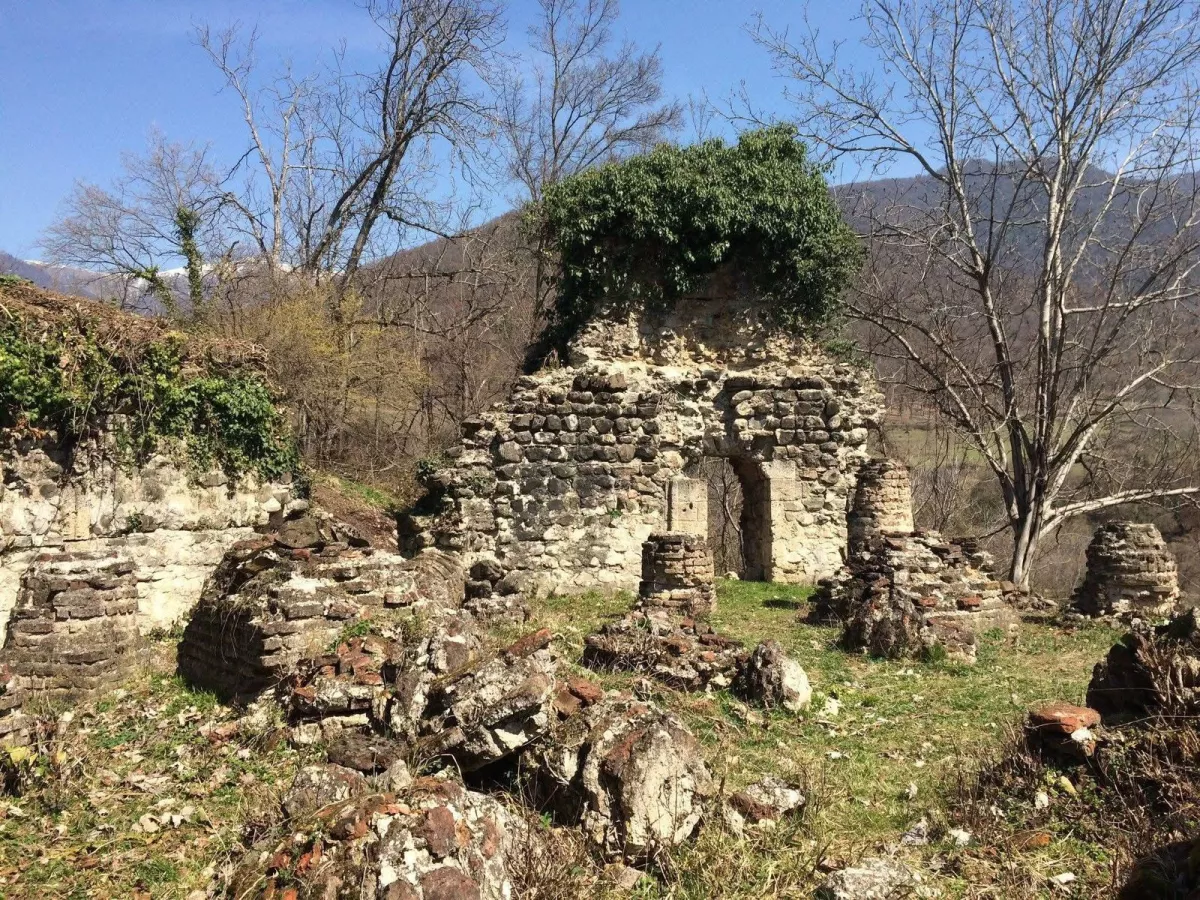
Archaeological discoveries have provided a more comprehensive understanding of the monastery’s construction features. A large number of tile fragments, as well as pieces of roofing material, were found on the site, indicating that the buildings were covered with tiled roofs.
The facades of the structures were clad with carefully dressed stone blocks. At the same time, no carved ornaments or decorative embellishments were found on the stones, giving the buildings a strict and monumental appearance. All of the complex’s structures were built from river stone and limestone using lime mortar. The churches were illuminated through narrow, elongated windows positioned on the northern and southern sides of the buildings. However, at a later stage, the northern windows of all the churches were sealed, although the exact reason for this remains unknown.
According to local residents, some of the chapels contained underground crypts.
The results of archaeological excavations confirmed the existence of a major monastic center here, where monks lived on a permanent basis. In times of danger, they sought refuge on the summit of the eastern mountain spur, where the ruins of a fortification were located. Among the local population, this site is known as “Kilsa-Galasi” — the “Church Fortress.” During their investigations, archaeologists uncovered tandoor ovens, food-storage containers, and storehouses. All of this suggests that the monks maintained a self-sufficient economy and provided themselves with the necessary food supplies.
Not far from the monastery lies the broad Alban Tala plain, whose name is also associated with the history of Caucasian Albania. Valuable information about the complex was left by the 19th-century Russian and Georgian scholar Alexander Khakhanov. While studying the architectural monuments of the Caucasus, he suggested that Yeddi Kilsa may have been one of the episcopal centres of the Albanian Church. Judging by the scale of the ensemble and the number of structures it contained, the monastery indeed appears to have played an important role in the religious life of the region.
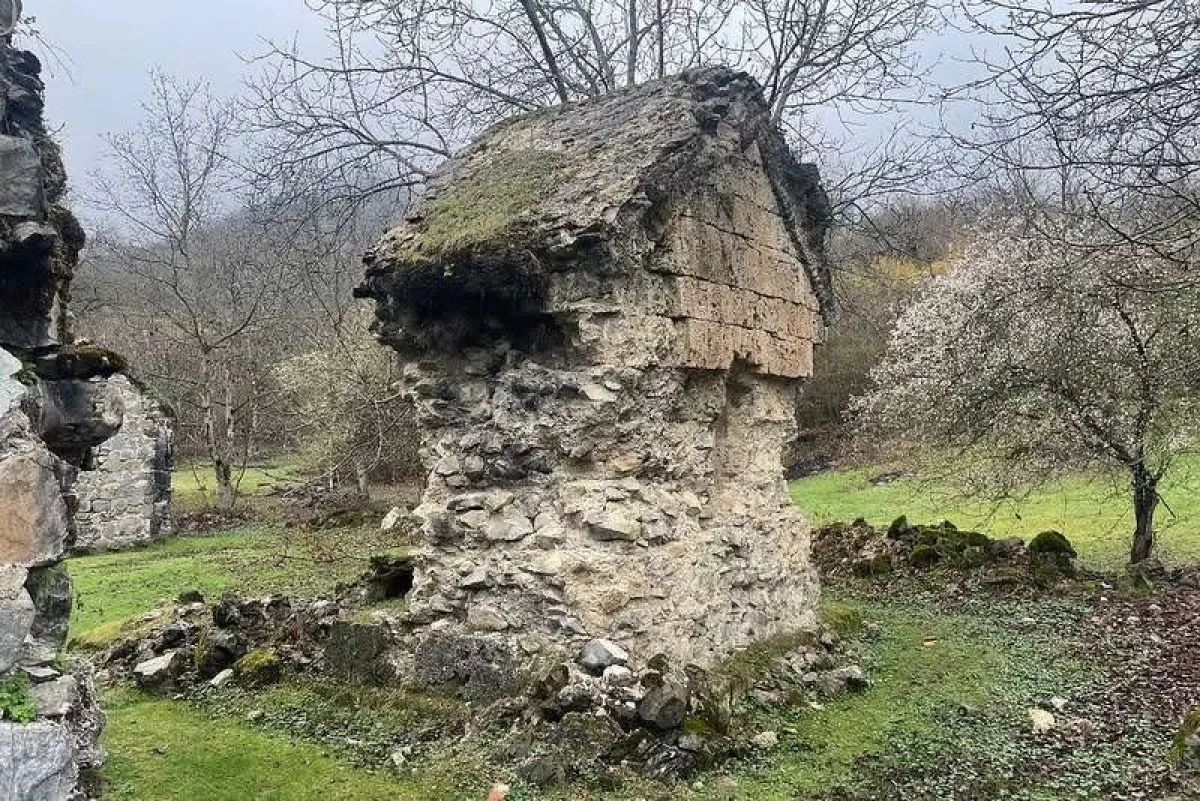
Unfortunately, time has not spared this magnificent monument. Between the 8th and 12th centuries, Caucasian Albania and the Albanian Church gradually lost their influence, which also affected the fate of the monastery. A significant portion of the structures was destroyed. The eastern church of the complex has been preserved the best, while one of the five chapels has been completely lost. Nevertheless, even in its partially ruined state, Yeddi Kilsa continues to impress visitors with its monumentality and ancient architecture.
Today, the Yeddi Kilsa monastic complex is one of the oldest and largest surviving monuments of the Caucasian Albanian era on the territory of Azerbaijan. It possesses immense historical, architectural, and cultural value and serves as an important testament to the region’s centuries-old history, the high level of architectural craftsmanship, and the rich spiritual heritage of ancient Albania. Yeddi Kilsa is an invaluable example of ancient architecture, embodying the traditions of local building techniques and early Christian culture.
Unfortunately, time and natural factors continue to erode this unique site. Trees growing through the structures, precipitation, wind, and fluctuations in temperature gradually weaken the stone masonry and architectural elements. For this reason, the ensemble requires careful protection and conservation, as its loss would represent an irreparable blow to the history of Azerbaijan and the Caucasus as a whole. Preserving Yeddi Kilsa is of particular importance for future generations, as this monument forms an integral part of the nation’s historical memory and reflects the country’s rich cultural past.
By Vahid Shukurov, exclusively for Caliber.Az







 editor@caliber.az
 +994 55 444-88-98
 Азербайджан, Баку, ул. Низами, 203, Af Business House, 5-й этаж