










Foreign Policy warns: Europe is alone as Trump tilts toward Moscow
A recent analysis published by Foreign Policy delivers a blunt and unsettling message: Europe is sleepwalking into a security crisis of its own making. The article argues that Europeans have misread the Trump administration’s intentions, comforting themselves with the illusion that Donald Trump is unpredictable but fundamentally manageable. In reality, the magazine warns, Washington under Trump has developed a coherent strategic vision for Europe—one that sidelines the continent, prioritises rapprochement with Russia, and empowers far-right movements to fracture the EU from within.
At the heart of the article lies a stark assessment: Europe now faces two strategic threats. The first is Russia’s ongoing war of imperial conquest in Ukraine. The second is Trump’s United States, which increasingly sees Europe not as an ally but as a bargaining chip in a global realignment shaped by great-power collusion rather than competition.
The author argues that European leaders have responded to Trump with a mixture of denial and appeasement. Each time the administration has belittled Europe or undermined Ukraine, European leaders have met Washington with polite smiles, symbolic gestures, and determined efforts to keep the transatlantic relationship afloat. Yet these diplomatic acrobatics have yielded nothing. From the White House’s humiliating treatment of President Zelenskyн, to the welcoming of President Putin in Alaska, to Trump’s Moscow-influenced “peace plan,” Washington’s stance has remained consistently pro-Kremlin.
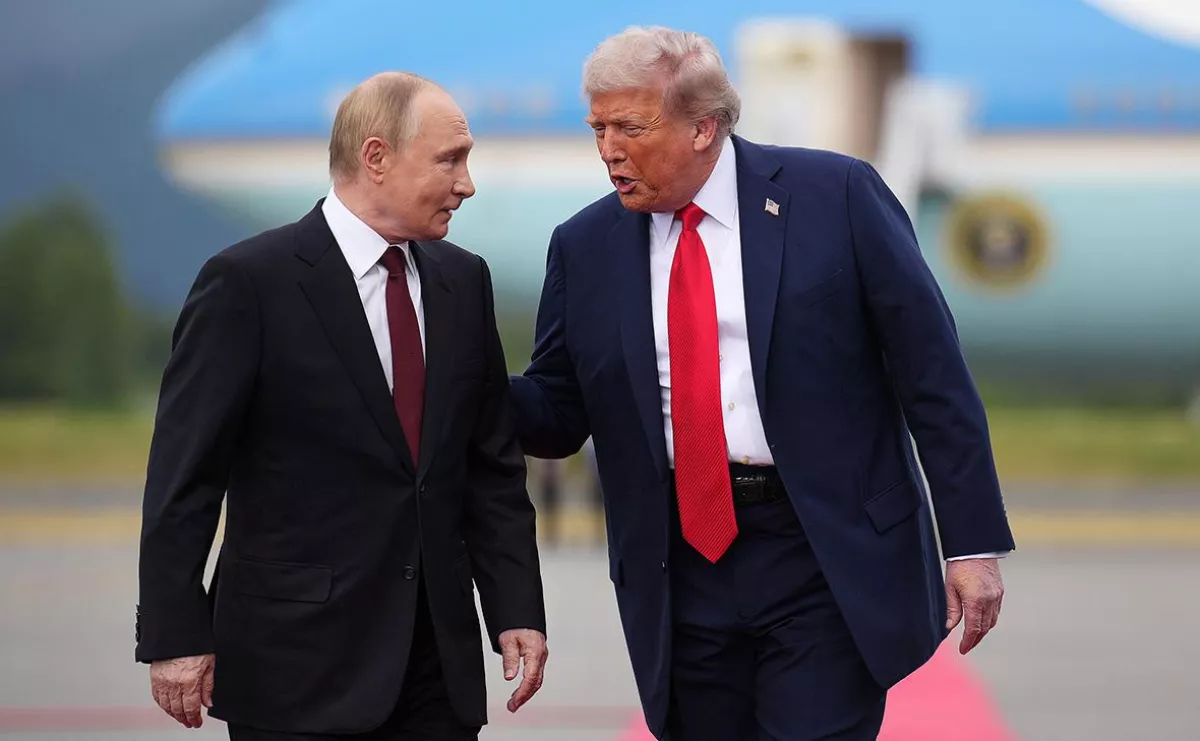
The article stresses that this consistency is no accident. Trump, it argues, sees the Ukraine war as an inconvenient obstacle to normalising ties with Russia—ties underpinned by prospective business arrangements involving powerful networks around both governments. The broader worldview is even more alarming: the liberal international order should give way to a world in which strongmen carve out spheres of influence, including in Europe. Far-right European parties serve as willing auxiliaries, undermining EU unity from within while aligning ideologically with MAGA politics.
Yet the analysis is not wholly pessimistic. It emphasises that Europe retains significant leverage in the conflict. While U.S. military and intelligence support remains indispensable, it is Europe that holds the majority of Russia’s frozen assets, imposes the most consequential sanctions, and provides most of Ukraine’s economic and military aid. Ukraine’s defence industry is increasingly self-reliant thanks to European investment.
Still, Europe’s greatest weakness is strategic incoherence. The article criticises European institutions and member states—Belgium and the European Central Bank in particular—for dragging their feet on using frozen Russian assets. Such caution, it argues, is dangerously misplaced when the stakes involve Europe’s long-term security.
The second missing ingredient is political courage. Foreign Policy urges European leaders to take a new approach with Washington: politely acknowledge Trump’s diplomatic theatrics, but make clear that Europe can—and will—manage the war in Ukraine, provided U.S. intelligence support continues and arms purchases remain unobstructed. Europe must buy time to build sustainable security structures of its own.
Ultimately, Europe cannot end the war tomorrow. But it can prevent Ukraine from collapsing—and in doing so, it can safeguard its own future.
By Vugar Khalilov







 editor@caliber.az
 +994 55 444-88-98
 Азербайджан, Баку, ул. Низами, 203, Af Business House, 5-й этаж