










Ganja’s lost bridges: tracing a forgotten engineering legacy A journey into history with Caliber.Az
Ganja is a beautiful and historically significant city in Azerbaijan with a distinctive cultural and architectural identity. Over many centuries, it developed into an important centre of crafts, trade, and the spiritual life of the region. The city preserves numerous monuments from different eras, reflecting the evolution of its urban environment and artistic traditions.
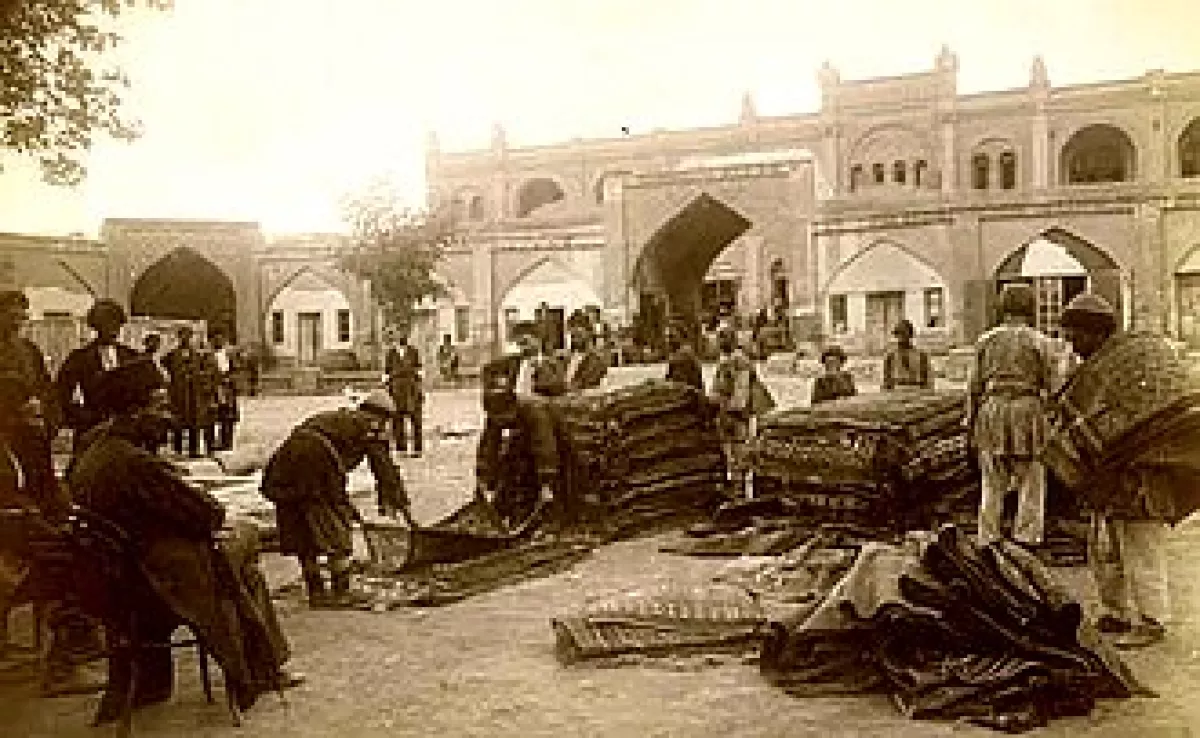
The streets of Ganja still bear traces of its period of flourishing, when the city played a notable role in regional and international connections. Bridges occupy a special place among its heritage — essential elements of urban infrastructure. They not only connected riverbanks but also ensured links between different parts of the city, trade routes, and transport corridors.
The complex local relief and the presence of rivers across Azerbaijan contributed to the extensive development of bridge-building, forming enduring engineering traditions. Many surviving bridges across different regions of the country are valuable monuments of architectural and engineering thought.
The bridges of Ganja were part of this tradition and represented sophisticated engineering structures that ensured connectivity between the riverbanks in a city with a fortress-based layout.
According to historical data, three multi-span bridges were built across the Ganjachay River in the territory of old Ganja. Only individual piers and fragments of their structures have survived to this day.
These structures played a key role in shaping the city’s transport system, ensuring stable communication between its various districts and external routes.
According to researchers’ assumptions, the Ganja bridges may have been constructed in the 12th century, although there are also versions attributing them to a later origin, linking them to the Safavid era and subsequent stages of the city’s development.
A special place among the Ganja crossings was occupied by a bridge known in popular tradition as the Khan’s Bridge. It was located on the Karabakh Road and, for a long time, served as an important transport artery connecting Ganja with other regions. Due to its scale and expressive architectural appearance, it blended organically into the urban environment and became one of its notable landmarks. Today, information about this valuable monument of the city’s engineering and cultural heritage is preserved in historical sources.
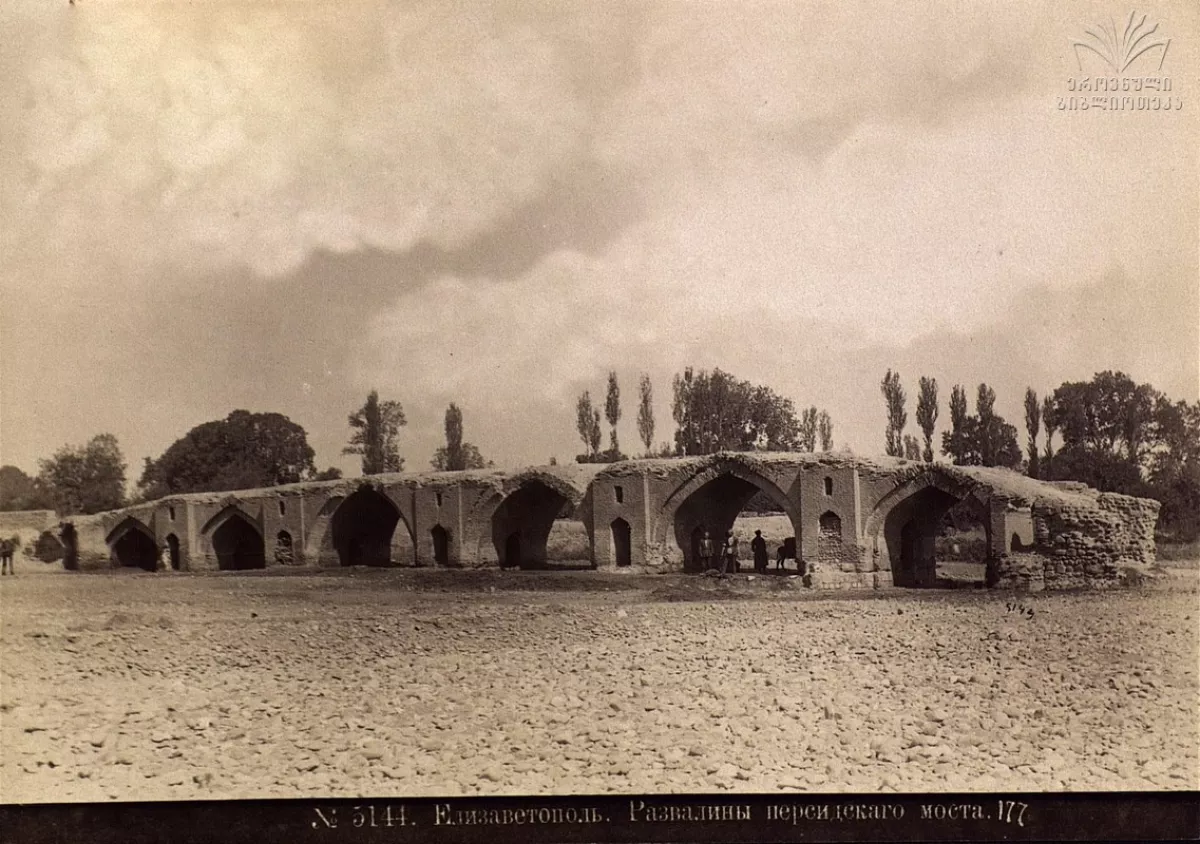
According to research by historians based on ancient maps, the Khan’s Bridge was part of a nine-arch crossing. After exiting the outer fortress through the Karabakh Gate, this structure became part of the route leading towards Karabakh.
Arch bridges of that period represented a rare example of engineering and architectural culture, where structural ingenuity was combined with an expressive artistic form. Their composition was built on a rhythmic alternation of pointed arches, which gave the structures both plasticity and visual lightness, while the multi-span system ensured an even distribution of loads and long-term structural stability.
Such structures were often built of brick and stone. The strict geometry of the arches, without excessive decoration, emphasised the functional nature of the constructions and their architectural integrity, while massive piers added monumentality and reliability. Small openings served both structural and maintenance purposes, complementing the engineering logic of the bridge. The overall form of the bridges was shaped by the alternation of spans of varying height and contour, allowing them to blend organically into the surrounding landscape. The well-balanced rhythm and proportions of the arch structures gave them completeness and expressiveness, making them not only engineering works but also significant elements of the city’s architectural identity.
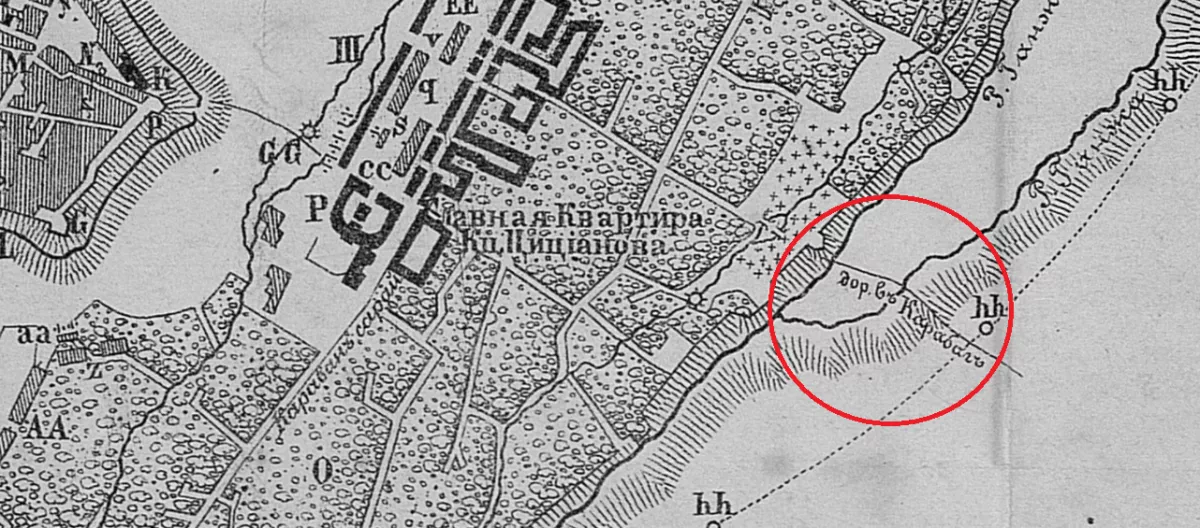
According to the plan of the 1803–1804 capture of Ganja, compiled by Pavel Dmitriyevich Tsitsianov — an infantry general and commander-in-chief of the Imperial Russian forces in the Caucasus and Transcaucasia — two main bridges across the Ganjachay River were recorded: the Khan’s Bridge and a wooden bridge. The map also marked numerous smaller stone and wooden crossings within the city, spanning irrigation canals, kahrizes, and arkhs (ditches). These were primarily used for domestic purposes and for the functioning of the water supply system.
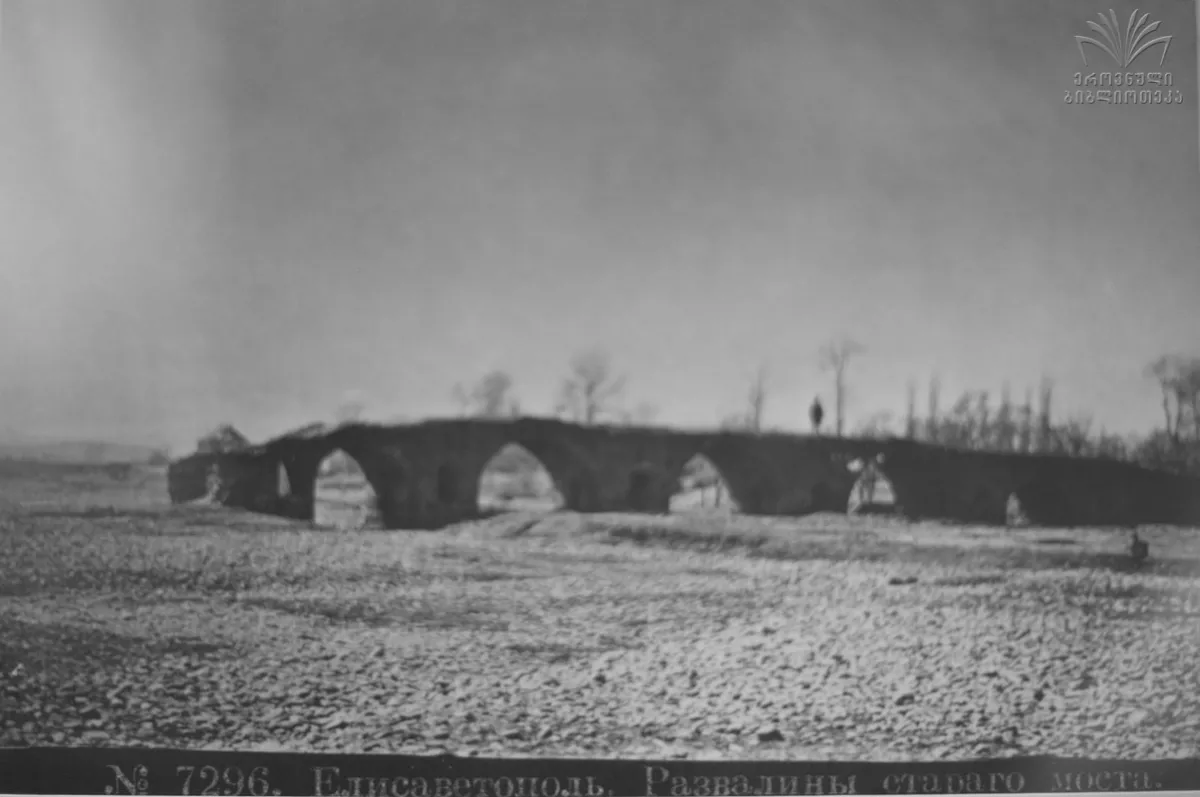
The Khan’s Bridge was also documented in historical photographs taken by Russian ethnographer, archaeologist, and photographer Dmitry Yermakov during his stay in Ganja. These images help reconstruct its original appearance and scale before most of the structure was lost.
By the mid-19th century, the bridge had fallen into a state of disrepair, which significantly hindered its use. Today, only small fragments and scattered remnants have survived, allowing researchers to infer its former engineering and architectural form.
Despite these losses, the bridges of Ganja are rightfully regarded as important monuments of the bridge-building art of their time, where engineering logic and architectural expressiveness were harmoniously combined. They are valuable testimonies of the past, reflecting a high level of engineering skill and artistic thinking of their era. They clearly demonstrate how, in historical construction, functionality and durability were organically merged with aesthetic expression, forming not only transport structures but also significant elements of the city’s architectural identity.
By Vahid Shukurov, exclusively for Caliber.Az







 editor@caliber.az
 +994 55 444-88-98
 Азербайджан, Баку, ул. Низами, 203, Af Business House, 5-й этаж