










Gizilja station: A monument to Azerbaijan’s railway heritage A journey into history on Caliber.Az
For more than a century, Azerbaijan's railways have played a vital role in the country's economic and territorial development. Alongside the expansion of the railway infrastructure, a distinctive architectural legacy also emerged—railway station buildings that, over time, transcended their purely utilitarian function to become part of the nation's historical and cultural heritage. These structures embody a harmonious blend of engineering practicality, artistic vision, and the distinctive architectural styles characteristic of different eras.
Particularly active development of railway architecture took place during the Soviet period, when new railway lines and stations were constructed. Station buildings were designed not only as functional transport facilities but also as important architectural landmarks that shaped the appearance of towns and settlements. Today, many of these buildings are valued as monuments of the industrial era, reflecting the history of transport development and architectural thought.
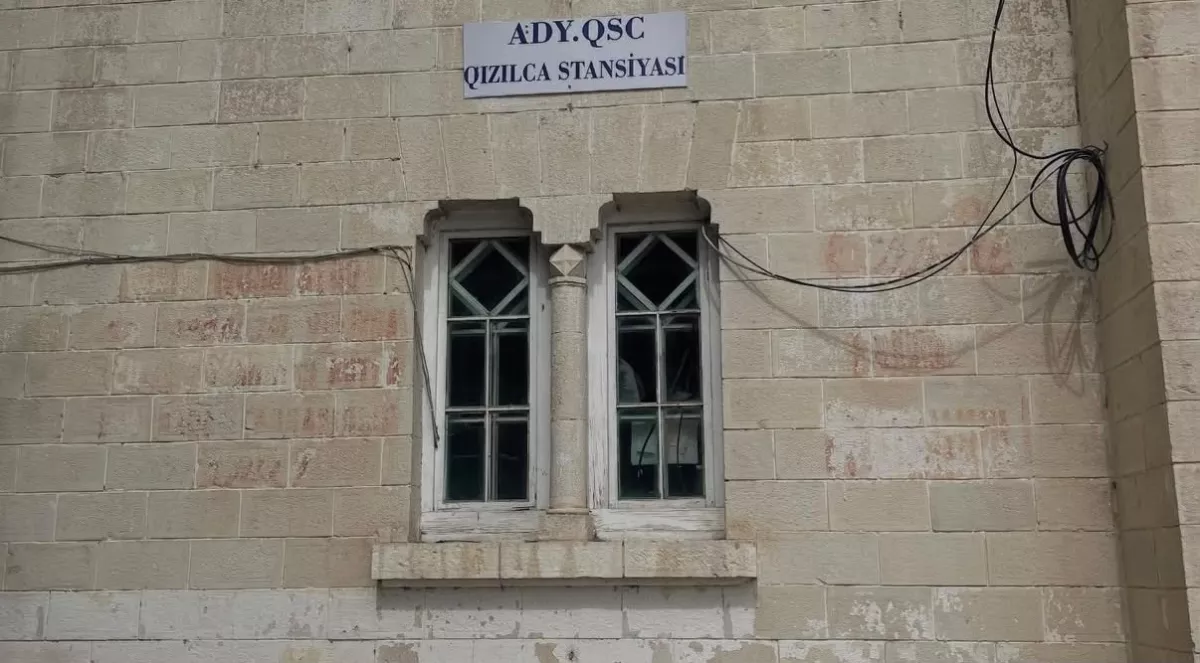
The Gizilja railway station in Dashkasan is a striking example of architecture in which Eastern motifs are harmoniously combined with elements of Stalinist Empire style. The building is a rare example of railway architecture in Azerbaijan, where a purely utilitarian structure was transformed into one with an almost palatial appearance. It forms a cohesive and easily recognizable silhouette that blends naturally into the surrounding landscape.
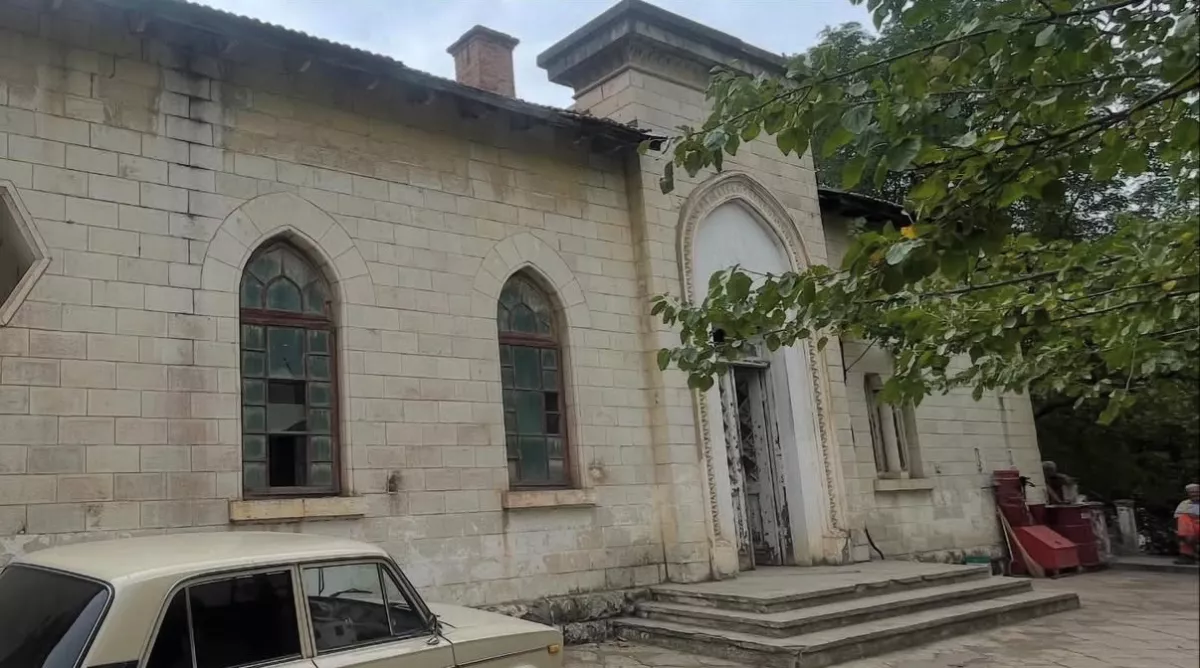
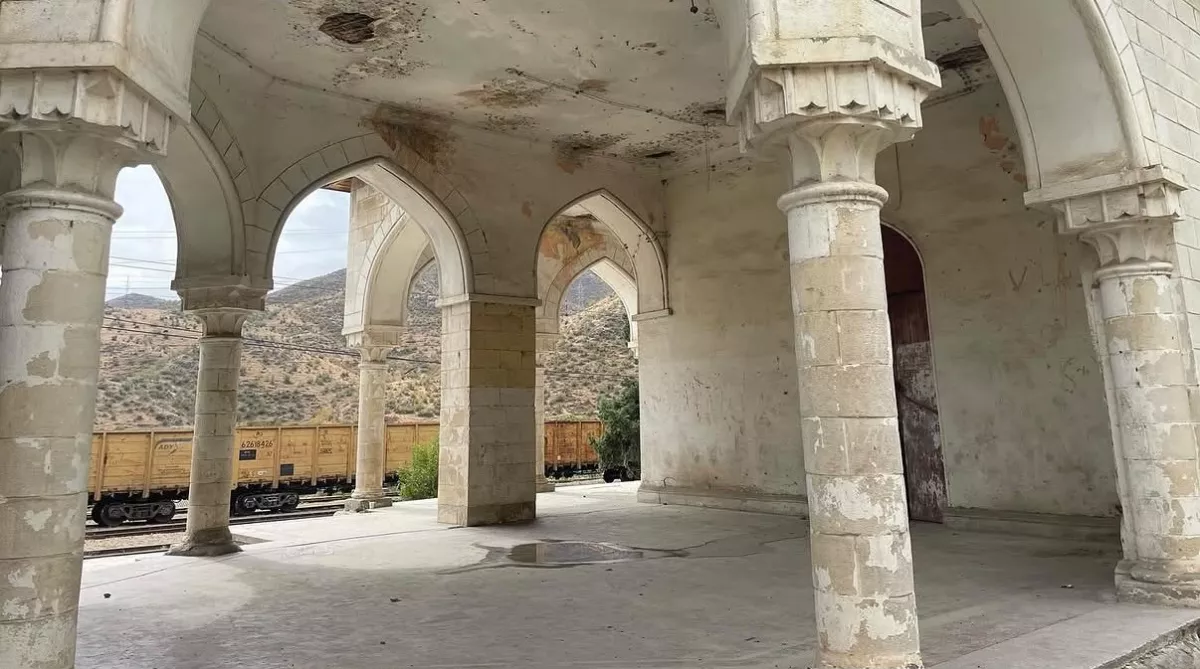
The central risalit, crowned by a tall pointed-arch portal, emphasizes the main entrance and serves as the compositional focal point of the building. The architectural composition is distinguished by its carefully conceived structure: the projecting central section of the façade flows seamlessly into a series of arched forms, accentuating the building's verticality and elegant proportions. The façade is enriched by an open arcade of pointed arches supported by slender stone columns with finely crafted capitals. The archivolts, the expressive masonry, and the rhythmic arrangement of the openings create a striking interplay of light and shadow, while every element—including purely functional ones—is harmoniously integrated into the overall architectural concept.
The composition is completed by a low-pitched tiled roof, which reinforces the building's visual unity without distracting from the decorative treatment of the walls and arcades. Particular attention should also be paid to the wooden windows and doors, which lend the structure a distinctive character and enhance its artistic expression.
The stone masonry is particularly impressive: its meticulously crafted relief and fine finishing lend the building a monumental and dignified character. In front of the central waiting hall is a small open veranda that creates a smooth transition between the exterior and the interior. Service and technical rooms are located on the left-hand side, while the station itself opens directly onto the platform, underscoring its functional purpose.
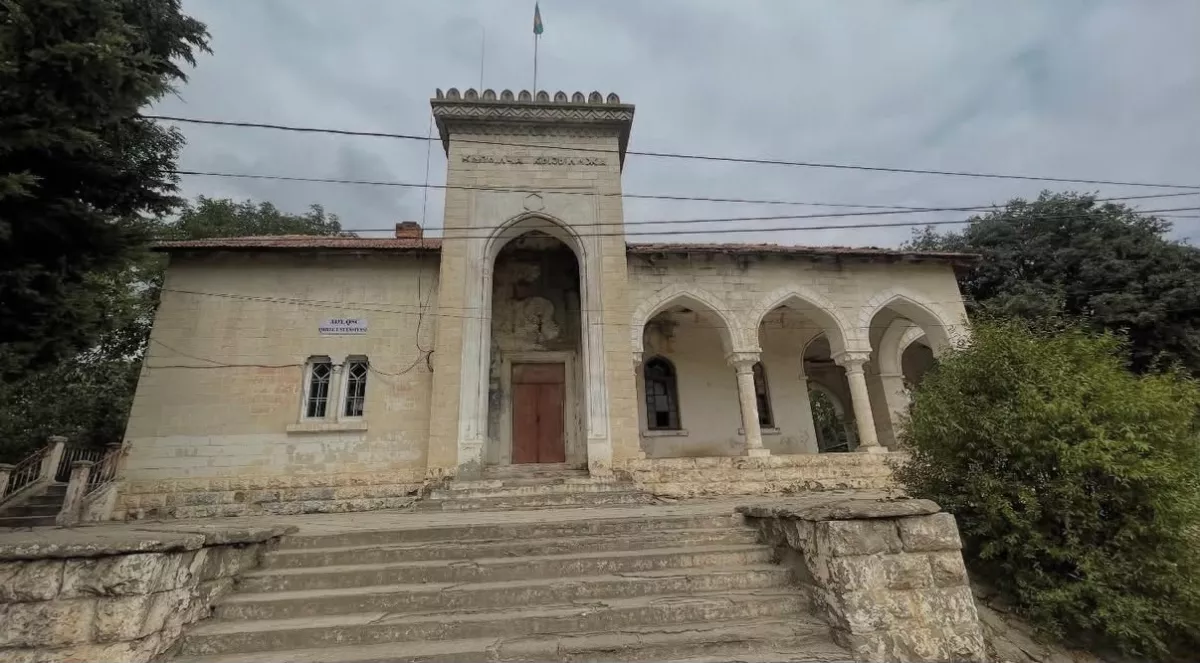
The station building was constructed in 1946 by German prisoners of war. Despite the passage of time, it has retained its historic appearance and remains a remarkable example of railway architecture, reflecting the high standards of craftsmanship and attention to detail characteristic of the period in which it was built. Unfortunately, the station has yet to be included in Azerbaijan's register of protected architectural monuments and is in need of restoration.
The Gizilja railway station is rightly regarded as a unique architectural achievement of its era, harmoniously combining practical engineering solutions with the pursuit of aesthetic expression that defined the architecture of the mid-twentieth century.
By Vahid Shukurov, exclusively for Caliber.Az







 editor@caliber.az
 +994 55 444-88-98
 Азербайджан, Баку, ул. Низами, 203, Af Business House, 5-й этаж