










Iran's neighbors at risk as wind carries salt from drying Lake Urmia PHOTO
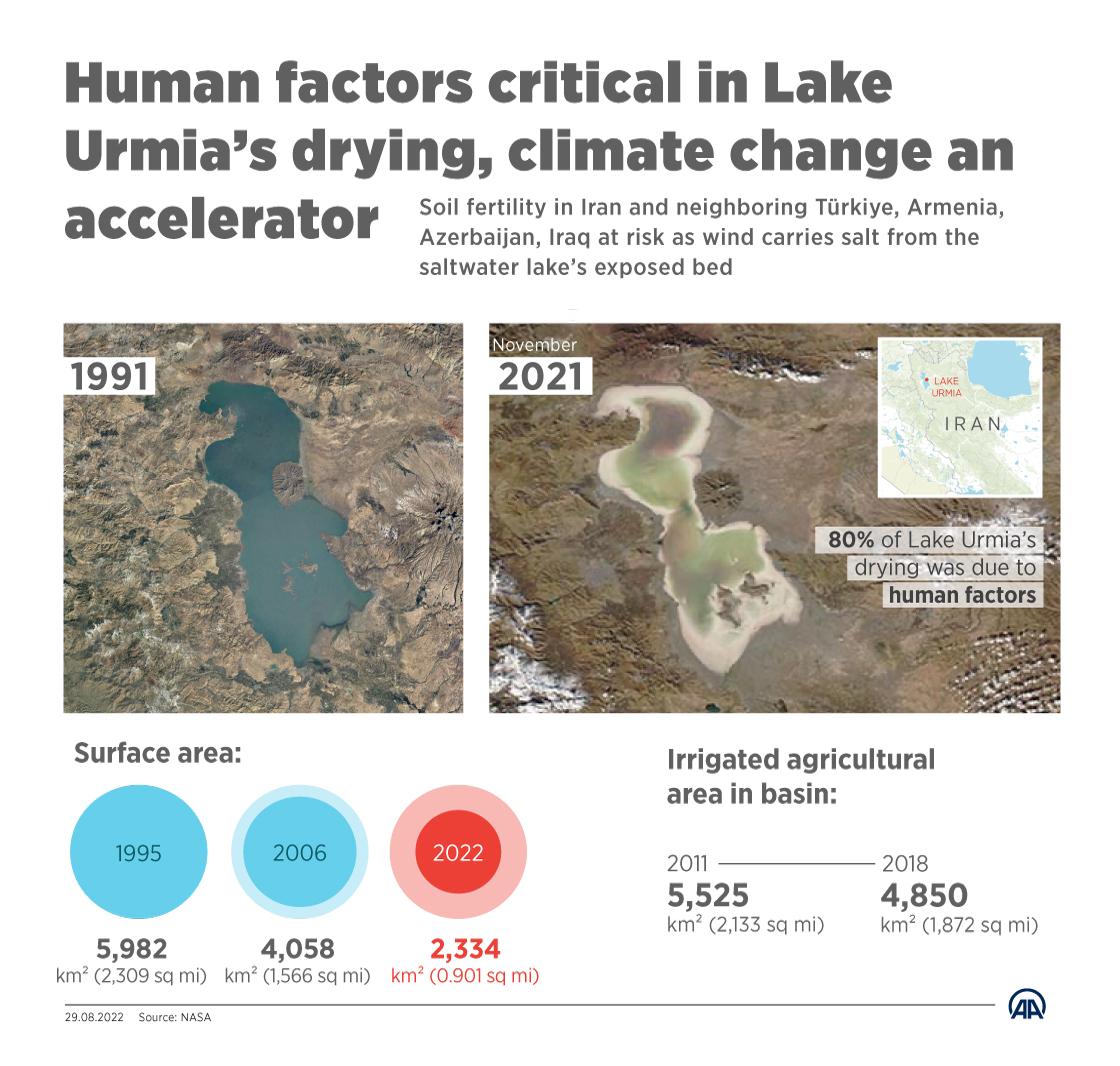
Lake Urmia (Orumiyeh), in Iran's northwestern province of Western Azerbaijan, has lost 95 per cent of its water over the past three decades, despite government claims that it has appropriated hundreds of millions of dollars to prevent the environmental disaster.
Now, soil fertility in Iran and neighbouring Türkiye, Armenia, Azerbaijan and Iraq is at risk as the wind carries salt from the saltwater lake’s exposed bed.
Urmia was the largest lake in the Middle East and the sixth largest salt lake in the world, with an original surface area of 5,200 square kilometres in the 1970s, or 2,000 square miles. It had shrunk to 700 sq km by 2013. The lake began shrinking in the 1980s due to water mismanagement and climate change, according to Iran International.
Located in Iran between the provinces of East and West Azerbaijan, Lake Urmia has been facing serious drought for years due to climate change, the long dry spell, unrestrained damming and excessive water use, especially in the agriculture sector. Like the Aral Sea, a better-known vanishing salt lake in Central Asia, Lake Urmia is exposing a salt desert that generates noxious dust, threatening crops and people with a risk of serious diseases like respiratory problems or lung cancer.
In the past few months, thousands of people angry over the drying up of rivers have been driven to protest, particularly in central and southwestern Iran. In mid-July, police arrested several people for “disturbing security” after they demonstrated against the drying up of Lake Urmia in Iran’s northwestern mountains.







 editor@caliber.az
 +994 55 444-88-98
 Азербайджан, Баку, ул. Низами, 203, Af Business House, 5-й этаж