










Macronism is ruining France: a new “lame duck” scandal Euractiv article
Euractiv has published an article examining a political scandal in France. Caliber.Az presents the most telling parts of the article.
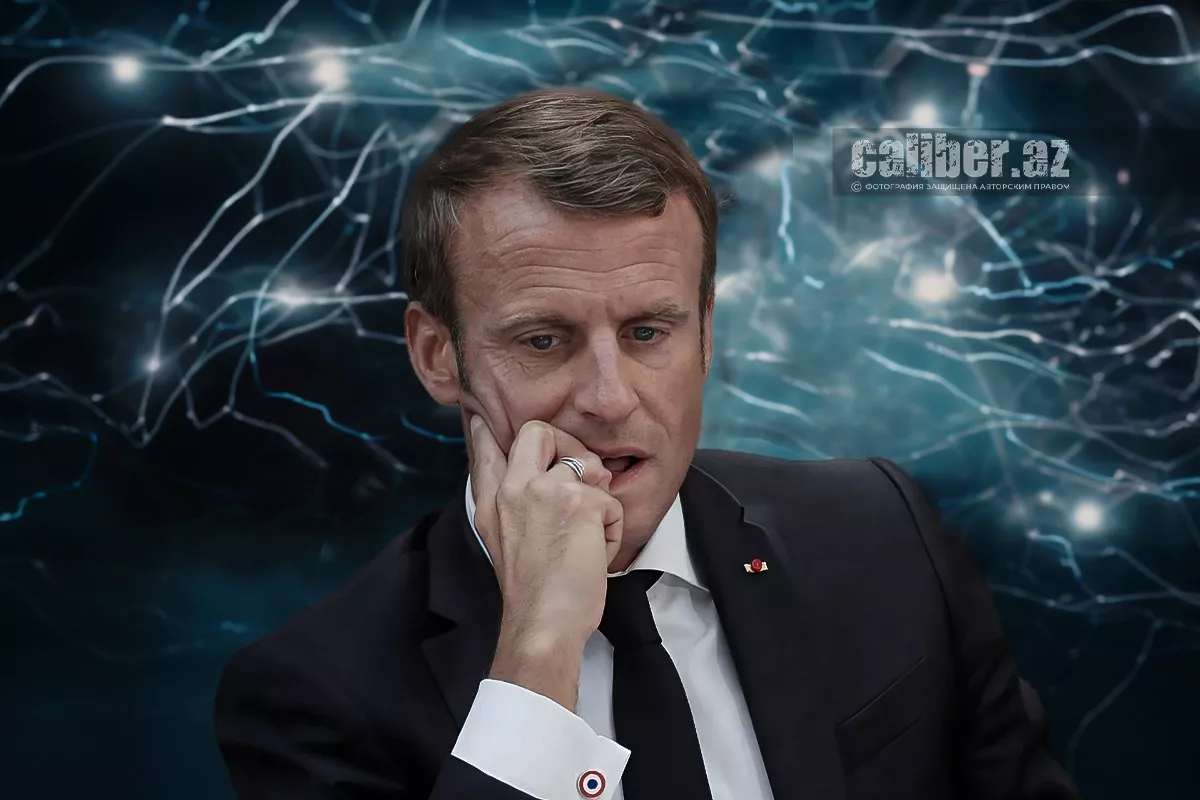
With less than a year until the French presidential elections, Emmanuel Macron has been accused of using his final months in power to place loyalists in some of the country’s most important state institutions.
From the Constitutional Council to the Court of Auditors, from the Banque de France to the ombudsman’s office, a string of looming or recent appointments has sharpened opposition claims that President Macron is trying to preserve influence after he leaves the Élysée.
The far right sees an outgoing president trying to frustrate any future victory by Marine Le Pen’s Rassemblement national (RN) camp. The left claims Macron is weakening watchdogs meant to control or constrain executive power. Conservatives accuse him of turning independent authorities into extensions of his political camp.
Whether that is a fair verdict or a standard exercise in end-of-term presidential politics, one thing is already clear: the battle for power in 2027 has started out of sight from the public campaign trail.
The broader fight reveals how much power sits beyond elections in France’s highly centralised system. Senior appointments can shape legal rulings, budget oversight and administrative decisions for years if not decades, which partly explains why the stakes feel so high for opposition parties.
“When Macronism is collapsing in the country, it clings to the counter-powers,” the conservative Republicans said in a recent statement.
Conflict of interest allegations
The most controversial move so far was the nomination in February of former budget minister Amélie de Montchalin to lead the Court of Auditors, the body charged with scrutinising public spending. Critics said that since Nicolas Sarkozy’s presidency, there has been an informal tradition of appointing opposition figures to the top job in order to dispel doubts about independence.
That custom began in 2010 with Socialist heavyweight Didier Migaud and continued with the former EU commissioner Pierre Moscovici a decade later. But by choosing an outgoing Macron minister, opponents say the president has broken with precedent. As soon as she took office in February, de Montchalin announced she would stay out of the auditor’s work on public finances in 2025 to avoid conflict of interest allegations.
Far-right lawmaker Jean-Philippe Tanguy called the nomination “a scandal”, accusing Macron’s camp of seeking to “mask the ruin of the public accounts.” Socialist MP Arthur Delaporte said the move represented “the absolute mixing of roles weakening the institution.”
Legal challenges have followed, with anti-corruption campaigners from the NGO Anticor and others launching cases contesting the appointment. The final ruling is expected in the coming weeks, but there is little chance of annulling the appointment, said one of the plaintiffs.
“If this were happening in Mr Orbán’s Hungary, it would have made every democrat’s hair stand on end,” said Paul Cassia, a law professor. He added that the president’s camp was exploiting legal loopholes that give the president wide room for manoeuvre in the Fifth Republic’s highly centralised system.
“The president has created a structural conflict of interest here. We are told she will recuse herself from all matters involving the policies she herself helped implement — but who checks that? Who enforces it?” he asked.
He pointed out that magistrates who had questioned the appointment in a public opinion piece were themselves targeted through proceedings by the court’s ethics committee.
The dispute echoes the uproar last year over Richard Ferrand, one of Macron’s oldest political allies, taking the helm of the Constitutional Council. His arrival was denounced by critics as another example of presidential patronage. His competence and impartiality were also questioned at the time, before a tight parliamentary approval process.
More battles may be brewing. Former justice minister Éric Dupond-Moretti is among those mentioned for the post of Défenseur des droits – the ombudsman charged with defending civil liberties and overseeing public services. This would likely trigger fierce resistance from magistrates.
At the Council of State the name of Marc Guillaume has circulated for the vice president role despite past controversy over sexism allegations. Guillaume, who served as the government’s secretary-general during Macron’s first term, was moved to a local governor or prefect role after the claims emerged.
Attention is also turning to France’s financial establishment. Banque de France governor François Villeroy de Galhau has stepped down. Names circulating for his succession in Paris include the Elysée’s secretary general Emmanuel Moulin.
As the race for 2027 takes shape, France’s institutions are becoming a campaign battlefield of their own.







 editor@caliber.az
 +994 55 444-88-98
 Азербайджан, Баку, ул. Низами, 203, Af Business House, 5-й этаж