










Middle Corridor: From alternative route to strategic necessity Artice by The National Interest
The National Interest has published an article on the growing importance of the Middle Corridor amid the regional crisis. Caliber.Az reprints some excerpts from the piece for its readers.
Editor’s Note: The author of the article, Ebru Akgün, is a journalist and pundit specialising in post-Soviet geopolitics and security issues in Central Asia.
“When the United States and Israel struck Iran on February 28, 2026, crude oil prices jumped nearly 10 per cent overnight. The International Energy Agency confirmed the disruption had exceeded the scale of the 1973 oil shock in key indicators. The world’s attention fixed, reasonably enough, on the Persian Gulf. The more consequential strategic story was unfolding thousands of miles to the north and east.

The Trans-Caspian International Transport Route, the Middle Corridor, has long subsisted as a geopolitical aspiration. The Strait of Hormuz blockade transformed it into a structural necessity almost overnight. But the corridor’s sudden centrality has not resolved the competition among the states that control it. It has intensified that competition, and clarified what each party wants from it.
The Middle Corridor runs from China through Kazakhstan, across the Caspian Sea to Azerbaijan, through Georgia, and into Türkiye. Formally established in 2014, it remained secondary to the northern route through Russia until the war in Ukraine made that route politically untenable for European and Asian shipping. Container traffic along the route rose by 36 percent in 2025 alone, before the Iran crisis even began.
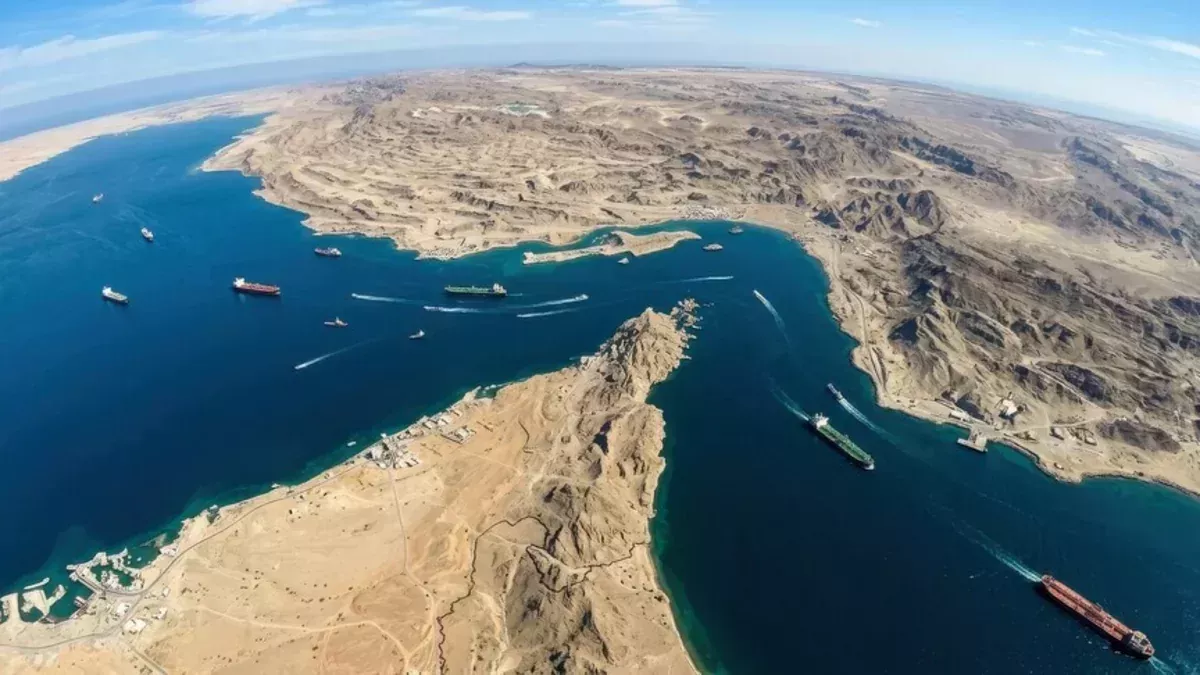
When Iran restricted commerce through the Strait of Hormuz, demand for container transportation on the Middle Corridor surged by 450 to 500 percent within a single week compared with the same period the previous year. Cargo volumes at the ports of Aktau and Baku surged.
The Middle Corridor contains its own chokepoints, and none of the states sitting on them are passive transit countries. Azerbaijan controls the Caspian crossing and the Baku-Tbilisi-Kars (BTK) railway, the corridor’s central rail artery. Georgia controls the land bridge between the Caspian and the Black Sea. Türkiye controls the corridor’s western terminus and, critically, the Bosphorus with its access to the Black Sea and the Mediterranean.
Kazakhstan has been the most publicly enthusiastic beneficiary of the corridor’s new moment. The macroeconomic logic is straightforward: roughly 80 percent of Kazakh oil still transits via the Caspian Pipeline Consortium route through Russia to Novorossiysk, a route that has faced repeated disruptions. The Trans-Caspian route now looks, as Kuanysh Keskinbayev of KMG Kashagan (a Kazakh oil concern) put it at the Baku logistics forum in April, like “one of the few routes operating without serious disruptions.”
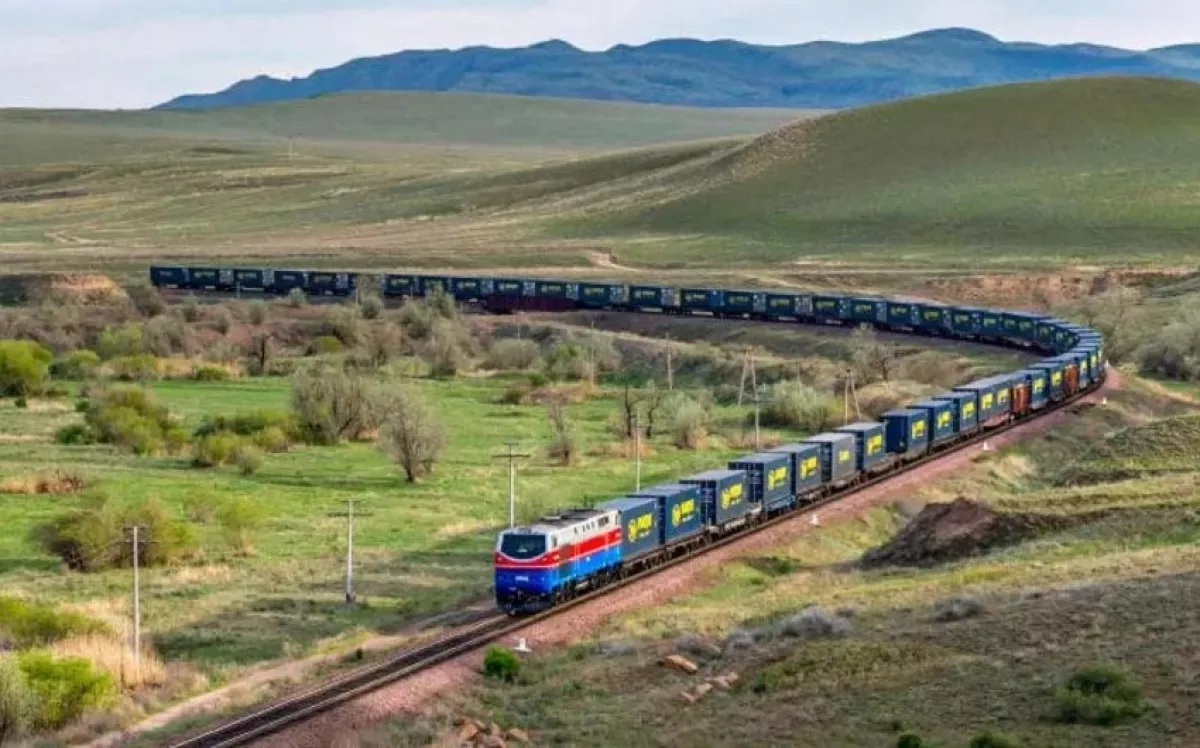
The enthusiasm is understandable. The capacity is not yet there to match it. Of all the states along the corridor, Türkiye has positioned itself most deliberately for this moment. The Trans-Caspian corridor carried 4.5 million tons of cargo in 2024, up fivefold from 800,000 tons just seven years ago. Delivery times have been cut from 28–32 days to 13–17 days. Rail cargo between Ankara and Astana rose 35 percent last year.
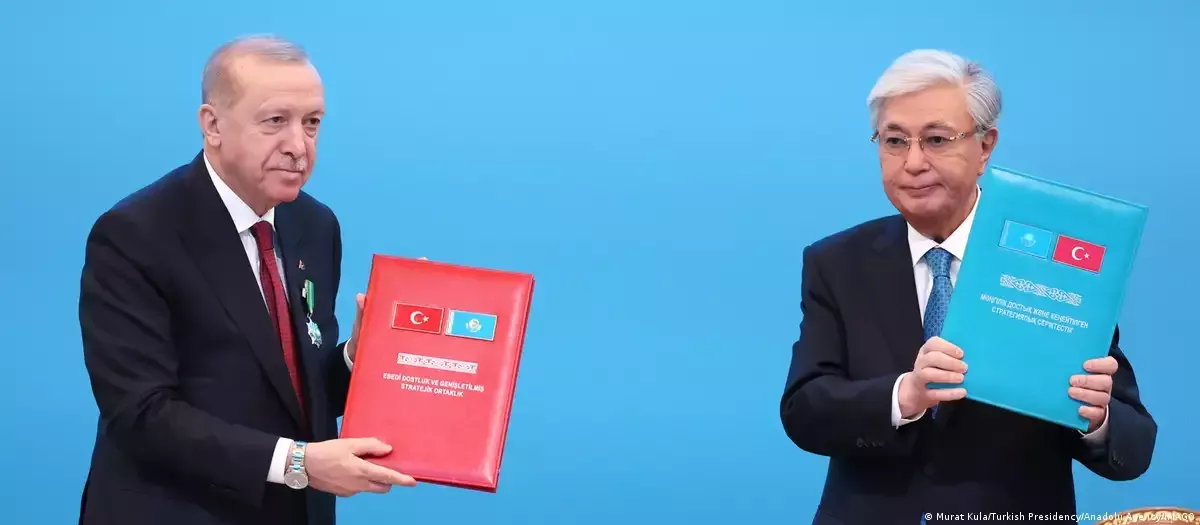
When Turkish President Recep Tayyip Erdoğan met President Tokayev in Astana in May 2026 and announced a “Declaration on Eternal Friendship,” the corridor was the explicit spine of the visit.
What Türkiye brings to the corridor beyond geography is institutional leverage of a particular kind. Ankara is a member of NATO, maintains active trade relations with the European Union, and holds the presidency of the Organization of Turkic States. That combination of Western institutional membership and Turkic world leadership gives Türkiye a bridging role no other corridor state can replicate.
Ankara has proposed building an oil pipeline to supply NATO’s eastern flank, bypassing the risks of the Strait of Hormuz. The Baku-Ceyhan pipeline already carries up to 1.2 million barrels per day. Around 3.5 million barrels of oil transit the Bosphorus daily.
The European Union has been running summits and producing connectivity frameworks for years. The Global Gateway initiative and subsequent EU-Central Asia formats have generated investment signals around Caspian hubs, and multilateral lenders including the World Bank, EBRD, and ADB are active in the corridor space.

China’s bilateral trade with Kazakhstan reached a record $48.7 billion in 2025, up 11 percent year-on-year. The Hormuz crisis has, if anything, accelerated Beijing’s engagement with Central Asian overland routes.
The strategic implication for Washington is direct. The Middle Corridor is not merely a trade route; it is an emerging test of whether the United States and its partners can match Chinese and Russian state capacity for patient, long-term infrastructure investment. The Hormuz crisis has created a window. Windows close. Three conclusions follow for US and Western policymakers.
First, the corridor requires capital commitments rather than additional frameworks. The EBRD and World Bank are present but insufficient.
Second, Türkiye’s bridging role should be engaged rather than managed at arm’s length. Its institutional position on the corridor is also irreplaceable.
Third, Kazakhstan’s hedging posture deserves more direct economic support than it currently receives.
The Middle Corridor’s moment has arrived. The route that runs from China through the steppe, across the Caspian, through the Caucasus, and into Türkiye is real, and its momentum is real,” the article reads.







 editor@caliber.az
 +994 55 444-88-98
 Азербайджан, Баку, ул. Низами, 203, Af Business House, 5-й этаж