










Must-see celestial shows coming in 2026
As 2026 approaches, skywatchers around the world have plenty to look forward to.
According to U.S. media, from spectacular meteor showers to dramatic eclipses, the year promises a series of unforgettable celestial events visible across different parts of the globe.
January: Quadrantids meteor shower and wolf supermoon
The year kicks off with the Quadrantids meteor shower, peaking on the night of January 3. Considered one of the top annual meteor showers, it can produce up to 120 shooting stars per hour. Skywatchers in the Northern Hemisphere will have the best view. On the same night, the Wolf Supermoon—named for mid-winter wolves—will light up the sky, appearing slightly larger and brighter than a typical full moon. Jupiter will follow, reaching opposition on January 9–10, offering the brightest and clearest view of the gas giant all year.

February: Annular solar eclipse
On February 17, a rare annular solar eclipse, or “ring of fire,” will occur. While 96% of the sun will be covered by the moon, only remote regions of Antarctica will see the full spectacle.
March: Total lunar eclipse and spring equinox auroras
March 3 brings a total lunar eclipse, turning the moon a deep red for 58 minutes—a phenomenon visible in North America, Australia, New Zealand, East Asia, and the Pacific. Later, around the spring equinox on March 20, geomagnetic conditions are expected to intensify aurora activity, making it a perfect opportunity to see the Northern Lights in Iceland, northern Scandinavia, Alaska, and northern Canada.
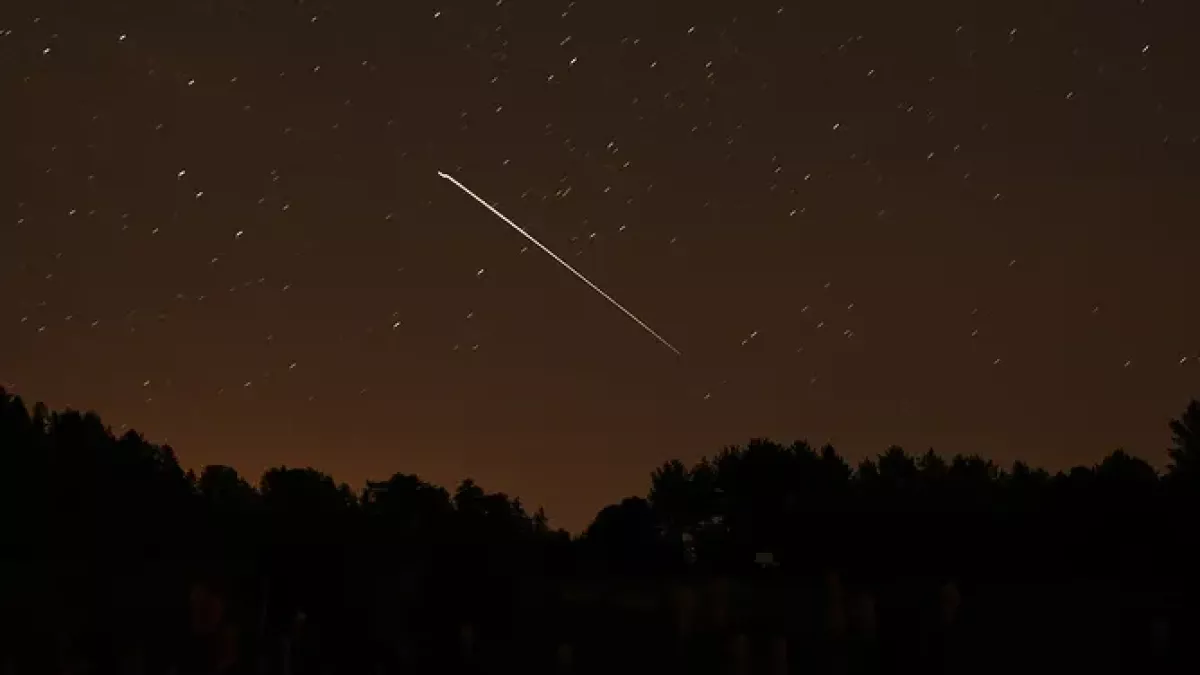
April: Lyrid meteor shower
The Lyrid meteor shower will peak on the night of April 21, offering at least 18 meteors per hour as Earth passes through debris from the Thatcher comet. Optimal viewing is after midnight and before dawn on April 22.
May: Full blue micromoon
May 3 will feature a Full Blue Micromoon—the second full moon in May—which appears slightly smaller than usual. This rare lunar alignment occurs about seven times every 19 years.

June: Venus and Jupiter conjunction
On June 9, Venus and Jupiter will appear very close in the southwestern sky after sunset, visible for several hours. The two bright planets will be separated by roughly one finger width in the sky.
July: Quiet month
July offers a break for astronomers to prepare for the second half of the year.

August: Total Solar eclipse, Perseid meteor shower, and partial Lunar eclipse
August 12 will feature a total solar eclipse visible across the Arctic, Greenland, Iceland, northern Spain, and northeastern Portugal. On the same night, the Perseid meteor shower will peak, with 50–100 meteors per hour lighting up the skies. The year’s final eclipse, a deep partial lunar eclipse covering 96% of the moon, will occur on August 28, visible across Europe, Africa, Asia, and Australia.
September: Venus at peak brightness
On September 18, Venus will reach its brightest phase as a crescent, making it easier to spot in the evening sky.

October: Lunar occultation of Jupiter and Orionid meteor shower
October 6 will bring a lunar occultation, as the moon temporarily passes in front of Jupiter, visible from parts of Africa and North America. Later, the Orionid meteor shower will peak from October 21–22, offering around 20 meteors per hour.
November: Leonid meteor shower and Uranus opposition
The Leonid meteor shower peaks from November 17–18, producing 10–20 meteors per hour. On November 25, Uranus will reach opposition, appearing brighter and closer than usual—ideal for telescope viewing.

December: Geminid and Ursid meteor showers, Christmas Eve supermoon
December offers two meteor showers: the Geminids, peaking December 13–14 with 120 meteors per hour, and the Ursids, peaking December 21–22. The year ends with a spectacular Christmas Eve supermoon on December 24, appearing 7–14% larger and 30% brighter than a typical full moon, providing a stunning close to 2026’s celestial calendar.
With so many dazzling events lined up, 2026 promises to be a memorable year for stargazers worldwide.
By Aghakazim Guliyev







 editor@caliber.az
 +994 55 444-88-98
 Азербайджан, Баку, ул. Низами, 203, Af Business House, 5-й этаж