










Pentagon seeks massive missile boost after heavy war use
The Pentagon’s proposed Fiscal Year 2027 budget calls for a sharp increase in procurement of key US Navy munitions, reflecting heavy usage in ongoing operations in the Middle East and growing concerns about stockpile depletion.
At the centre of the request are major increases in purchases of Tomahawk Land Attack Missiles and Standard Missile-6 (SM-6) interceptors—two systems widely used in conflicts involving Iran and Houthi forces in the Red Sea. According to budget documents, cited by USNI News, the Navy is seeking 785 Tomahawks worth $3 billion, a more than 1,200% increase from the 55 missiles funded at $258 million in FY2026. It is also requesting 540 SM-6 missiles for $4.33 billion, up from 166 units funded at $1.41 billion the previous year.
Additional procurement plans include 494 AIM-120 Advanced Medium-Range Air-to-Air Missiles valued at $804 million—a roughly 370% increase—and 141 MK-48 heavyweight torpedoes costing $571 million.
Funding for these purchases is split between the standard defense budget and a separate reconciliation bill, marking the second consecutive year this approach has been used. The reconciliation mechanism allows the Navy to spread procurement over multiple years. Under current plans, 58 Tomahawks would be purchased through the FY2027 budget and 727 via reconciliation funding. For SM-6 missiles, 106 would be acquired through the base budget and 434 through reconciliation.
Both systems play a central role in naval operations. Tomahawks are long-range precision strike missiles, capable of hitting targets over 1,000 nautical miles away, and are deployed from vertical launch systems on destroyers and submarines. SM-6 missiles serve as multi-role interceptors, designed to counter aircraft, drones and cruise missiles, and form the backbone of fleet air defense.
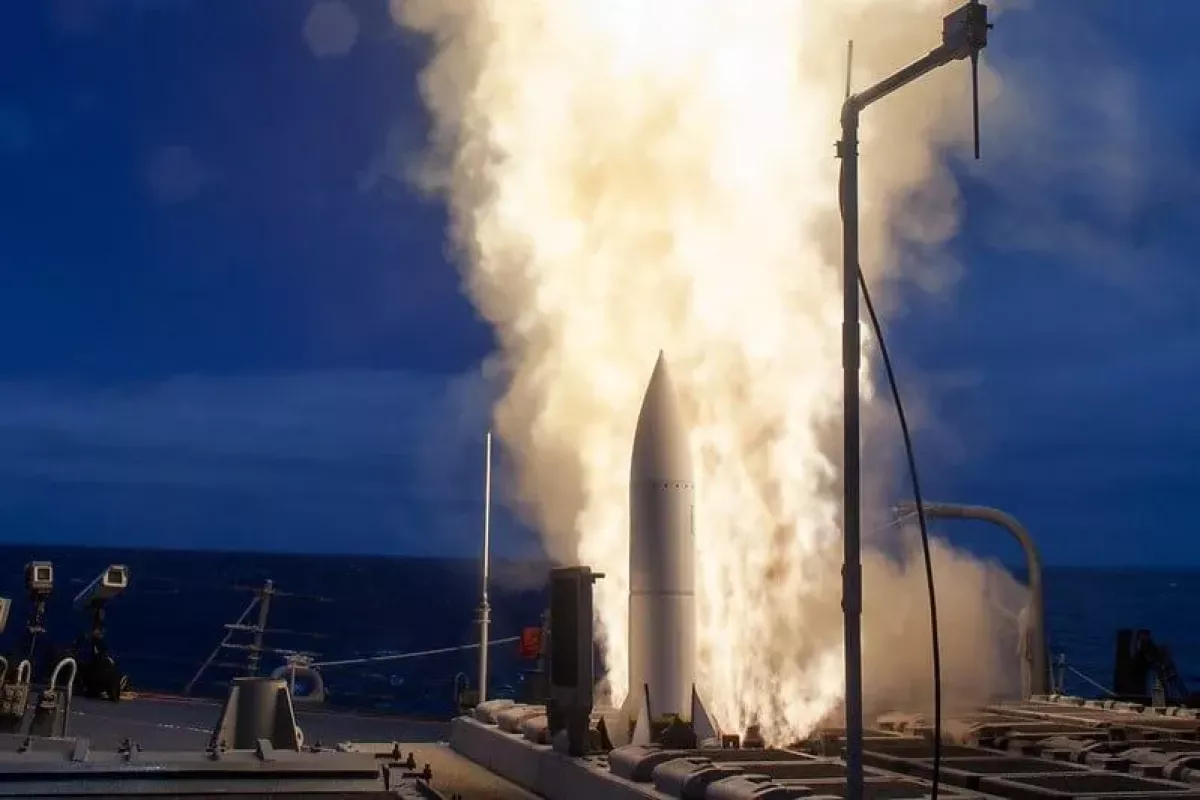
The increased demand follows extensive use in Operation Epic Fury, where the Navy had launched approximately 850 Tomahawks by late March, according to the Center for Strategic and International Studies—the highest number used in a single conflict since the 1991 Gulf War.
The surge in spending has raised concerns about the strain on the defense industrial base. Analysts warn that current production capacity may not be sufficient to meet the proposed procurement levels in the near term. Todd Harrison of the American Enterprise Institute noted that while the purchases are necessary, industry limitations mean delivery timelines could extend significantly.
Missile production remains constrained by supply chain challenges. SM-6 systems can take more than 36 months to manufacture, largely due to limited availability of solid rocket motors, while Tomahawk production depends on single-source suppliers and can require more than two years to initiate.
Analysts suggest the reconciliation strategy effectively “frontloads” funding, allowing the Pentagon to secure long-term contracts and give manufacturers greater certainty to invest in workforce and infrastructure. However, this approach is unlikely to accelerate near-term delivery, meaning replenishment of depleted stockpiles will take time.
By Tamilla Hasanova







 editor@caliber.az
 +994 55 444-88-98
 Азербайджан, Баку, ул. Низами, 203, Af Business House, 5-й этаж