










Rare solar storm lights up skies across parts of Europe, North America
The Sun has unleashed its most powerful solar radiation storm in more than 20 years, triggering vivid auroras across large swathes of the Northern Hemisphere and raising concerns about potential disruptions to satellites and power systems.
The intense geomagnetic storm followed a massive eruption of charged particles from the Sun on January 17. According to the US National Oceanic and Atmospheric Administration (NOAA), the solar material was forecast to reach Earth on January 19 and January 20, producing unusually strong space weather effects, DW writes.
A geomagnetic storm is a major disturbance in Earth’s magnetic field caused by solar activity. NOAA described the night’s event as "very rare," noting that the storm reached G4 conditions — the second-highest level on the geomagnetic storm scale — at 7:38 p.m. GMT.
Spaceweather, an astronomy monitoring platform, reported that the ejected solar cloud traveled from the Sun to Earth in just under 25 hours. Typically, such clouds take three to four days to cover the same distance, underscoring the storm’s exceptional speed and intensity.
Shawn Dahl, a service coordinator at NOAA’s Space Weather Prediction Center, said the last solar radiation storm of this scale affected Earth in 2003.
Solar radiation storms pose risks to spacecraft, satellite operations, and navigation systems, and may also cause voltage irregularities in power grids.
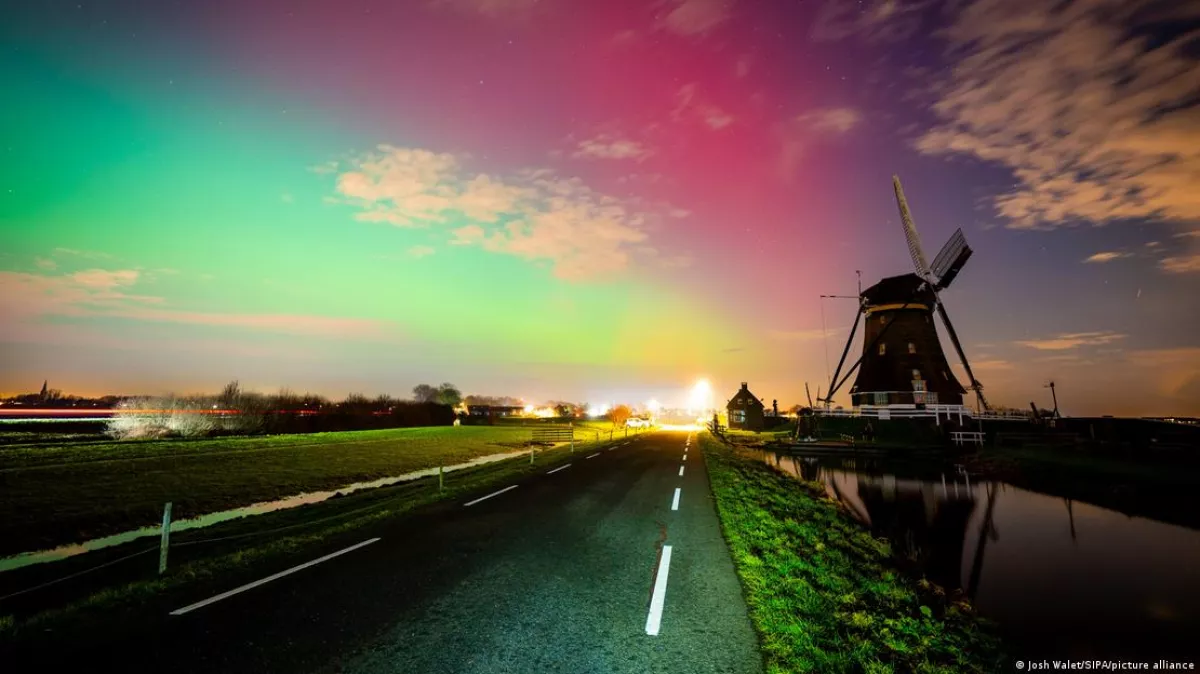
The storm produced widespread auroral displays. On the night of January 19, the northern lights illuminated skies across several regions of Germany, according to the German Weather Service (DWD). The strength of the storm allowed auroral colors to be seen as far south as the Alps.
In North America, NOAA said people in northern and central parts of the continental United States "can look for the aurora if at night and should weather conditions permit." The agency added that the green, red, and purple hues of the aurora could be visible as far south as Alabama and northern California.
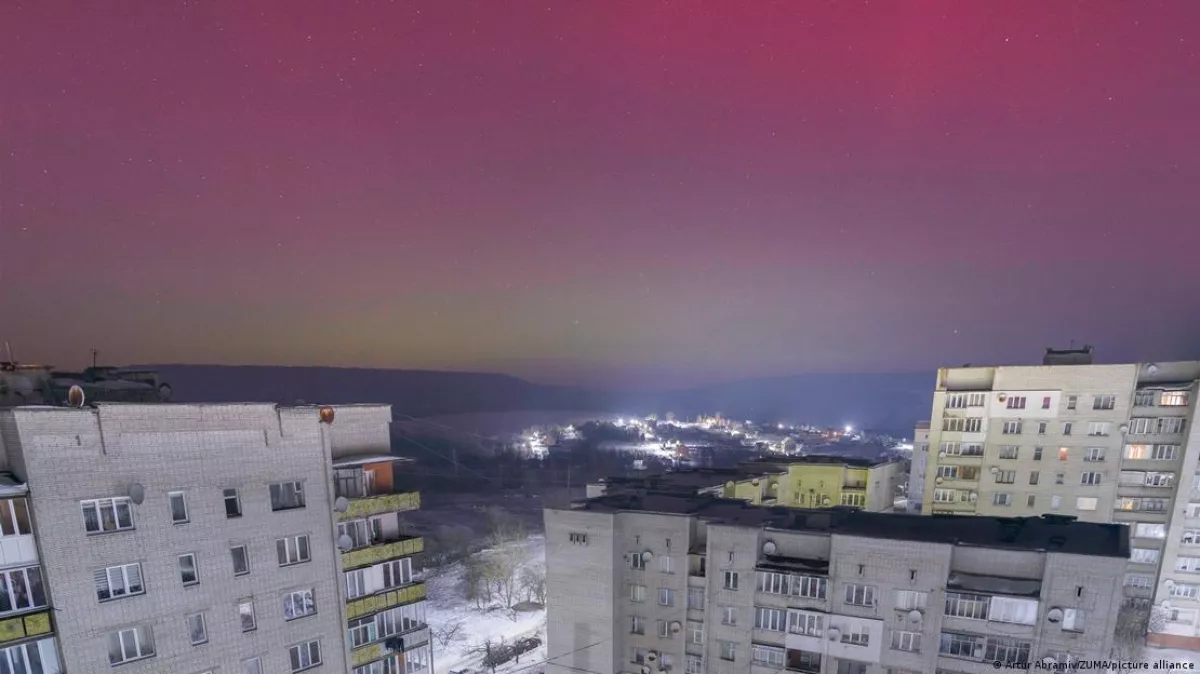
Auroras were also expected across much of Canada and parts of Europe, including Switzerland and Ukraine, as the geomagnetic storm continued to interact with Earth’s atmosphere.
By Sabina Mammadli







 editor@caliber.az
 +994 55 444-88-98
 Азербайджан, Баку, ул. Низами, 203, Af Business House, 5-й этаж