










South Caucasus emerges as Europe’s energy asset Article by Strategy International
The Cypriot analytical centre Strategy International has published an article by Canadian political scientist Robert Cutler examining the role of the South Caucasus in diversifying Europe’s energy supply sources. Below is an excerpt from the piece, presented for Caliber.Az readers.
Europe should turn interest in South Caucasus energy corridors into practical and financial support, strengthening strategic redundancy after Hormuz
The pressure on Hormuz has stripped energy security back to a basic issue: supply volume is not enough. It depends on whether routes remain usable when political risk rises, and on what infrastructure remains available when one passage becomes uncertain. For Europe, the South Caucasus is not a substitute for the Gulf. Its value is narrower: an existing corridor that reduces route concentration in a European system already forced to build redundancy.
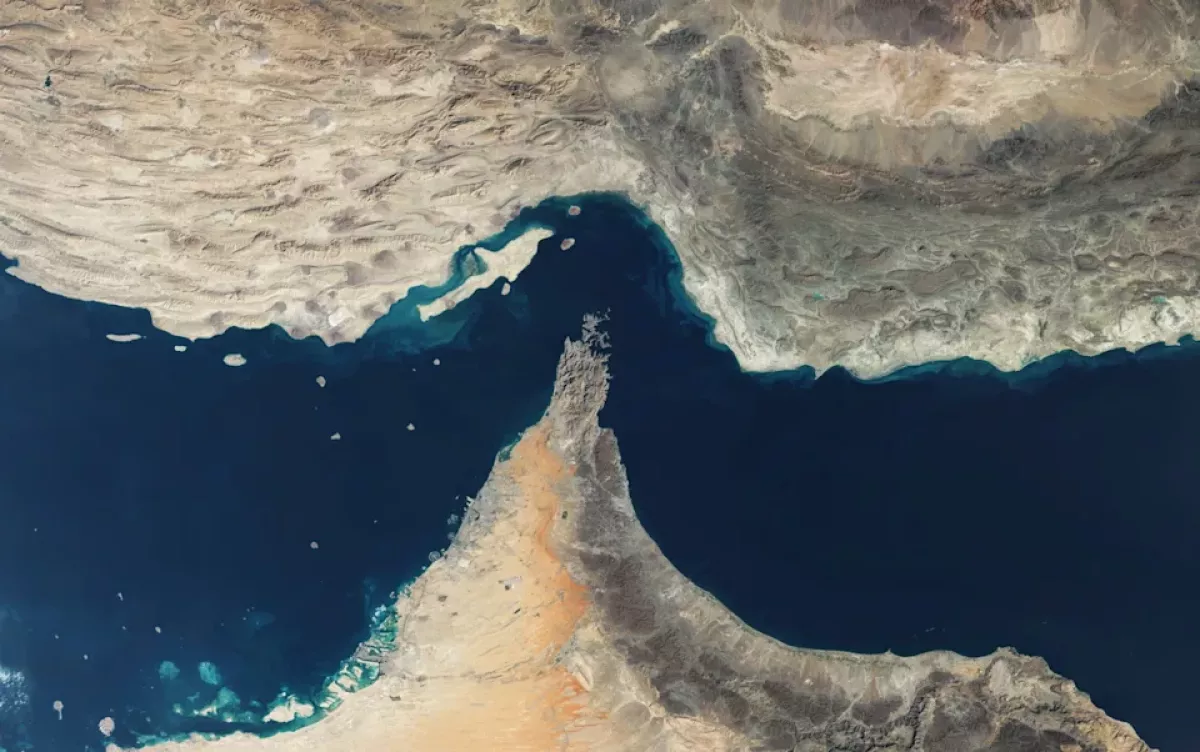
Recent pressure on the Strait of Hormuz has clarified a problem for Europe’s energy security. The issue is whether normal routes remain dependable under political stress. Market expectations now turn on route confidence as much as supply volume: reports of diplomatic movement over the Strait can move oil prices sharply.
The scale of the Hormuz problem lies in the mismatch between normal flows and available alternatives. Nearly 20 million barrels per day of oil moved through the Strait in 2025, while available bypass capacity through Saudi and Emirati routes is estimated at only 3.5 to 5.5 million barrels per day.
Europe’s redundancy problem
For Europe, the lesson reaches beyond the immediate Middle East crisis. Since 2022, Europe has reorganized energy policy around diversification: more LNG, more Norwegian gas, more North African supply, tighter storage discipline, demand management, renewables, and selective pipeline diversification. In 2025, Norway supplied 31 percent of EU gas imports, the United States 26 percent, North Africa 13 percent, and Azerbaijan and Qatar 4 percent each; LNG rose from 20 percent of EU gas imports in 2021 to 45 percent in 2025.
The numbers describe a system already being redesigned. Europe’s energy security now depends on who supplies energy, how it moves, through which corridors, under what political conditions, and with what reserve capacity if one route becomes unreliable.
The South Caucasus corridor
South Caucasus energy is already embedded in physical infrastructure. The Southern Gas Corridor (SGC) links the Caspian basin to Europe through the South Caucasus Pipeline (SCP) across Azerbaijan and Georgia, the Trans-Anatolian Natural Gas Pipeline (TANAP) across Türkiye, and the Trans-Adriatic Pipeline (TAP) across Greece and Albania, with the Adriatic route into Italy. This is not a line on a map. It crosses producing territory, mountain transit, Turkish infrastructure, Balkan and Adriatic segments, and the Italian entry point into the European gas system.
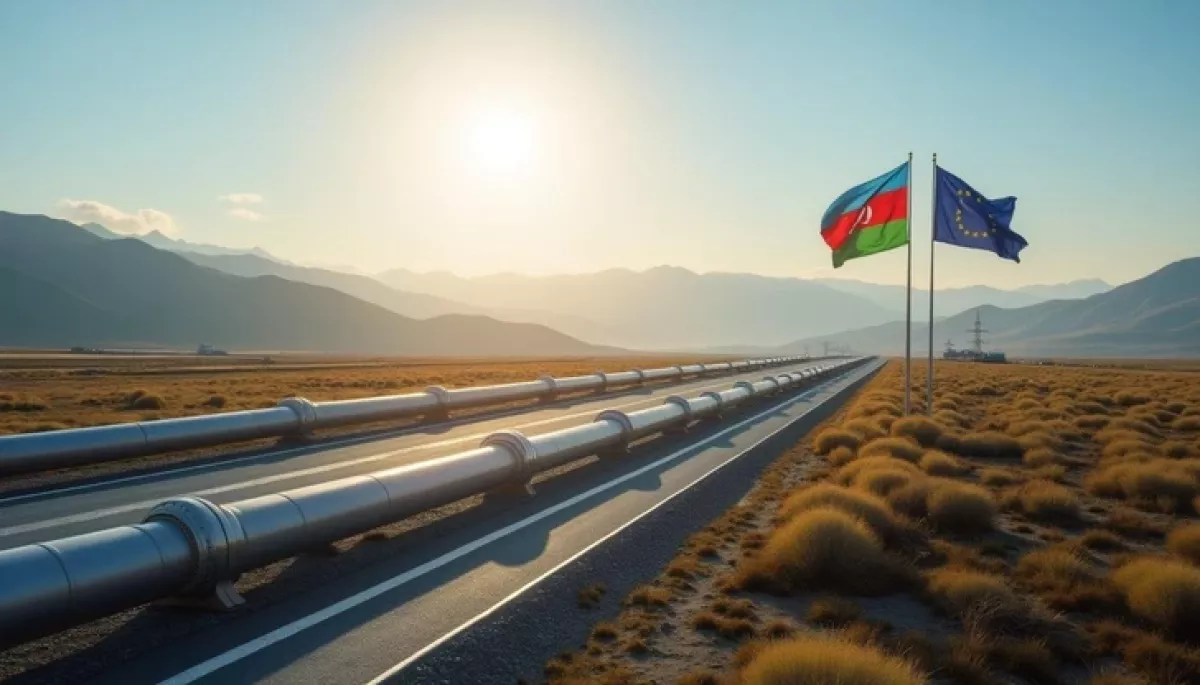
The South Caucasus thus has a regional role. Azerbaijan is the production and political anchor; Georgia and Türkiye are also part of the route logic. The corridor’s strategic significance lies in its function as a non-Hormuz, non-Russian, pipeline-based route from the Caspian to European markets. Once route reliability becomes a policy criterion, the states along that corridor become part of Europe’s security architecture.
Azerbaijan will replace neither the Gulf nor the volumes Europe lost from Russia. Its importance is more limited, and therefore more credible. Azerbaijani gas already reaches European markets through an established pipeline system. Supplies to the EU have grown since 2021, SOCAR’s European reach has widened, and Azerbaijan supplied 12.5 billion cubic meters of natural gas to EU member states in 2025.
The 2022 EU–Azerbaijan energy memorandum gave the relationship a clear policy framework, aiming to increase SGC capacity toward at least 20 billion cubic meters annually by 2027 while linking gas cooperation to renewables, methane reduction, and the wider energy transition. Azerbaijani gas remains a relatively small part of Europe’s total import balance, but it is especially important in certain national or regional markets such as Italy, Greece, Bulgaria, and other Balkan and south-central European markets.
This pipeline gas moves through established corridors and does not compete for LNG cargoes, tanker availability, regasification slots, or crisis-driven spot prices. It can also help preserve storage during a winter or route shock. Azerbaijan’s deliverable gas can significantly alter the stress level for individual countries, particularly when other routes are congested or exposed.
The Caspian option
Discussions of future gas deliveries from Turkmenistan, green-energy corridors, electricity links, and deeper Caspian–European coordination belong to the same strategic logic: Europe is looking for routes that diversify not only suppliers, but also political pathways.
The immediate Hormuz shock may recede, but the strategic lesson will remain. The episode reinforces a lesson already visible since 2022: energy security has again become a question of physical routes, political reliability, and redundancy under stress. South Caucasus energy cannot remove Europe’s exposure to global chokepoints, but it can reduce the brittleness of Europe’s energy system at the margin where real infrastructure matters. It should be treated as part of Europe’s route-security strategy after Hormuz. For the EU and its member states, interest in the corridor now has to become practical and financial support.







 editor@caliber.az
 +994 55 444-88-98
 Азербайджан, Баку, ул. Низами, 203, Af Business House, 5-й этаж