










Syria as an arena of rivalry between Türkiye and Israel A closer look at the power vacuum
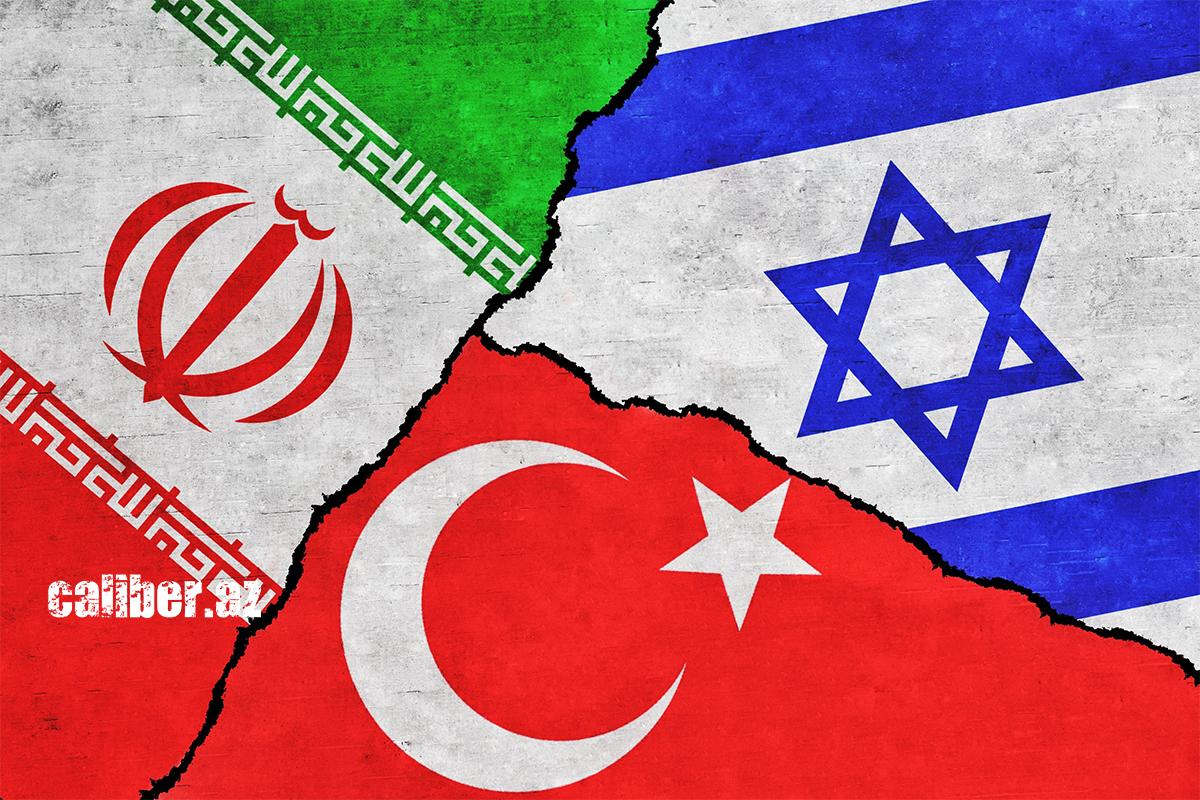
One of the outcomes of the Middle Eastern wars over the past two years has been the weakening of Iran and its allies, with their main failure being the loss of Syria, where the pro-Iranian regime of Bashar al-Assad fell. This created a power vacuum that two powers — Türkiye and Israel — are seeking to fill. Syria has thus become a field of rivalry between them.
In Damascus, a government close to Ankara, led by Ahmed al-Sharaa, controls part of Syria’s territory. In the Druze region of Suwayda and in northeastern Syria, “autonomous governments” have emerged, relying on their own armed forces. Türkiye supports a centralised state in Syria, which is unsurprising — its experts participate in managing ministries of the new regime, while Ankara’s allies, Qataris, pay the salaries of local officials. Israel, on the other hand, is interested in weakening and decentralising Syria; it focuses on the Druze and conducts negotiations with the Kurds.
Both countries maintain military bases and troops on Syrian territory. Türkiye has deployed its forces in northern Syria, while Israel controls several southern regions and demands full demilitarisation of Syria, extending all the way to the capital, Damascus.
Turkish forces systematically attack Kurdish formations, since the leadership of the “Kurdish administration” consists of elements hostile to Ankara, drawn from the party ranks of the Kurdistan Workers’ Party (PKK), a group engaged in armed struggle against Türkiye. Ankara is unhappy that the PKK has effectively established its own state along Türkiye’s border in Syria. However, Türkiye is currently negotiating with the PKK on disarmament and a peaceful resolution of the “Kurdish issue,” so Ankara refrains from carrying out a large-scale operation against the PKK’s “autonomous administration” in Syria.
Israel conducts arrests and armed patrols in southern Syria, which leads to conflicts with local Sunni tribes. In addition, the Israeli Air Force periodically bombs heavy weapons bases and other targets in areas controlled by the Syrian government. Using the vast capabilities of its Air Force, equipped with state-of-the-art combat aircraft, Israel seeks to dictate terms in the region.
The latest escalation is linked to Ankara’s recent initiatives. Türkiye is attempting to deploy radar systems on Syrian territory, according to Western intelligence sources cited by the Israeli publication The Jerusalem Post. Israel believes that placing these radars in Syria would undermine its ability to strike targets in Iran, as Israeli operations use Syrian airspace for attacks on the Islamic Republic of Iran.
The deployment of radar systems on Syrian territory would significantly restrict the freedom of action of the Israeli Air Force in Syrian airspace, as was the case during recent strikes, since Turkish radars could detect Israeli aircraft activity over the country.
One source told The Jerusalem Post that Türkiye plans to hand over the radar systems to Syrian forces, presenting the move as a strengthening of President Ahmed al-Sharaa’s forces. However, Turkish personnel would remain responsible for operating the systems, giving Ankara access to the intelligence collected and control over it.
Israel, irritated by the increase in Turkish influence, has struck Syrian Air Force bases. Shortly after the fall of Assad’s regime last year, Israel carried out airstrikes on military facilities in Syria, including Air Force bases such as T-4, amid growing concerns that Türkiye would establish its own permanent military bases there and deploy drones.
The confrontation escalated further when the pro-government Turkish newspaper Yeni Şafak ran a headline declaring: “Israel Is Türkiye’s Number One Enemy.” The article appeared a day after Prime Minister Benjamin Netanyahu met with the leaders of Greece and Cyprus in Nicosia. During the trilateral summit, Netanyahu remarked: “Those who fantasize about restoring their empires will not succeed.”
Erdogan responded: “Whether in the Eastern Mediterranean or anywhere else, we do not take what is not lawfully ours, and we do not allow our rights to be taken.” He added: “Agreements can be made, documents can be signed, and messages can be conveyed in various ways, but none of this will change our policy.”







 editor@caliber.az
 +994 55 444-88-98
 Азербайджан, Баку, ул. Низами, 203, Af Business House, 5-й этаж