










“Trump whisperer”: NATO chief emerges as Europe’s most capable diplomat for US affairs
European leaders arrived at the World Economic Forum in Davos this week, bracing for confrontation, as US President Donald Trump escalated rhetoric about taking control of Greenland and signalled a tougher tone toward Europe.
Fears of a deeper transatlantic rift, however, were eased after NATO Secretary General Mark Rutte, now dubbed by some as the “Trump whisperer” emerged as a key intermediary, helping to de-escalate tensions between Washington and its European allies.
Trump did criticize European officials on multiple fronts during his appearance in the Swiss Alps, but he also sought to lower the temperature on Greenland by ruling out the use of force to annex the Danish territory. The move eased concerns that the dispute could seriously undermine NATO unity.
Momentum shifted further following Trump’s meeting with Rutte, after which the US president announced that the two had reached an understanding on a possible framework regarding Greenland. Trump also said he would no longer impose tariffs on European countries opposed to his ambitions to acquire the Arctic island. While details of the framework remain unclear, the apparent reversal highlighted Rutte’s growing influence at a moment of acute strain in transatlantic relations.
Rutte, a former Dutch prime minister who served for 14 years before taking the helm of NATO, has positioned himself as a pragmatic bridge between Europe and Trump. Known for his understated style and consensus-building approach, the longest-serving Dutch leader contrasts sharply with Trump’s confrontational political persona. Yet their relationship stretches back years, forged during Rutte’s regular visits to Washington while Trump was serving his first term as president.
The NATO chief’s most widely noted moment of Trump-soothing diplomacy came at a NATO summit last year, when he joked about Trump’s blunt language by remarking, “Daddy has to sometimes use strong language.”
The comment went viral and appeared to resonate with Trump, who later recalled at Davos, “They called me ‘Daddy,’ right? Last time. A very smart man said, ‘He’s our Daddy.’”
Rutte has repeatedly praised Trump on issues ranging from US strikes on Iran to efforts to end the war between Russia and Ukraine, as well as the president’s push for higher European defence spending. Their cordiality has extended into private correspondence, portions of which Trump has publicly shared.
In one recent message posted on Truth Social, Rutte wrote: “Mr President, Dear Donald. What you accomplished today in Syria is incredible,” closing with, “Can’t wait to see you. Yours, Mark.” Ahead of last year’s NATO summit, Rutte had also told Trump, “You will achieve something NO American president in decades could get done.”
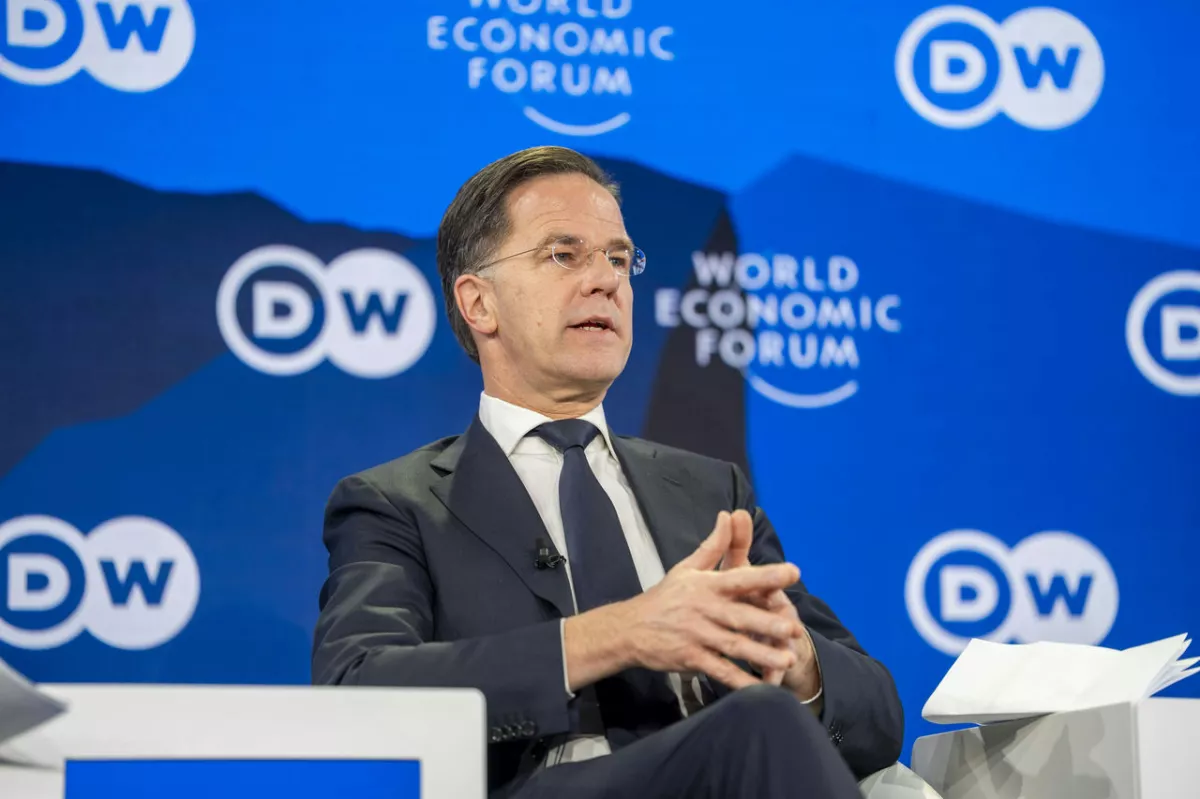
Such overt flattery has drawn criticism within Europe. Addressing the controversy at Davos, Rutte acknowledged the backlash, telling an audience, “I’m not popular with you now because I’m defending Donald Trump, but I really believe we can be happy that he is there because he has forced us in Europe to step up, to face the consequences that we have to take care more of our own defence."
Other world leaders have similarly sought personal rapport with Trump, including Finnish President Alexander Stubb and Japan’s late former Prime Minister Shinzo Abe, both of whom bonded with him over golf. French President Emmanuel Macron also cultivated a close relationship, though it appears to have soured after Trump publicly shared a private message from the French leader without apparent consent.
For his part, Rutte has remained cautious in public comments following his Davos meetings, saying only that he had a “very good meeting” with Trump. A NATO spokesperson later confirmed that Rutte did not propose any “compromise” on Danish sovereignty during discussions on Greenland.
In a subsequent Fox News interview, Rutte said talks focused primarily on Arctic security. “We basically discussed how can we implement the president’s vision on protecting, yes, Greenland, but of course this – not only Greenland – this whole Arctic,” he said.
While many details remain unresolved, Trump’s shift in tone and Rutte’s behind-the-scenes diplomacy have, at least temporarily, helped steady a relationship that many in Europe feared was heading toward open rupture.
By Nazrin Sadigova







 editor@caliber.az
 +994 55 444-88-98
 Азербайджан, Баку, ул. Низами, 203, Af Business House, 5-й этаж