










Why Europe, US take opposing directions on offshore wind energy
European leaders are accelerating plans to expand offshore wind power, while the United States has abruptly halted major projects over national security concerns, highlighting a growing transatlantic divide over the future of offshore renewable energy.
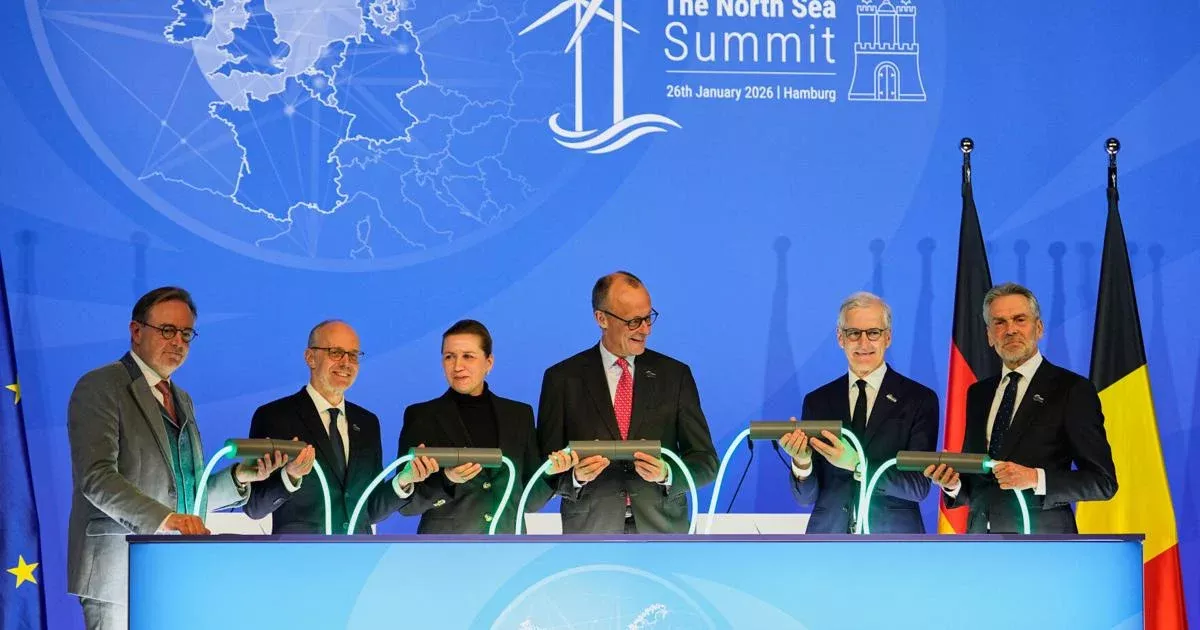
Heads of state and energy ministers from nine North Sea countries gathered in Hamburg this week to reinforce cooperation on offshore wind development. Together with industry representatives and transmission system operators, they signed the “Investment Pact for the North Seas,” committing governments to build 15 gigawatts (GW) of offshore wind capacity annually between 2031 and 2040 and to reduce investment risks in the sector. In return, industry partners pledged to deliver cost reductions, create 91,000 additional jobs and generate an estimated €1 trillion in economic activity.
The agreement underscores Europe’s determination to scale up offshore wind as a pillar of its energy transition. However, the momentum contrasts sharply with developments in Washington, where the US administration ordered an immediate halt to all five large-scale offshore wind projects under construction in December 2025, citing “national security risks.”
The suspended projects, which are at various stages of development, are located along the US East Coast. One of them, the Revolution Wind project off the coast of Rhode Island, is being developed by Danish energy company Ørsted in partnership with Skyborn Renewables. Like several other firms affected by the decision, Ørsted has filed a legal challenge against the suspension.
In its announcement, the US Department of the Interior did not provide detailed explanations of the alleged security threats. However, officials have suggested that offshore wind installations could be exploited by foreign adversaries to conceal or launch attacks against the United States.
Concerns have focused in particular on the interaction between wind turbines and military radar systems.
Speaking to Fox News in December 2025, US Secretary of the Interior Doug Burgum warned: “If you wanted to attack a population center on the East Coast of our country, you would send a swarm of drones right through one of these wind farms.”
Commenting on the decision to halt construction, Burgum said the move "addresses emerging national security risks, including the rapid evolution of the relevant adversary technologies, and the vulnerabilities created by large-scale offshore wind projects with proximity near our east coast population centers."
Beyond radar interference, critics of offshore wind infrastructure have also pointed to potential impacts on underwater acoustic environments. Defence analysts and scientific studies have long raised concerns that offshore wind farms could alter ambient noise conditions in ways that affect sonar-based detection systems, as noted in an article by the Australian Strategic Policy Institute (ASPI).
Some research into turbine noise and passive acoustic surveillance suggests that wind farms introduce persistent sound into marine environments, potentially complicating the operation of seabed sensors and the acoustic systems used by submarines to monitor surface and undersea activity. These issues have somewhat gained prominence amid growing concern over undersea threats, including autonomous submarines, and the need to protect offshore and subsea infrastructure from sabotage.
According to the ASPI article, maritime domain awareness is another recurring issue. Turbine towers and rotating blades can generate radar clutter, which may degrade the detection and tracking of surface vessels and low-flying aircraft.
Although most major economies such as the vast majority of EU countries and China are maximizing their offshore wind capabilities, the United States is not alone in raising defence-related objections to offshore wind. In 2024, Sweden cancelled 13 offshore wind projects after its armed forces concluded that the installations posed unacceptable risks to national security.
At the time, Swedish Defence Minister Pal Jonson said that "the wind farms could also lead to reduced intelligence-gathering capabilities and disrupt sensors used to detect submarines," adding that the projects would have "unacceptable consequences for Swedish security." The decision sparked domestic debate over how Sweden would meet rising demand for green electricity. Stockholm has signalled plans to expand nuclear power capacity.
How justified are those concern?
Joseph Majkut, Director of the Energy Security and Climate Change Program at the Center for Strategic and International Studies (CSIS), told NPR that security concerns surrounding offshore wind had been under discussion within the US government for years.
According to Majkut, the Department of the Interior, which oversees offshore wind leasing, and the Department of Defense “have wrangled, negotiated and worked together to try and manage these problems for years.”
"So all the things that have been cited so far [by the Trump administration] have been through the wringer of whether or not they are particularly national security questions, and project developers have made changes to their designs in response to national security concerns," he stated.
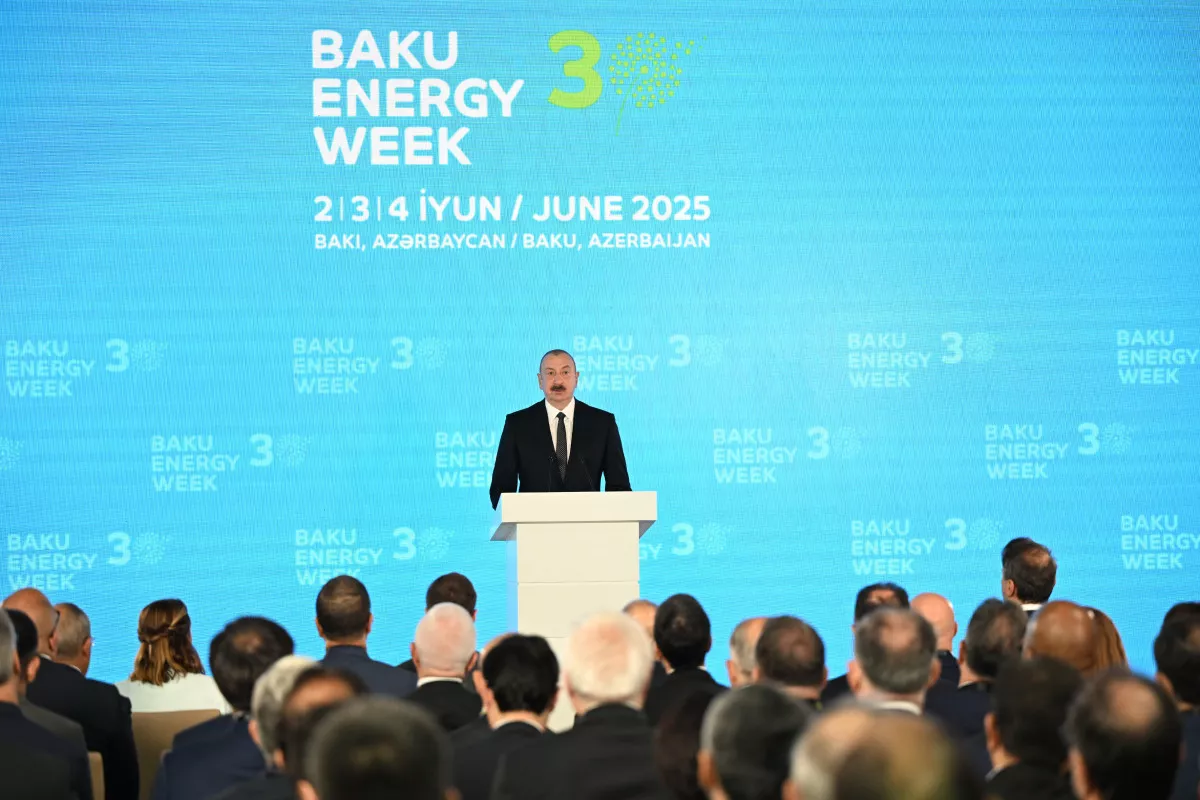
While the debate continues in the United States, other countries are pressing ahead with renewable energy expansion. Azerbaijan, for example, has set ambitious targets to address climate change through large-scale solar projects, the development of onshore and offshore wind farms, and investments in green hydrogen production.
US policy, meanwhile, has parallelly shifted toward stronger support for fossil fuels. President Donald Trump campaigned under the slogan "drill, baby, drill," and has sought to roll back support for renewable energy since returning to office.
Days after his inauguration, Trump said "we're not going to do the wind thing" and described offshore turbines as "big, ugly windmills" that were dangerous to wildlife, reinforcing the administration’s scepticism toward wind power even as Europe doubles down on offshore expansion.
By Nazrin Sadigova







 editor@caliber.az
 +994 55 444-88-98
 Азербайджан, Баку, ул. Низами, 203, Af Business House, 5-й этаж