










Ancient DNA reveals how humans shaped wine for millennia
A recent report by The New York Times explores how modern science is reshaping our understanding of wine’s long history, drawing on new genetic research into ancient grape seeds to trace how cultivation began and evolved over millennia.
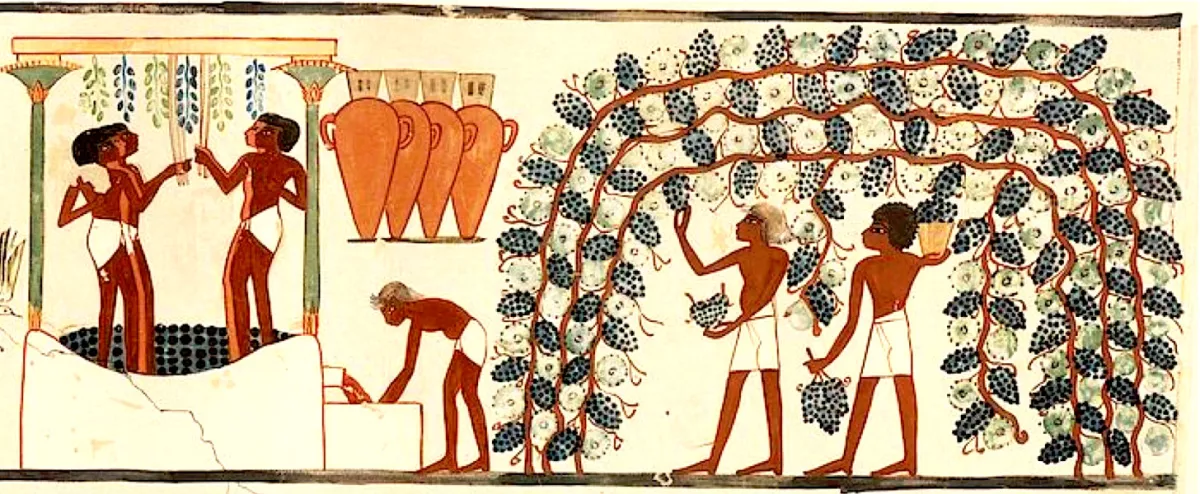
Humans have consumed wine for thousands of years, as evidenced by ancient Egyptian paintings depicting grape harvesting, Mesopotamian murals showing elites raising cups believed to contain wine, and Roman frescoes of Dionysus enjoying the drink. Yet key questions have remained about how much wine — and the grapes behind it — has changed over time, and to what extent human intervention shaped its development.
A new study published in Nature Communications addresses these questions through genetic analysis of ancient grape seeds, known as pips, recovered from archaeological sites in France. The research identifies France as a major center in the historical development of winemaking and provides new clarity on when grape domestication took hold.
According to the findings, humans in what is now France were already domesticating grapes for wine production by around 650 B.C., roughly coinciding with the founding of Marseille by Greek settlers. Researchers suggest the process may have begun even earlier.
The study also sheds light on the remarkable continuity of certain grape varieties. Lineages such as Pinot noir and Folha de Figueira have remained largely unchanged for centuries, preserved through deliberate human propagation techniques.
“It’s mind blowing to think that we humans have cultivated this same exact genetic clone of a plant for almost 1,000 years,” said Jazmín Ramos Madrigal of the University of Copenhagen, who was not involved in the study.
This stability stands in contrast to other domesticated crops. Michele Morgante of the University of Udine noted that modern crops such as maize have undergone thousands of generations of change, while grape varieties are often only five to ten generations removed from their original domestication.
The earliest domesticated grapes are believed to have originated in the mountainous region between the Black and Caspian Seas, with evidence of winemaking dating back at least 8,000 years. Archaeological discoveries, including an ancient wine jar found in Tbilisi, support this timeline.
As trade and migration expanded, domesticated grape varieties spread westward into Europe, where they mixed with local wild species. Over time, regions such as France developed thriving wine cultures, drawing on genetic inputs from across Europe and the southwestern Middle East.
Despite this long history, significant gaps have remained in understanding when specific grape varieties emerged and how cultivation practices evolved. “When it comes to France, every single question is wide open,” said Ludovic Orlando of the University of Toulouse, who led the study.
To address these gaps, Orlando and his team analyzed more than 150 preserved grape pips from archaeological sites across France, selecting 49 samples with sufficiently preserved DNA for full genomic sequencing. The samples ranged from around 2250 B.C., in the Bronze Age, to approximately A.D. 1450, extending the known genetic record significantly both backward and forward in time.
Their analysis revealed that the earliest samples were entirely wild. By around 625 B.C., however, domesticated varieties—likely introduced from the East—began to appear, along with hybrid forms combining wild and cultivated traits. From that point onward, the genetic record shows clear evidence of sustained human cultivation.
“The biggest contribution of this paper is that it puts a more precise date on when the first fully domesticated varieties appear,” Morgante said.
The persistence of certain grape lineages reflects long-standing agricultural practices, particularly propagation through cuttings, which produces genetically identical clones rather than introducing diversity. This approach likely allowed growers to preserve desirable traits, including flavor and adaptability to Europe’s climate.
“We like our wine,” Ramos Madrigal said. “Once you find something you like, you want to keep it. You keep growing it.”
The study also has implications for the future. Expanding the database of grape genomes could help scientists identify traits that make vines more resilient to climate change, especially given that many European varieties originated in hotter, drier regions.
Orlando’s team aims to extend the research further back in time and expand it geographically to build a more complete picture of how grapes and human culture have co-evolved.
“We really want to understand the whole co-evolutionary history of us and grapes, and how that circles back to culture,” he said.
As for recreating ancient wines, researchers say the prospects are limited. Wine production depends on far more than grape genetics, including climate conditions, fermentation processes, microbial activity and aging techniques.
“I’m not sure the wine of the Romans was better than what we have today,” Morgante said. “So why should we go back?”
By Tamilla Hasanova







 editor@caliber.az
 +994 55 444-88-98
 Азербайджан, Баку, ул. Низами, 203, Af Business House, 5-й этаж