










Baku, Astana, Tashkent advance green energy corridor to Europe Article by The Astana Times
The Astana Times has published an article on energy cooperation between Azerbaijan, Kazakhstan and Uzbekistan. Caliber.Az reprints some excerpts from the piece.
“Kazakhstan, Azerbaijan and Uzbekistan are advancing plans for the Caspian Green Energy Corridor that would allow renewable electricity generated in Central Asia to reach European markets. The Astana Times takes a closer look at the project’s scale, economics and strategic significance.
The project stems from the agreement, signed by the leaders of Kazakhstan, Azerbaijan and Uzbekistan in Baku in November 2024, that establishes a framework for closer cooperation on renewable energy development, energy efficiency and the export of renewable energy to international markets.
Centered on a planned high-voltage submarine cable across the Caspian Sea, the initiative aims to connect Central Asia’s rapidly growing renewable energy sector with European markets through Azerbaijan and a broader Black Sea electricity network.
“The initiative aims to establish a Green Energy Corridor that would enable the export of renewable electricity, hydrogen and green ammonia from Central Asia to Europe via the Caspian Sea,” the Kazakh Energy Ministry told The Astana Times in a comment for this story. “A key component of the project is the planned construction of a high-voltage direct-current submarine cable across the Caspian Sea. This strategic decision would provide Kazakhstan with direct access to the European Union’s electricity markets through a similar project planned in the Black Sea,” it added.
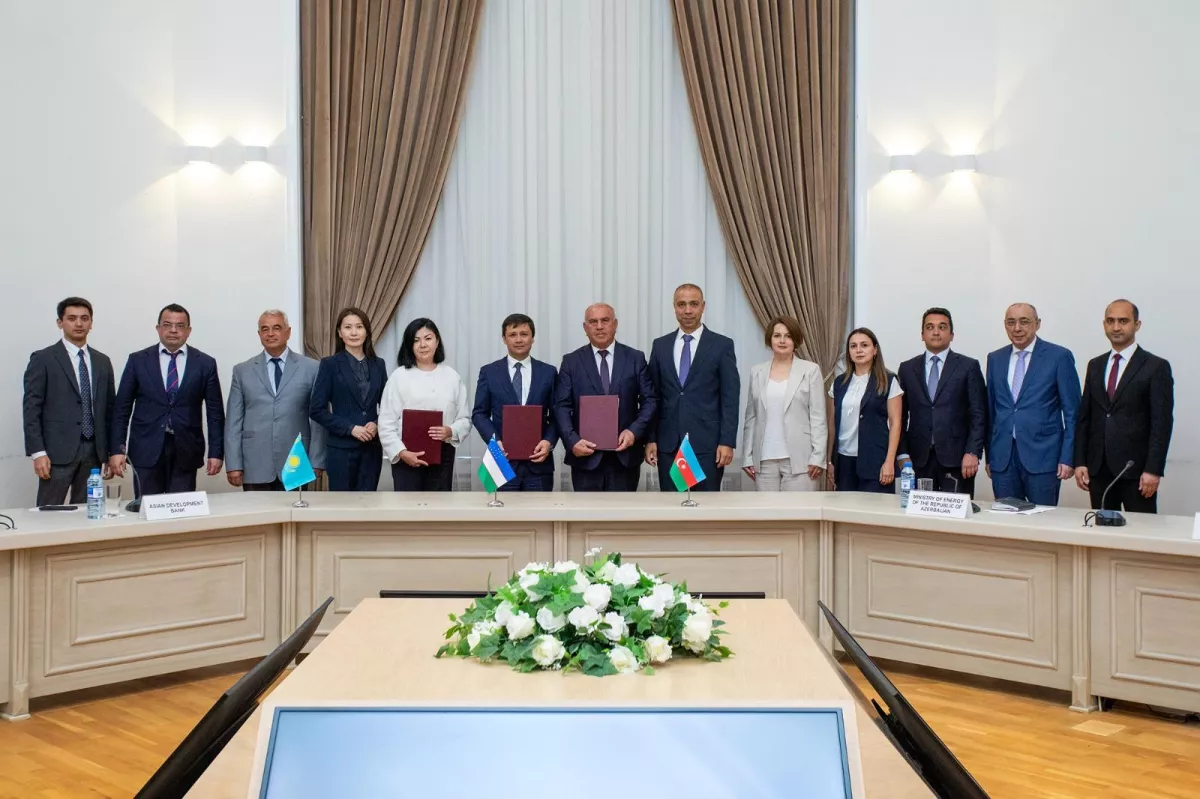
The necessary infrastructure will be built in the Mangystau Region in western Kazakhstan, according to the ministry. The Asian Development Bank (ADB), the Asian Infrastructure Investment Bank (AIIB) and the energy ministries of Azerbaijan, Kazakhstan and Uzbekistan signed a memorandum of understanding in April 2025 to support a feasibility study for the project. Italian consulting and engineering company CESI has begun work on the study.
“The study will assess the technical, economic, regulatory, and environmental viability of the proposed infrastructure, laying the foundation for the development of one of the most ambitious green energy corridors connecting Central Asia and Europe,” said CESI.
According to the Kazakh ministry, the Asian Development Bank and the Asian Infrastructure Investment Bank have committed up to $2 million in support for the project.
To oversee implementation, the three countries established the Green Corridor Alliance joint venture. It was officially registered in Baku in July 2025, with the founding shareholders being Azerenerji, National Electric Grids of Uzbekistan, and Kazakhstan Electricity Grid Operating Company (KEGOC).
According to KEGOC, the study is expected to be completed in May 2027.
Unlocking renewable energy potential
The initiative comes at a time when Central Asian countries are setting increasingly ambitious renewable energy targets, albeit at different scales and speeds. Kazakhstan currently operates 169 renewable energy facilities with a combined installed capacity of approximately 3.7 gigawatts. The government plans to add 10 gigawatts of renewable capacity by 2035 under an initiative called QaJET, a national Energy Transition Investment Platform.
Several large-scale renewable energy projects are already underway, including developments by Masdar in the Zhambyl Region, projects involving Energy China in the Karagandy Region and a planned project by China Power International Development in the Pavlodar Region.
Uzbekistan’s export potential
Against that backdrop, Uzbekistan’s rapidly expanding renewable sector could become a key source of electricity for the proposed corridor. Uzbekistan has set some of the region’s most ambitious renewable energy targets. Under its national strategy, the country aims to increase installed renewable energy capacity to 35 gigawatts by 2030.
Renewables are expected to account for 54% of electricity generation by the end of the decade. In Uzbekistan, total capacity rose sharply from 6.1 gigawatts to 10 gigawatts in 2025, a 65% increase in a single year, according to the International Renewable Energy Agency. The share of renewables in electricity capacity increased from 27.5% to 36.1%, highlighting the rapid scaling up of clean energy deployment.
Azerbaijan as a gateway
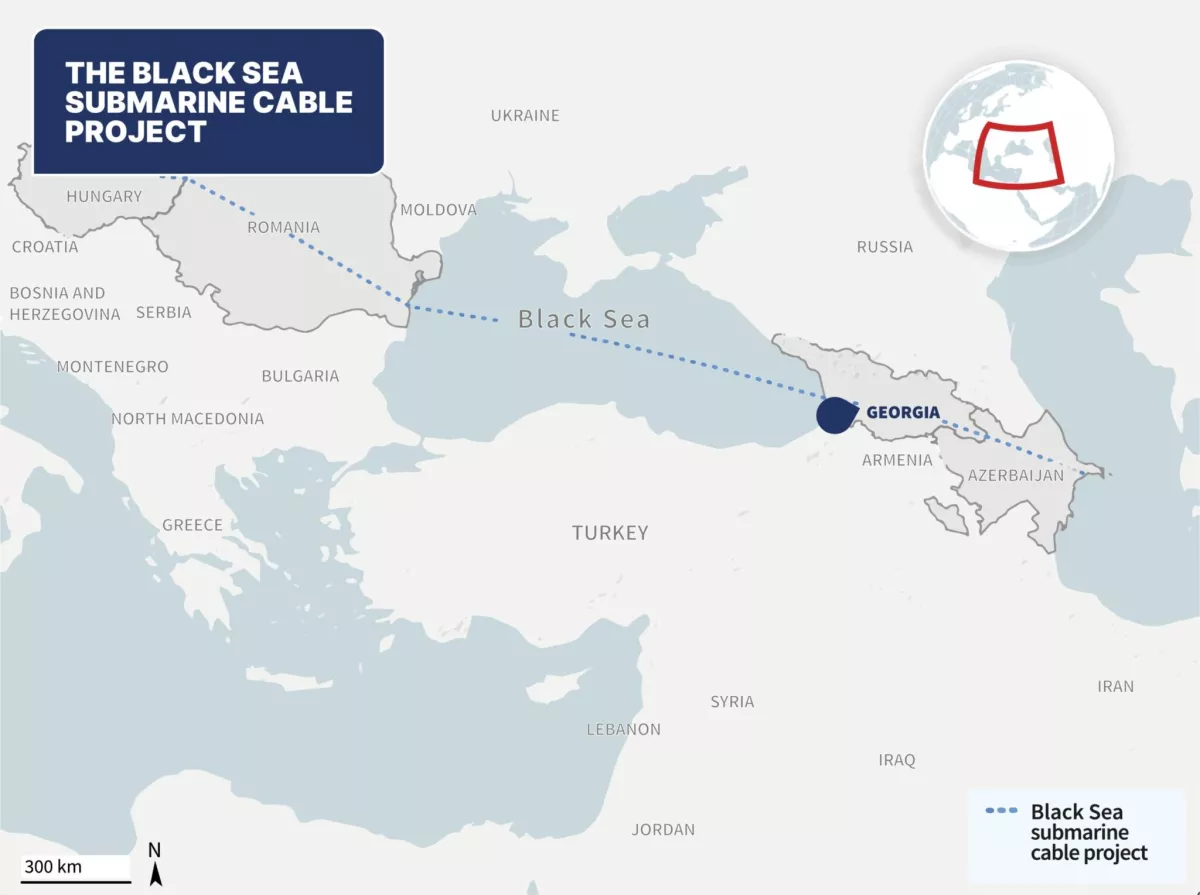
Azerbaijan is expected to serve as the corridor’s gateway to European markets. The country is already working with Georgia, Romania and Hungary on a 1,500-kilometer Black Sea electricity transmission project that could ultimately provide the route through which renewable electricity generated in Central Asia reaches European consumers. Azerbaijan itself currently operates 65 hydropower plants, six wind farms and nine solar power plants, giving the country more than two gigawatts of renewable energy capacity.
Speaking at a ministerial roundtable during Kazakhstan Energy Week in October 2025, Azerbaijani Energy Minister Parviz Shahbazov said renewable energy cooperation is central to broader efforts to strengthen ties across Central Asia, the South Caucasus and the Caspian region.
“The creation of the Trans-Caspian Green Energy Corridor, which will connect the electricity systems of our countries for the first time in history, is fully consistent with the main priorities of this policy and opens up wide opportunities for the development of the Middle Corridor connecting Europe with Asia and China through the Caspian Sea as a green bridge,” he added.
The project, overall, aligns with Europe’s broader push to diversify energy supplies and increase imports of low-carbon electricity as countries seek to meet decarbonization targets and strengthen energy security,” the article reads.







 editor@caliber.az
 +994 55 444-88-98
 Азербайджан, Баку, ул. Низами, 203, Af Business House, 5-й этаж