










Caspian cooperation bolsters South Korea's drive for energy diversification
The growing fragmentation of the global energy landscape has transformed energy security from a largely economic issue into a core element of national security and foreign policy. Renewed instability in the Middle East has once again highlighted the vulnerabilities faced by countries that rely heavily on imported energy in an increasingly volatile geopolitical environment. Among them is South Korea, which imports nearly all of its crude oil and natural gas and has long depended on shipments passing through the Strait of Hormuz. In response, Seoul has accelerated efforts to diversify its energy sources, with the Caspian region emerging as an increasingly important partner, particularly Azerbaijan and Kazakhstan.
South Korea's engagement with the countries of the Caspian Basin began in the early 1990s following the collapse of the Soviet Union. The emergence of newly independent states created opportunities for Seoul to establish diplomatic relations while laying the groundwork for long-term energy cooperation, as a featured article published by the Geopolitical Monitor recalls.
By the early 2000s, South Korea had broadened its strategy beyond importing hydrocarbons, seeking direct investments in upstream oil and gas exploration and production projects across the wider Caspian region.
Azerbaijan
A significant milestone in South Korea's energy partnership with Azerbaijan came in April 2007, when the State Oil Company of the Azerbaijan Republic (SOCAR) and the Korea National Oil Corporation (KNOC) signed a memorandum of understanding to deepen bilateral cooperation. The agreement established a framework for joint participation in future oil and gas projects and marked the beginning of a more structured and institutionalised energy partnership.
Later that year, in October 2007, KNOC agreed to acquire a 20% stake in the Inam offshore exploration project in Azerbaijan's sector of the Caspian Sea from Shell's existing 25% share. Before finalising the transaction, KNOC had also explored the possibility of purchasing a 20% stake directly from SOCAR, which held a 50% interest in the project. At the same time, South Korean officials held discussions with both SOCAR and BP to identify broader opportunities for cooperation, underscoring Azerbaijan's growing strategic importance in Seoul's long-term energy security strategy.
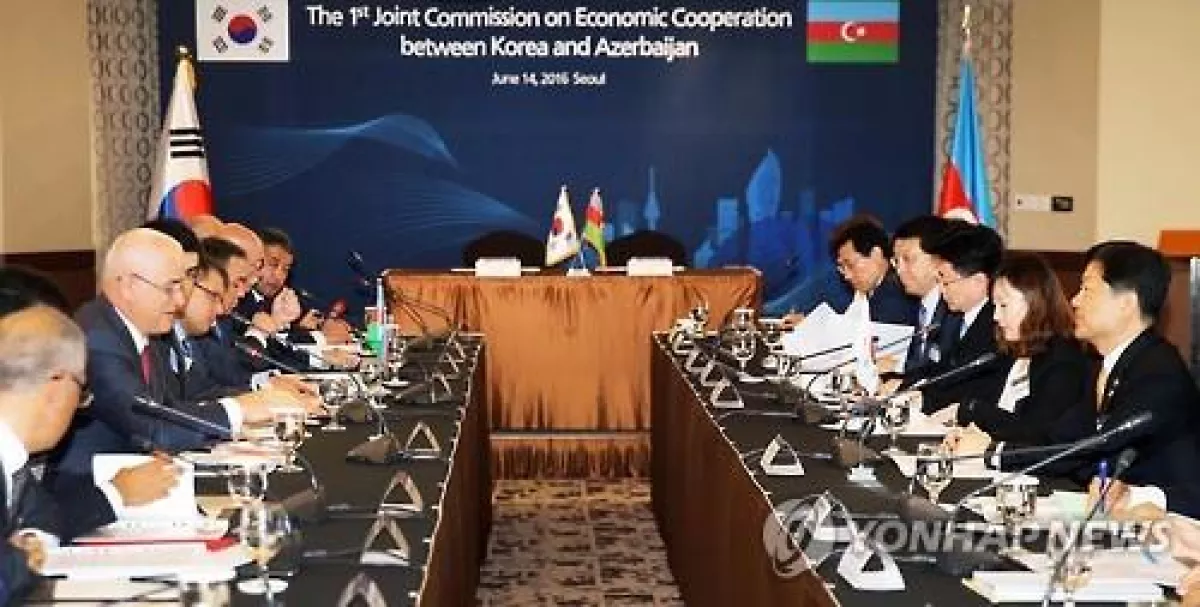
Energy cooperation continued to expand in August 2011, when SOCAR Trading and KNOC signed an agreement on crude oil storage at South Korean terminals. Under the arrangement, SOCAR Trading secured the right to store up to 5.3 million barrels of crude oil in South Korea for an initial period of two years, with an option to extend the agreement by another year. Beyond its commercial significance, the deal reflected growing trust and strategic coordination between the two countries, highlighting the continued evolution of their energy partnership.
More recently, in February 2026, SOCAR and Samsung E&A signed a memorandum of understanding to broaden cooperation in energy infrastructure. The agreement covers a range of areas, including improving infrastructure efficiency, expanding technological cooperation, supporting local manufacturing, developing human capital and promoting decarbonisation initiatives.

Kazakhstan
South Korea has also steadily increased its energy investments in Kazakhstan. Major South Korean companies, including Samsung, SK Group and KNOC, have participated in the development of the Zhambyl offshore block in Kazakhstan's sector of the Caspian Sea. The investment reflected Seoul's broader strategy of moving beyond energy imports by securing direct stakes in overseas production projects.
This approach was reinforced in 2009, when South Korea acquired an 85% stake in Kazakhstan's Sumbe Energy Company, the operator of the Arystan and Kulzhan oil fields. Seoul later increased its ownership to 100%, taking full operational control and further strengthening its upstream presence in the country.
Most recently, an intergovernmental agreement signed in April 2026 committed South Korea to importing approximately 18 million barrels of crude oil from Kazakhstan. These continued investments demonstrate Seoul's long-term commitment to expanding energy cooperation with Astana as part of its broader strategy to diversify energy supplies and secure overseas production assets.
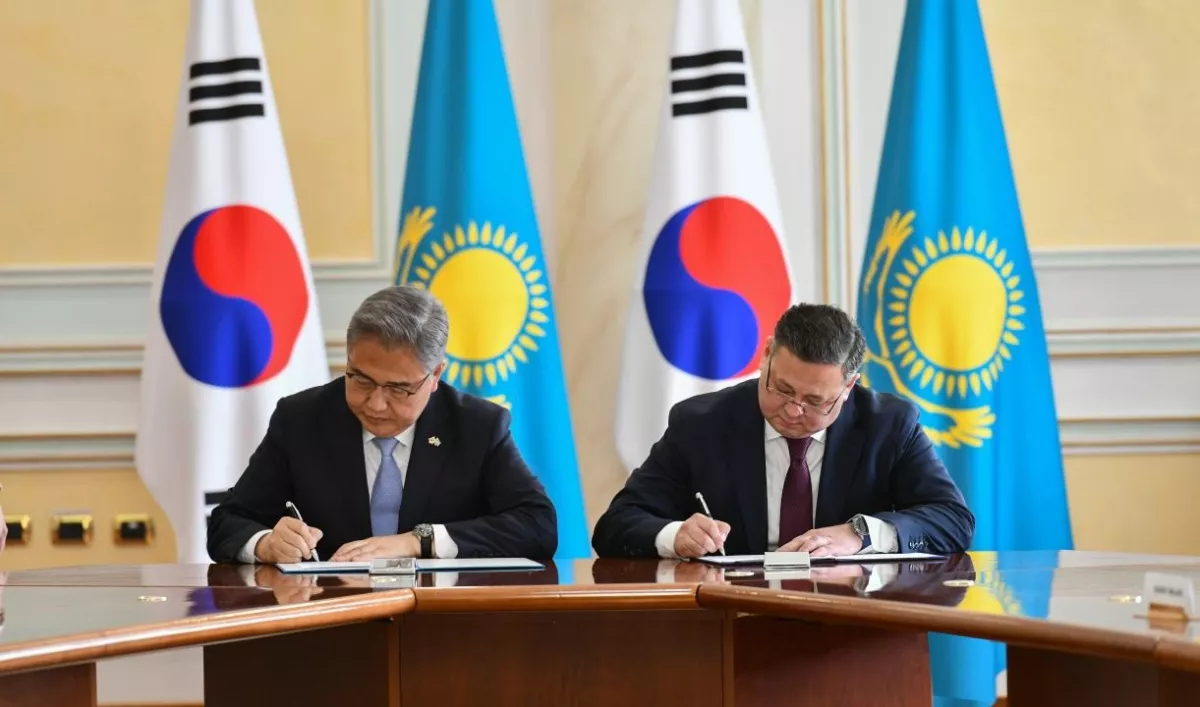
Beyond their immediate commercial value, the article notes how these partnerships reflect South Korea's wider objective of strengthening its presence in the Caspian energy sector while positioning its companies to play a greater role in Eurasia's evolving energy landscape.
Land connectivity
In addition to bilateral energy cooperation, the Caspian region's expanding transport connectivity is further enhancing its strategic value for South Korea. Key initiatives include the Middle Corridor, formally known as the Trans-Caspian International Transport Route (TITR), which links Southeast Asia and China with Europe through Kazakhstan, the Caspian Sea, Azerbaijan, Georgia and Türkiye. Another important framework is the CASCA+ corridor, which brings together the railway administrations of Azerbaijan, Georgia, Kyrgyzstan, Turkmenistan, Türkiye and Uzbekistan.
At the same time, emerging regional mechanisms such as the C6 platform and the growing institutional role of the Organization of Turkic States are creating new opportunities to deepen economic and energy cooperation between South Korea and several Caspian littoral states.
By improving transport connectivity, strengthening regional coordination and fostering a more stable and predictable investment environment, these initiatives are enhancing the Caspian region's attractiveness as a long-term partner in South Korea's strategy to diversify energy supplies and strengthen energy security.
By Nazrin Sadigova







 editor@caliber.az
 +994 55 444-88-98
 Азербайджан, Баку, ул. Низами, 203, Af Business House, 5-й этаж