










New study claims 140,000-year-old child may be earliest human–Neanderthal hybrid PHOTO
The remains of a small child discovered nearly a century ago in a cave on Mount Carmel in Israel have rekindled a major scientific debate. Long classified as an early Homo sapiens, the individual—known as Skhūl I—may in fact represent the earliest known human–Neanderthal hybrid, according to new research published in the peer-reviewed journal L’Anthropologie.
If confirmed, the findings would push back the timeline of interbreeding between the two species by at least 100,000 years. Current consensus holds that Homo sapiens and Neanderthals first mixed around 50,000 years ago, largely in Europe and western Asia.
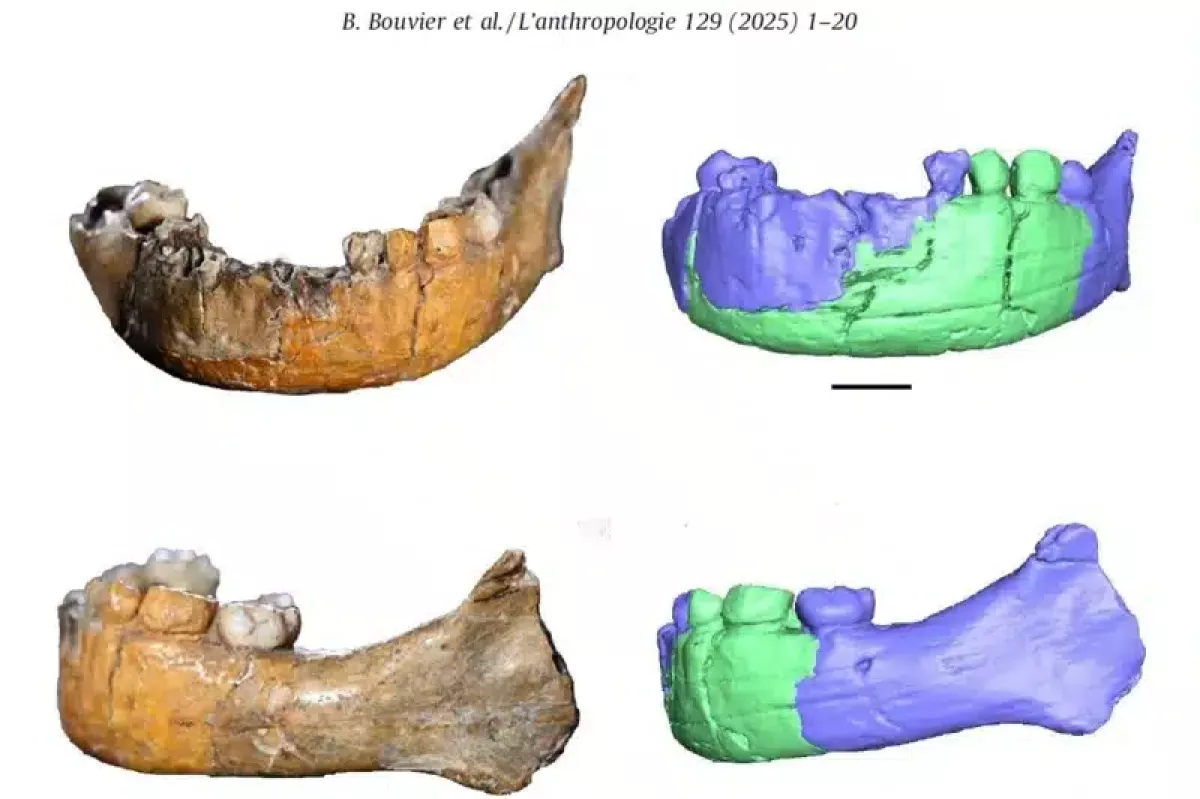
Researchers from Tel Aviv University used high-resolution CT scans and 3D digital modelling to reassess the partial skull and jaw, originally unearthed in the 1930s. Their analysis revealed a surprising blend of features: a modern human-like upper skull combined with a jaw showing distinctly Neanderthal characteristics.
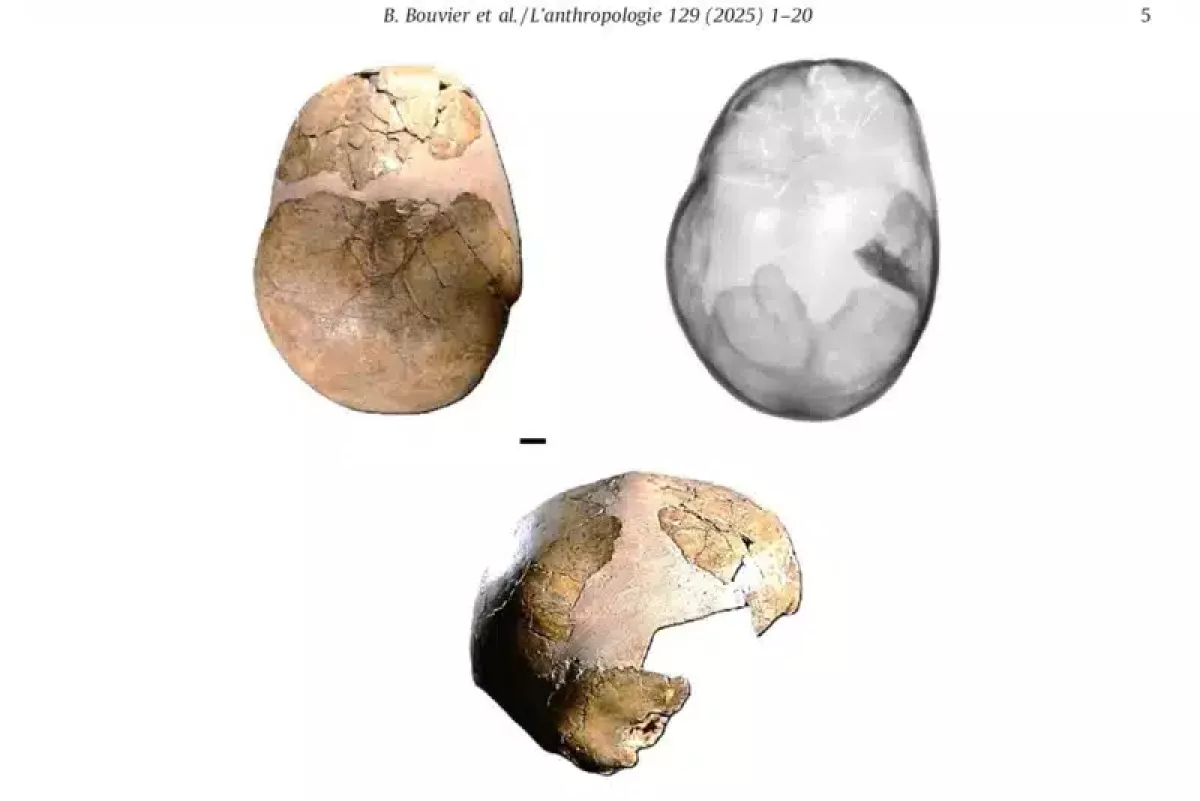
Lead author Israel Hershkovitz described the discovery as a potential turning point. “We are not looking at a late hybridization event,” he said. “This is a population-level genetic exchange happening deep in time.”
The Levant, a key migration route between Africa, Europe and Asia, has long been considered a possible zone of contact between early hominin groups. But the suggestion that sustained Neanderthal–human interaction occurred as far back as 140,000 years ago significantly alters established models of human evolution.
The researchers propose that Skhūl I belonged to a “paleodeme”—a biologically diverse community formed through long-term mixing between modern and archaic humans. This interpretation aligns with earlier genetic research, including a landmark 2010 Science study showing that 1%–5% of the DNA of modern non-African populations derives from Neanderthals.
Adding to the intrigue, Skhūl I was found in what appears to be a collective burial site, potentially the oldest known intentional cemetery. Such burial practices have traditionally been associated with Homo sapiens, but the new findings suggest symbolic behaviour may have been shared across mixed populations.
Not all experts are convinced. Antonio Rosas, a senior paleobiologist at Spain’s National Museum of Natural Sciences, said the study raises “legitimate but inconclusive” points. He warned that assigning hybrid status based solely on morphological differences—particularly when the jaw and skull were excavated separately and partly reconstructed—remains speculative.
Critics also note that without ancient DNA, which is extremely difficult to recover from fossils in the warm climate of the Levant, the hybrid theory cannot be definitively proven.
The debate echoes earlier disputes, including the case of Portugal’s Lapedo child, a 29,000-year-old skeleton that also exhibited mixed traits and sparked controversy over its classification.
For now, Skhūl I remains at the centre of a growing scientific dispute—one that could reshape long-held assumptions about where, when, and how early humans and Neanderthals first met.
By Vugar Khalilov







 editor@caliber.az
 +994 55 444-88-98
 Азербайджан, Баку, ул. Низами, 203, Af Business House, 5-й этаж